

Ekid nation reforms marriage list, burial practices to reduce financial strain
Reform will usher in a community anchored on discipline, order, growth” – Nduese Essien

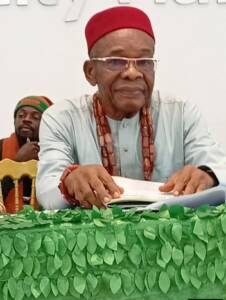
Tony Okoh, Uyo
Seeking to address economic realities and promote social well-being, the people of Ekid Nation in Akwa Ibom State, under the Ekid Peoples Union (EPU), have embarked on major reforms of marriage and burial practices long regarded as financially burdensome.
Speaking over the weekend during the EPU Annual National Congress, the Chairman of the Board of Trustees, Rt. Hon. Chief Nduese Essien, explained that the Union is determined to reposition Ekid Nation from what he described as a “rudderless society” into a programmed community anchored on discipline, order, and uninterrupted, self-sustained growth.
According to him, “The Ekid Peoples Union (EPU) has taken a decisive step toward restoring order, dignity, and sustainable development in Ekid land, with the unveiling of far-reaching reforms aimed at curbing excessive marriage and burial demands that have long burdened families and society.”
Chief Essien, a former Minister of Lands and Urban Development, highlighted that a major component of the reform agenda is the streamlining of marriage and burial lists in Ekid land, decrying the exorbitant marriage requirements in some communities, which have created deep social distortions and forced many young men and women into single parenthood simply to fulfill their natural desire to have children.
He regretted that the prohibitive cost of marriage has forced many young adults to cohabit as husband and wife without traditional marriage rites—a trend he cited as eroding family bonds and cultural values.
“These excessive demands have produced unpleasant and unacceptable repercussions for families and society at large. To address these challenges, the EPU has now agreed on a reformed and standardized list for marriage and burial rites, designed to reflect modest spending in line with what families are naturally endowed with by God,” he added.
He averred that the new framework will remove needless financial pressure and restore sanity to age-long cultural practices.
Chief Essien declared that, from January 2026, the old practice of exorbitant marriage and burial demands will be abolished following the promulgation of the reformed lists.
He urged families to align strictly with the new order, stressing that marriage lists and burial rites should no longer serve as avenues for financial extortion.
“As part of the measures to curtail expensive burial rites, the obnoxious item known as ‘Opening of Mourning House’ has been prohibited.”
Speaking on the new reforms, the President General of Afigh Iwaad Ekid, a foremost socio-cultural youth body in Ekid Nation, Obongiwaad Captain Willie Mbong, lauded the EPU for the bold move toward engineering a new and responsible Ekid society.
He affirmed that the reform would encourage young men to settle down early in life and halt the disturbing practice where families sell off land and other valuable property just to bury their loved ones.
Captain Mbong expressed optimism that the new order would restore dignity to Ekid cultural practices while promoting social stability and economic well-being.
In his candid submission, the Village Head of Afaha Odonen in Eket, Etteidung Paul Akpan Tom, said, “The resolution of the Ekid Peoples Union, which has been passed into traditional law, stands. I want copies of the resolution sent to all Village Heads. Any community that allows the old burial practice to continue must be sanctioned. The remains of our relatives should be buried not more than two weeks after death.” Chief Tom added that, in the olden days, three days was the maximum time to embalm the dead for burial.
The Clan Head of Eket, Offiong, who doubles as the Village Head of Abighe Asang in Esit Eket LGA, Chief Etteudo Ikot, called for the “criminalization” of the opening of mourning houses.
“In my opinion, we should criminalize certain burial practices that were never observed by our forebears. These modern-day practices are even more expensive than the burial ceremony itself. I totally align with the resolution of EPU on the issues of marriage lists and burial rites,” he said.
The EPU clarified that although the reforms were announced on December 19, 2025, full implementation takes effect from January 2026 to give communities and families ample time to adjust to the new dispensation.
The landmark decision from the Ekid Peoples Union signals a firm commitment to cultural reform, social responsibility, and a more humane future for Ekid land.




Bloodbath in Benue: 18 feared dead as gunmen invade Otukpo communities
Henry Iyorkase, Makurdi No fewer than 18 persons were reportedly killed, with several othe…