

Privacy at risk: Inside allegations of unlawful digital surveillance by security agencies

By Chinedum Ukaegbu
At about 2 a.m., the sound of his name being shouted outside his apartment jolted him awake.
When he peered through the window, he saw vehicles, many of them. Men had surrounded the building. At least 12 vehicles, he recalled. For a moment, he thought it was the Department of State Services (DSS).
He had no idea that, according to him, operatives of the National Intelligence Agency (NIA) had been monitoring him for weeks.
His offence, he insists, was participating in protests demanding better governance in Nigeria.
“I was a victim of illegal surveillance carried out by the NIA. It was my first encounter with them,” he said quietly at a stakeholder dialogue in Abuja. “They first called my phone, trying to lure me out so they could arrest me, but I avoided the trap.”
He didn’t know then that, according to his account, his movements were already being tracked.
“They got my home address and came in the middle of the night. The first thing they did when they entered our apartment was check my phone to confirm they had the right target. They not only tracked my phone; they had access to my messages, phone calls, and records of people I spoke with on different days and at different times.”
For him, the most frightening part was not the arrest. It was the realisation that his private conversations were no longer private.
After his arrest, he said he was transferred to the Special Intelligence Response Team of the Nigeria Police Force.
“The IRT confirmed they had materials used to monitor me. I was kept in detention for two months,” he added.
It was only after his release that he learned the operation was allegedly carried out by the NIA, not the DSS, as he initially believed.
His story was one of several troubling accounts shared at a consultative dialogue organised by Spaces for Change (S4C), with support from the Ford Foundation and the Civic Space Resource Hub.
The event, titled “Building Multisectoral Partnership for Online Safety and Security in Nigeria,” brought together lawyers, regulators, telecom representatives, tech experts and civil society actors to examine how surveillance technologies are reshaping civic freedoms.
For many in the room, the victim’s story was no longer shocking but deeply alarming.
Executive Director of S4C, Victoria Ibezim-Ohaeri, warned that the implications of unchecked surveillance extend far beyond activists.
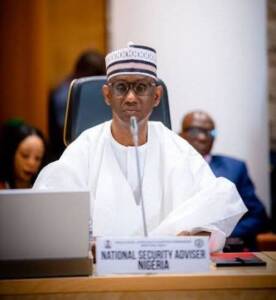
“I am worried because the National Security Adviser is not an ordinary Nigerian,” she said, referencing a public dispute involving the Office of the National Security Adviser. “If it is easy for such high-level conversations to be tapped, then even private and intimate exchanges, things you and I say to our spouses, could be overheard.”
Her concern followed allegations earlier in 2026 involving Mallam Nuhu Ribadu and former Kaduna State Governor Nasir El-Rufai, which sparked national debate over intercepted communications and the limits of digital monitoring.
For Ibezim-Ohaeri, the issue is systemic.
“If you live in a country where systems function properly, you are protected whether you are in power or out of power,” she said. “We should not run a society where protection exists only for those in power. Many Nigerians are not in power. Nobody in this room is in power.”
She warned that technology, particularly Artificial Intelligence tools capable of tracking, profiling and analysing behaviour, can easily become instruments of repression if not regulated.
Beyond individual testimonies, S4C unveiled the second edition of its Civic Space in West Africa database report, documenting civic crackdowns.
According to the report, 639 incidents affecting civic freedoms were recorded between 2017 and 2022. Between 2022 and 2024, the number rose sharply to 801.
More troubling, she noted, is what she described as a shift from outright disregard of the judiciary to what she called its increasing use as a pathway for prolonged detention through repeated adjournments.
“Government institutions should not become weapons,” she stressed. “They should strengthen the system.”
She also raised concerns about the acquisition and proliferation of surveillance technologies by federal and state governments, questioning whether some of the tools may have fallen into private hands.
“Governments and suppliers claim these tools are restricted. But evidence suggests they are reaching private actors. That affects civic engagement,” she said.
As Nigeria approaches the 2027 general elections, stakeholders say the stakes are even higher.
“When people cannot speak freely, online or offline, fear spreads,” Ibezim-Ohaeri warned. “Citizens must be able to question candidates without becoming targets.”
She also pointed to the delicate position of telecom operators and digital platforms, which may be compelled by regulation to release user data to authorities.
Out of fear of sanctions or licence withdrawals, companies may comply in ways that undermine civil liberties, she noted.
For the young man who shared his story, however, the debate is no longer theoretical.
Every ringtone now carries suspicion. Every online message feels exposed.
“What scared me most,” he said, “was knowing that someone I never saw had access to my life.”
His experience underscores a growing anxiety among Nigerians: in an age of invisible technologies, who is watching — and who is protecting the watchers?
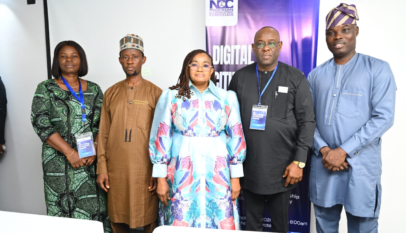
Other speakers at the event included Dr. Amanim Akpabio, Associate Professor in the Department of Private Law at the University of Uyo; Abdullahi Abubakar Aliyu, Deputy Manager at the National Information Technology Development Agency (NITDA); Ms. Amarachi Okonkoh, Data Privacy and Digital Infrastructure specialist at GEPLAW; Linda Obaji, Legal Officer at the Nigeria Data Protection Commission (NDPC); Mr. Ade Atobatele of Remarkable Idea Ltd; Mr. Rotimi Ogunyemi, Technology Attorney and Partner at BOC Legal; Ms. Atinuke Ibrahim, Manager of Regulatory Affairs at the Association of Licensed Telecom Operators of Nigeria (ALTON); Ms. Judith Chiamaka, Digital Rights Programme Associate at S4C; and Michael Itegbe, Technology Officer at S4C.


Excitement as Akwa Ibom people await presidential visitors
By Solomon Essiet Other things being equal, His Excellency, President Bola Ahmed Ti…