
CGE Africa mobilises stakeholders to advance women’s leadership in Blue Economy

Charles Okonji
Centre for Gender Economics in Africa (CGE Africa) and the Gender and Blue Economy Working Group have called for deliberate structural support, stronger institutional partnerships and inclusive financing to increase women’s participation and leadership in Nigeria’s marine and blue economy sectors.
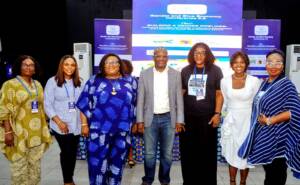
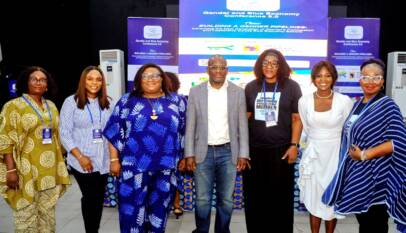
The stakeholders made the call at the opening of the Gender and Blue Economy Conference 3.0 in Lagos, with participants stressing the need to create clear career pathways that can move women from entry-level participation into technical, commercial and decision-making positions across the sector.
The conference, themed “Building Career Pipelines: Advancing the Next Generation of Women’s Participation and Leadership across Blue Economy Sectors,” brought together government representatives, industry leaders, researchers, fellows and young women entrepreneurs.
Speaking at the event, Dr. Funmilayo Iyabode Arowoogun, Managing Director, DEW’S Group and member of the Gender and Blue Economy Working Group, said deliberate interventions were required to enable women to progress from education and training into meaningful employment and leadership.
Arowoogun said the conference was founded on the conviction that women must have meaningful access to opportunities and participate actively in shaping the future of Nigeria’s blue economy.
“Our focus is on how young women move from learning to opportunity, from opportunity to meaningful work, and from experience to leadership.
“These transitions require deliberate support. They require employers willing to open doors, institutions willing to build partnerships, and financing systems that recognise women’s enterprise and ambition,” she said.
Climate resilience critical to blue economy
In a presentation titled “Climate Resilience and the Blue Economy,” Mr Adeojo Adebayo said the blue economy extended beyond the sea, stressing that the sustainable use of ocean, coastal and freshwater resources must combine economic development with environmental protection.
He identified fisheries and aquaculture, ports and shipping, renewable energy and marine services as key areas where economic value could be generated while protecting ecosystems.
Adebayo said resilience must include healthy wetlands and coastlines, safer infrastructure and disaster preparedness, while inclusion should encompass decent work, women-led enterprises, community knowledge and equitable access to finance and decision-making.
He noted that climate change was already reshaping coastal livelihoods, infrastructure and investment decisions, warning that coastal flooding and erosion were threatening homes, transport links, ports, tourism assets and businesses.
According to him, climate change was also weakening natural protection, fish productivity and blue carbon potential, thereby placing coastal communities and their livelihoods under increasing pressure.
He urged fish processors, traders, tourism workers and other coastal communities to embrace climate resilience measures aimed not only at protecting physical assets but also jobs, incomes, food systems and future opportunities.
Experts seek removal of barriers
Adebayo also identified limited access to internships, field placements and technical networks as some of the barriers affecting women’s participation in the sector.
He listed unequal access to finance, equipment, technology and business support, as well as safety concerns, mobility challenges, career responsibilities and workplace bias among issues that must be addressed.
He further called for greater representation of women in technical, commercial and decision-making positions across blue economy value chains.
BOI highlights financing challenges
The Director, MSME, Bank of Industry (BOI), Temiloluwa Adeboye, said MSMEs accounted for more than 75 per cent of Nigeria’s total employment, but noted that about 80 per cent of the country’s MSMEs were constrained by inadequate access to finance.
Adeboye said improving financing for MSMEs required stronger collaboration among entrepreneurs, financial institutions and government.
She explained that financial institutions assess the character, capacity, capital, collateral and prevailing economic conditions before approving loans.
According to her, entrepreneurs seeking financing must demonstrate credibility, sound financial management, repayment capacity and commitment to their businesses.
She said financial institutions typically examine an entrepreneur’s credit history, education and work experience, as well as the financial statements, assets, liabilities, projections and strategic plans of the enterprise.
Adeboye added that financial institutions generally did not finance the entire cost of an asset, stressing that entrepreneurs were expected to demonstrate commitment by investing their own funds.
She noted that having sound collateral could also strengthen an MSME’s chances of securing financing, with acceptable forms including accounts receivable, inventory, real estate, machinery and equipment.
She urged MSMEs to address the concerns of financial institutions by demonstrating professionalism, a good reputation, sound credit history, stable financial capacity, adequate capitalisation and acceptable collateral.
Three-year advocacy journey
Speaking on the three-year sectoral advocacy of the Gender and Blue Economy Working Group, Uchenna Idoko, Executive Director, CGE Africa and National Coordinator of the Working Group, said the coalition was established in 2024 with 11 member organisations domiciled at CGE Africa.
She said the annual conference had since become a platform for advancing targeted conversations on gender inclusion in Nigeria’s blue economy.
According to Idoko, the 2024 Conference 1.0 focused on “Expanding the Horizon for Women in Fisheries and Aquaculture in Nigeria,” drawing attention to women’s foundational contributions to the sector.
She said the 2025 Conference 2.0 examined “Building a Gender-Inclusive Blue Economy through Education and Research for Sustainable Growth in Nigeria,” with emphasis on knowledge systems and institutional collaboration.
The 2026 Conference 3.0, she noted, shifted the focus towards actionable career pathways, mentorship, enterprise financing and executive leadership.
Idoko said the ultimate measure of the conference would be the tangible outcomes achieved after participants left the venue.
She identified such outcomes as young women securing mentors, graduates discovering clear career pathways, entrepreneurs becoming investment-ready and institutions reforming their hiring and partnership models.
She commended the Africa Centre for Energy Policy (ACEP) and other institutional partners for their continued support, while calling on more corporate organisations and development partners to join the coalition and help expand access and sustain the annual platform.
Addressing fellows and young women at the conference, Idoko urged them to take their place in leadership across the sector.
“You belong in the future of the blue economy. Your knowledge, your enterprise and your leadership are needed,” she said.



Tinubu 2027: Ogbuku unites Bayelsa East behind Renewed Hope Agenda
Stanley Ihedigbo Political landscape of Bayelsa East Senatorial Distr…