

Nigeria losing up to ₦20 trillion annually to revenue leakages — Agbakoba raises alarm

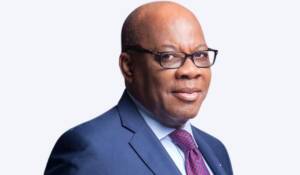
Senior Advocate of Nigeria and former President of the Nigerian Bar Association, Olisa Agbakoba, has raised fresh concerns over Nigeria’s fiscal health, warning that the country may be losing as much as ₦20 trillion annually through systemic revenue leakages, weak institutional controls, and poor enforcement of constitutional financial provisions.
Agbakoba made the remarks during an exclusive interview on Frontline, a current affairs programme aired on Eagle 102.5 FM, where he analysed the country’s socio-economic and political situation and warned that continued fiscal inefficiencies could further deepen poverty, debt burdens and economic instability.
The senior lawyer argued that Nigeria’s persistent dependence on borrowing despite vast revenue-generating opportunities reflects structural failures in public finance management rather than an actual shortage of resources.
According to him, the constitutional framework governing Nigeria’s finances clearly stipulates that all revenues generated by the federation should be paid into a central Federation Account without deductions, but several government institutions have allegedly undermined this process through parallel financial practices.
Agbakoba cited Section 162 of the Constitution, explaining that the provision establishes a special Federation Account into which all revenues from various government sources are expected to be paid in full.
He, however, alleged that key agencies have consistently failed to comply with the constitutional requirement, thereby creating large-scale leakages within the public finance system.
He specifically identified the Nigerian National Petroleum Company Limited as a major contributor to the problem, accusing the oil company of operating deduction practices and financing arrangements that significantly reduce what eventually reaches the Federation Account.
According to him, the scale of the alleged infractions partly informed recent actions taken by President Bola Ahmed Tinubu, including the dissolution of the board led by former Group Chief Executive Officer Mele Kyari.
Agbakoba further referenced ongoing anti-corruption investigations involving officials of the national oil company, saying such developments reinforce concerns about transparency and accountability in the management of oil revenues.
The former NBA president questioned why Nigeria continues to accumulate debt despite generating substantial income from petroleum profit tax, royalties, gas revenues, licensing fees, company income taxes and other statutory inflows.
He likened the situation to a family head borrowing money despite having sufficient funds in a bank account, insisting that the nation’s fiscal challenges are rooted more in weak management systems than lack of earnings.
He also criticised what he described as unconventional oil financing arrangements, including forward crude sales in which future crude oil production is allegedly pledged in exchange for immediate cash.
Agbakoba referenced initiatives such as Project Gazelle, Project Yield, Project Leopard and Eagle Export Funding, alleging that future crude oil revenues had been committed under various financing structures.
According to him, such arrangements weaken Nigeria’s long-term fiscal sustainability by mortgaging future earnings for short-term liquidity.
He also questioned repeated government spending on the rehabilitation of refineries in Port Harcourt, Warri and Kaduna, arguing that despite huge financial commitments, the facilities have yet to deliver meaningful output.
The senior advocate described the continued practice of exporting crude oil while importing refined petroleum products as economically irrational, adding that the development reflects deeper governance and accountability problems within the sector.
Agbakoba maintained that Nigeria is currently operating far below its actual revenue potential due to widespread leakages across multiple sectors of the economy.
He estimated that as much as 60 percent of potential revenue may be lost before reaching the Federation Account, forcing the country into repeated borrowing cycles and worsening debt servicing pressures.
According to him, debt servicing now consumes a significant portion of government earnings, leaving limited resources for infrastructure, salaries, healthcare, education and other public services.
The legal practitioner also referenced estimates by the World Bank, which he said align with concerns over revenue inefficiency in Nigeria, although he maintained that the actual figure could be much higher than official estimates.
Agbakoba further criticised the political class for prioritising preparations for the 2027 general elections over governance and institutional reforms.
He lamented that many political actors appear more focused on alliances, defections and electoral calculations rather than addressing the structural economic issues affecting ordinary Nigerians.
While defending the economic logic behind the removal of fuel subsidy and foreign exchange reforms introduced by the Tinubu administration, Agbakoba argued that the government failed to establish adequate mitigation measures to cushion the effects on citizens.
He questioned why savings from subsidy removal were not channelled into a dedicated national infrastructure fund capable of financing roads, schools, hospitals and other development projects.
Instead, he argued, the additional revenues are largely distributed to state governments without effective accountability mechanisms to ensure developmental impact.
Agbakoba expressed concern that despite increased allocations to states, many citizens have yet to witness corresponding improvements in public services or living conditions.
He warned that unless Nigeria urgently reforms its fiscal architecture, strengthens revenue oversight systems and blocks institutional leakages, the country may remain trapped in cycles of borrowing, economic inefficiency and underdevelopment.
The senior advocate insisted that fiscal accountability and revenue management should become central issues in the build-up to the 2027 elections, urging Nigerians to demand clear plans from political leaders on how they intend to address the country’s massive revenue leakages and economic challenges.

Medical brain drain: Tinubu calls for sustainable solutions across West Africa
Stanley Ihedigbo President Bola Ahmed Tinubu has urged medical professionals across…