

When seasons stopped keeping time: How climate change is rewriting Nigeria’s calendar

Jeremiah Adesina, Climate Communication Specialist | SDG 13 Advocate
There was a time when many Nigerians could almost tell the date by looking at the sky.
The first rains announced the beginning of another farming season. Fishermen knew when rivers would swell. Market women anticipated the arrival of seasonal crops. Parents planned school activities around predictable weather patterns, while communities organised festivals and cultural events with the confidence that the seasons would arrive as they always had.
The calendar was more than dates printed on paper.
It was written in the clouds, carried by the wind and buried in the soil.
Today, that calendar is beginning to fall apart.
Across Nigeria, conversations about the weather are increasingly conversations about uncertainty. A farmer waits for rain that comes weeks later than expected.
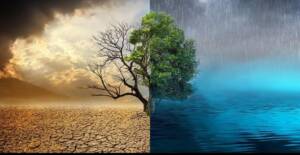
When it finally arrives, it may fall with such intensity that it washes away newly planted crops. In another community, the rains stop too early, leaving behind cracked earth where green shoots should have been. Elsewhere, extreme heat keeps children indoors, while sudden flooding forces families to abandon their homes with little or no warning.
Climate change is often explained through statistics—rising temperatures, shifting rainfall patterns, increasing greenhouse gas emissions and more frequent extreme weather events.
But for millions of Nigerians, climate change is experienced in much simpler and more immediate terms.
The seasons no longer behave the way they used to.
And that disruption is quietly rewriting the country’s social and economic calendar.
From the farm to the market, from the classroom to the hospital and from rural communities to Nigeria’s rapidly expanding cities, climate change is reshaping the way people live, work and plan for the future.
The Farmer and the Uncertain Sky
For generations, agriculture in Nigeria has depended heavily on the rhythm of predictable seasons.
Farmers traditionally knew when to clear their land, when to plant, when to expect the rains and when to harvest. Much of this knowledge was passed down through generations, refined over decades of observation and embedded deeply in local culture.
The sky was a source of information.
The wind carried clues.
The behaviour of insects, birds and plants often offered signs about what the season might bring.
But as rainfall patterns become increasingly unpredictable, that inherited knowledge is becoming less reliable.
Planting too early can mean losing seeds to a prolonged dry spell. Waiting too long can shorten the growing season and reduce yields. Heavy rainfall concentrated within a few hours can destroy farmland that gentle seasonal rains would once have nourished over several weeks.
For smallholder farmers, who often operate with limited financial resources and little access to insurance, a failed planting season can be devastating.
The consequences do not stop at the farm gate.
Every failed harvest means less food reaching the market. Reduced supply can contribute to higher prices, making nutritious food increasingly difficult for low-income families to afford.
In this way, climate change is no longer simply an environmental issue.
It is an economic issue.
It is a food security issue.
It is a household issue.
It is an issue that can appear on the dinner table when a family discovers that the food they once bought cheaply is suddenly beyond their reach.
When the City Becomes a Furnace
Nigeria’s cities are not insulated from the changing climate.
In fact, rapid urbanisation can make the effects even more intense.
Concrete buildings, asphalt roads and limited green spaces absorb and retain heat, creating urban environments that can become dangerously hot during periods of extreme temperature.
For a delivery rider navigating Lagos traffic, the heat is not an abstract climate statistic. It is a physical burden carried throughout the working day.
For a construction worker, it can mean hours of strenuous labour under an unforgiving sun.
For a street trader, stepping away from the heat may mean losing customers and income.
For a child walking home from school, an unusually hot afternoon can become a health risk.
For many Nigerians, adapting to extreme weather is not a lifestyle choice.
It is the price of earning a living.
This is one of the uncomfortable realities of climate change: the people who are often least responsible for global emissions can be among those who suffer the consequences most directly.
The Climate Is Entering the Classroom
Children are also growing up in a climate unlike that experienced by many of their parents and grandparents.
Schools in vulnerable communities can face disruptions caused by flooding, excessive heat and damaged infrastructure. Roads leading to schools may become impassable during heavy rainfall. Classrooms can become unbearably hot, making concentration difficult for students and teaching more challenging for educators.
In some communities, floodwaters can force schools to close temporarily, interrupting learning and widening existing educational inequalities.
The problem is not that education has become less important.
It is that the environment in which education takes place is becoming increasingly unpredictable.
Climate change is, therefore, beginning to shape childhood itself.
A child growing up today may experience more frequent disruptions to school activities, outdoor play and family routines because of extreme weather.
The climate crisis is becoming part of the story of a generation.
Floods, Heat and the Health Crisis
The changing climate also presents growing risks to public health.
Extreme heat can increase the risk of heat-related illnesses, particularly among vulnerable populations such as children, older people and those who work outdoors.
Flooding can contaminate water sources, damage sanitation systems and create conditions favourable to the spread of certain diseases.
When homes and communities are repeatedly flooded, families may also face displacement, loss of property and psychological distress.
The burden is often greatest in communities that already lack adequate drainage, healthcare facilities, reliable water supplies and resilient infrastructure.
This creates a dangerous cycle.
Poverty increases vulnerability to climate impacts, while climate impacts deepen poverty.
A family that loses a home to flooding may struggle to recover. A farmer who loses a harvest may borrow money to survive. A trader whose goods are destroyed by floodwater may have no capital to start again.
Climate change can turn a single extreme weather event into a long-term economic setback.
The new food calendar
Nigeria’s food system is particularly vulnerable to changing weather patterns.
When rainfall becomes unpredictable, crop production becomes more difficult to plan. When temperatures rise, some crops may struggle to thrive. When floods destroy farms and roads, food may become more difficult and expensive to transport.
The result is a food system increasingly exposed to disruption.
For consumers, this can translate into higher prices.
For farmers, it can mean greater uncertainty.
For the government, it presents a growing challenge to food security.
The traditional agricultural calendar—plant, grow, harvest—is becoming more difficult to follow with confidence.
In its place is a new calendar shaped by questions.
Will the rain come on time?
Will it stop too early?
Will the next rainfall be gentle or destructive?
Will the harvest be enough?
For millions of Nigerians, these are no longer occasional questions.
They are becoming part of everyday life.
Communities Are Fighting Back
Yet the story of climate change in Nigeria is not only a story of loss.
Across the country, communities are finding ways to adapt.
Farmers are experimenting with drought-tolerant and climate-resilient crop varieties. Some are adjusting planting schedules using seasonal forecasts and weather information rather than relying exclusively on traditional knowledge.
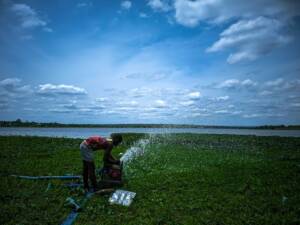
Others are adopting small-scale irrigation systems to extend production during dry periods.
Communities are also exploring tree planting, agroforestry and the restoration of degraded lands as ways of improving soil quality, reducing heat and strengthening local ecosystems.
Technology is becoming increasingly important.
Weather information delivered through radio, mobile phones and digital platforms can help farmers make better decisions about when to plant, when to harvest and how to prepare for extreme weather.
These interventions may appear modest when viewed individually.
Together, however, they demonstrate a powerful lesson:
Adaptation works best when it is local, practical, affordable and informed by science.
Traditional knowledge remains valuable, but it must increasingly work alongside modern climate science and reliable weather forecasting.
The goal should not be to replace one with the other.
It should be to bring the best of both together.
The Responsibility Cannot Rest on Individuals
But communities cannot carry the burden of climate adaptation alone.
Building a climate-resilient Nigeria requires stronger national and subnational action.
It requires investment in reliable weather forecasting and early-warning systems that can reach vulnerable communities before disasters strike.
It requires better drainage infrastructure and urban planning.
It requires stronger agricultural extension services that can provide farmers with timely information and practical support.
It requires investment in climate-smart agriculture, irrigation and improved storage facilities.
It requires the protection and restoration of forests, wetlands and other natural ecosystems that help reduce flooding, regulate temperatures and protect communities.
It also requires climate-resilient schools and healthcare facilities.
Climate literacy should become part of everyday learning, helping young Nigerians understand not only what climate change is but also how they can become part of the solution.
Urban planning must also recognise the value of nature.
Trees and green spaces are not luxuries. They can help reduce urban heat, improve air quality and contribute to healthier communities.
Policymakers must therefore treat climate adaptation not as a distant concern for future generations but as an urgent development priority.
A New Way of Measuring Time
Nigeria has always been a nation of adaptation.
Its people have survived economic shocks, insecurity, disease outbreaks and social upheavals. Communities have repeatedly found ways to adjust to changing circumstances.
But climate change presents a challenge of a different scale.
It is changing the conditions under which adaptation itself must take place.
The seasons are shifting.
The rains are becoming less predictable.
The heat is becoming more intense.
The floods are becoming more disruptive.
And the consequences are spreading across every aspect of life.
Climate change is no longer a distant prediction found in scientific reports.
It is present in delayed harvests.
It is visible in flooded streets.
It is felt in scorching afternoons.
It is reflected in rising food prices.
It is heard in the anxious conversations of farmers waiting for rain.
It is experienced by families who wake up to find floodwater inside their homes.
The old calendar measured time by months.
The new climate calendar measures time by uncertainty.
But uncertainty does not have to mean helplessness.
Nigeria still has an opportunity to build resilience, protect vulnerable communities and prepare its people for a changing climate. The choices made today—by governments, businesses, communities and individuals—will determine how well the country navigates the years ahead.
The question is no longer whether the climate is changing.
It is.
The question is whether Nigeria will continue reacting to each crisis as it arrives or begin preparing systematically for the climate reality already unfolding.
The seasons have not disappeared.
They have simply stopped keeping time.
And perhaps the greater question is whether we are prepared to keep pace with the climate that is already rewriting our future.




NUJ honours FCC Commissioner Peter Eze for Outstanding Youth leadership in Enugu
Stanley Ihedigbo Nigeria Union of Journalists (NUJ), Enugu State Coun…