

NBA warns more action possible if Ogun judiciary ignores demands
Wants virtual court fee cut from N100,000 to N25,000

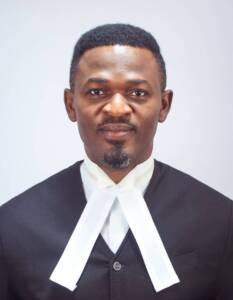
Michael Olumide
Lawyers across the Abeokuta, Sagamu and Ota branches of the Nigerian Bar Association (NBA) have returned to the courts after concluding their three-day warning boycott, while maintaining pressure on the Ogun State Judiciary to review policies they describe as costly and restrictive to legal practice and access to justice.
The boycott, which ran from July 6 to July 8, was organised in protest against several policies introduced by the Ogun State Judiciary, including a N100,000 charge for virtual court proceedings, a sharp increase in affidavit fees following the introduction of electronic affidavits and a directive limiting lawyers to filing only four affidavits daily.
Speaking during an exclusive interview on Frontline, a current affairs programme on Eagle 102.5 FM, Ilese-Ijebu, Chairman of the NBA Abeokuta Branch, Aderemi, confirmed that the industrial action had ended as scheduled and that lawyers had resumed normal court activities.
“The boycott has ended. We gave a minimum of seven days’ notice, and we gave the date. It was a three-day thing,” he said.
He explained that although legal practitioners had returned to work, discussions aimed at resolving the dispute were already underway, with several respected senior lawyers and stakeholders working behind the scenes to broker peace between the Bar and the judiciary.
According to him, the warning boycott was the culmination of months of consultations, complaints from members and repeated but unsuccessful engagements with the Ogun State Judiciary.
Aderemi said members of the NBA branches in Abeokuta, Sagamu and Ota consistently expressed dissatisfaction with the new court policies during monthly meetings, arguing that they had significantly increased the cost of litigation and negatively affected both lawyers and litigants.
He noted that the association explored several peaceful avenues to resolve the matter, including passing resolutions at branch meetings, writing formal letters and holding discussions with judicial authorities, but none produced a satisfactory outcome.
Despite those efforts, he said dissatisfaction among lawyers continued to grow, prompting the NBA leadership to widen consultations and seek the intervention of senior members of the legal profession before eventually embarking on the warning boycott.
According to him, the protest has since attracted nationwide attention, with senior lawyers from within and outside Ogun State reaching out to encourage dialogue and assist in resolving the impasse.
“Many elders have called, even from outside Ogun State, from Abuja and different places, asking what should be done going forward. Many have also promised to intervene,” he said.
Although encouraged by the interventions, Aderemi disclosed that no definite timeline had yet been agreed upon for resolving the dispute.
Explaining the issues behind the protest, he identified the N100,000 fee for virtual court sittings as one of the NBA’s major concerns.
While affirming the association’s support for the digitalisation of the judiciary, he argued that the amount being charged for virtual proceedings was excessive and placed an unnecessary financial burden on litigants.
He pointed out that the fee does not cover the internet costs incurred by either lawyers or their clients during virtual proceedings, making the arrangement even more burdensome.
The NBA chairman also criticised the increase in affidavit fees from N200 to a minimum of N1,500 following the introduction of the electronic affidavit system.
He said many litigants had questioned the sudden increase, placing lawyers in the difficult position of explaining charges they did not introduce.
Another major concern, he said, is the restriction limiting lawyers to filing a maximum of four affidavits daily.
According to Aderemi, the policy unnecessarily delays legal processes, especially for lawyers handling multiple cases or numerous witnesses, and could expose litigants to additional default penalties where statutory filing deadlines are missed.
He argued that such administrative limitations interfere with lawyers’ professional responsibilities despite their valid licences to practise.
Aderemi stressed that the NBA’s objective was not to confront or undermine the judiciary but to draw public attention to policies that, in the association’s view, threaten access to justice.
“Our goal is not to force the hands of the judiciary. It is to make the broader community know exactly what is happening,” he said.
He described the widespread media coverage generated by the boycott as one of its major achievements, noting that previous letters, meetings and consultations with judicial authorities had attracted little public attention.
The NBA chairman further clarified that the association was not opposed to judicial reforms or technological advancement.
Referring to comments previously made by the Chief Registrar that digitalisation comes at a cost, Aderemi acknowledged that technology requires investment but insisted that such costs should not be transferred to court users in a manner that discourages access to justice.
He warned that excessive charges could effectively deny ordinary Nigerians access to the courts, contrary to the judiciary’s constitutional role as the “last hope of the common man.”
As part of its proposals, the NBA is demanding that the N100,000 virtual hearing fee be reduced to N25,000 per case, while the minimum affidavit fee should be reviewed downward from N1,500 to N500.
The association is also seeking the complete removal of the restriction limiting lawyers to filing only four affidavits daily.
Aderemi further claimed that Ogun State currently imposes the highest virtual hearing fee in Nigeria.
According to him, findings by NBA branches nationwide indicate that Lagos State charges N30,000 for similar proceedings, while some states permit virtual hearings without imposing any additional fees beyond the internet costs borne by participants.
He also rejected suggestions that the increased charges were introduced to boost internally generated revenue, insisting that the judiciary should be adequately funded through statutory government allocations rather than imposing heavy financial burdens on litigants.
“The judiciary should never be seen as a revenue-generating agency of government,” he said.
On the possibility of further industrial action, Aderemi said any future decision would rest entirely with NBA members.
He explained that, as an elected leader, he was bound to implement whatever decision members democratically reached after further consultations.
Despite the disagreement, he reiterated the association’s commitment to dialogue and peaceful engagement, expressing optimism that ongoing interventions by senior members of the legal profession would pave the way for an amicable resolution of the dispute.




NOUN VC: Africa must address security, economic challenges driving youth migration
The Vice Chancellor of the National Open University of Nigeria (NOUN)…