

Downstream reset: NNPC seeks Chinese technical support to rebuild Warri, Port Harcourt refineries

By Caleb Ohaeri
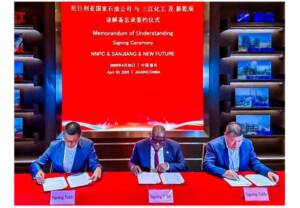
The latest Memorandum of Understanding between NNPC Limited and two Chinese firms for the rehabilitation and expansion of the Warri and Port Harcourt refineries arrives with familiar promise and familiar uncertainty.
For Nigeria, refinery rehabilitation has become a recurring national storyline—announced with optimism, backed by large expectations, but often slowed by execution gaps, technical setbacks, and shifting timelines.
Against that backdrop, this new partnership is both a continuation of a long reform attempt and another test of institutional credibility in the downstream oil sector.
On paper, the scope of the agreement is ambitious and strategically aligned with Nigeria’s long-term energy needs.
The focus on completing outstanding rehabilitation works, upgrading refining capacity, improving operational efficiency, and expanding into petrochemical production reflects a more modern understanding of what refineries should represent—not just fuel production centres, but integrated industrial hubs.
The inclusion of gas-based industrial clusters is particularly noteworthy. If properly implemented, such a model could reposition the refineries as anchors of broader industrial ecosystems, creating value beyond petrol and diesel into fertilizers, petrochemicals, and industrial feedstock.
This is where real economic transformation lies, not just in refining crude oil, but in expanding downstream linkages that drive manufacturing and job creation.
However, optimism must be tempered by Nigeria’s historical experience with these same assets.
The Warri and Port Harcourt refineries have undergone multiple rounds of rehabilitation announcements over the years, yet sustained output has remained elusive.
The core challenge has rarely been the absence of agreements, but the difficulty of translating them into consistent, transparent, and technically accountable execution.
This is why the current MoU, while encouraging, does not yet represent a turning point. It is a framework of intent, not a guarantee of delivery.
The real measure of success will lie in what follows: financing clarity, engineering milestones, contractor accountability, and measurable production timelines.
Without these, the agreement risks joining a long list of well-publicised but underperforming refinery revival efforts.
Another critical dimension is the evolving energy landscape in Nigeria.
With major private sector investments already reshaping domestic refining capacity, particularly in large-scale modular and integrated facilities, the role of state-owned refineries must be clearly defined.
They cannot operate as legacy symbols; they must be commercially viable, competitive, and integrated into a broader national energy strategy.
There is also the question of trust and governance. Public confidence in refinery rehabilitation has been eroded over time, not necessarily due to lack of intent, but due to repeated delays and limited transparency.
Restoring that confidence will require more than partnership announcements—it will require visible progress, open reporting mechanisms, and disciplined project execution.
Ultimately, this MoU represents both opportunity and obligation. It signals Nigeria’s continued desire to revive its refining capacity, but it also raises the stakes for delivery.
The difference between another headline and a genuine industrial milestone will depend on whether this agreement moves beyond diplomatic signing ceremonies into sustained operational reality.
Until then, the Warri and Port Harcourt refineries remain what they have long been in national discourse, assets of immense potential still waiting for consistent execution to match ambition.



Ojota property dispute: Family administrator raises fresh allegations
Wisdom Adebisi The ownership and administration dispute over a family estate…