

Editorial: Anambra government, Peter Obi, politics of old debts: Why now?

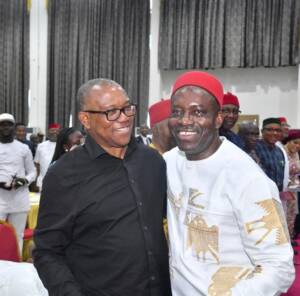
There is a legitimate question that the Anambra State Government must answer.
Why has the administration of Governor Chukwuma Soludo chosen this particular moment to reopen a prolonged argument over the record of former Governor Peter Obi, more than 12 years after he left office?
This question is not an attempt to shield Peter Obi from accountability. Neither should it be interpreted as an endorsement of his political ambition.
Rather, it is a question about public accountability, transparency and the responsible use of government information.
Peter Obi governed Anambra State from 2006 to 2014, and the administration that succeeded him has itself been succeeded by another administration.
If there are verifiable financial liabilities from the Obi years that remain outstanding today, the people of Anambra State deserve to know precisely what they are, how much they were originally worth, what has already been paid, what remains outstanding, when the liabilities arose and which administration incurred them.
But equally important is another question:
If the state government has documentary evidence showing that Peter Obi left behind unpaid salaries, pensions, gratuities, contractors’ debts or loans, why is the matter becoming particularly prominent now, as Nigeria approaches another presidential election?
That question deserves an answer.
The disagreement
The latest controversy began after officials of the Anambra State Government said the state was still servicing loans and other financial obligations associated with previous administrations, including that of Peter Obi.
Obi rejected the claims, saying that when he left office, he was not owing salaries, pensions or gratuities that the state government was responsible for paying.
He also said he did not owe suppliers or contractors whose work had been completed, certified and properly processed.
He went further, challenging anyone who could establish otherwise to produce the evidence.
The Anambra Government subsequently released what it described as public debt records and alleged that eight external loans associated with the Obi administration remained outstanding.
According to the state government, the outstanding balance of those loans was about ₦127.4 billion as of June 30, 2026.
That is a serious allegation.
But it is equally important to distinguish between a loan being outstanding today and a former governor personally owing the money.
Governments borrow. Governments repay. Governments inherit debts. Governments also refinance and restructure obligations.
Therefore, the central journalistic question should not simply be:
“Did Peter Obi borrow money?”
The more useful questions are:
How much was borrowed?
For what projects?
What was the original repayment schedule?
How much had been repaid before March 2014?
How much have subsequent administrations repaid?
What is the outstanding principal?
What portion represents interest, exchange-rate changes or other financing costs?
And most importantly:
What did Anambra State receive in return for the borrowing?
Those are questions that can be answered through documents rather than political rhetoric.
The pension and gratuity question is another matter That deserves attention.
If the Anambra State Government is asking Nigerians to examine Peter Obi’s financial record as governor, Nigerians should also be told about the financial benefits Peter Obi himself received after leaving office.
The public deserves to know:
How much pension was paid to Peter Obi each month after he left office?
What was the total pension paid to him from the date he became eligible until the present?
How much gratuity or severance benefit was paid to him upon leaving office?
Were vehicles provided to him under the applicable law?
Were security personnel provided at public expense?
Were personal aides provided?
What medical benefits, accommodation, allowances or other entitlements were provided?
What is the total amount spent by Anambra State on its post-office entitlements?
Were these payments made under the law in force at the time?
Were similar payments made to other former governors?
These figures should not be treated as secret political information.
They are public expenditures.
According to published accounts of the Anambra State Governors’ Pension Law, 2009, former governors were entitled to a life pension equivalent to their last salary in office, subject to periodic review. The law also provided for an official vehicle, personal aides, security and other benefits. A 2019 report estimated the financial commitment for an Anambra former governor at about ₦48.96 million over four years, excluding some medical and security costs.
But this figure should not be presented as the total amount Peter Obi personally received over the years.
Why?
Because the figure reported in 2019 was an estimate of the financial commitment under the law, not an audited statement showing every naira actually paid to Peter Obi from 2014 to 2026.
That is precisely why the Anambra Government should publish the actual figures.
How much was budgeted?
How much was appropriated?
How much was actually released?
How much was paid directly to Peter Obi?
How much was spent on benefits provided on his behalf?
The public deserves the distinction.
If there is a debt, show the document
The same standard must apply to the debt allegations.
If the government says Peter Obi left behind ₦127.4 billion in outstanding loans, it should publish a clear schedule showing:
the name of each loan;
the date it was obtained;
the original amount;
the purpose;
the lending institution;
the repayment period;
the amount repaid by 2014;
the amount repaid by subsequent administrations;
the principal outstanding;
accumulated interest;
the current balance;
and the project for which the money was borrowed.
The government has already said that the loans were connected to areas including malaria control, erosion management, education and healthcare. It has also acknowledged that borrowing itself is not necessarily wrong if borrowed funds are used productively.
That is an important distinction.
A government should not be condemned merely because it borrowed money.
The real issue is whether the borrowing was lawful, necessary, properly documented, properly applied and capable of producing public value.
What about the alleged pension arrears?
The state government has also alleged that inherited arrears of salaries, pensions and gratuities remained after Obi left office.
The government says the Soludo administration has cleared about ₦22 billion in inherited gratuity arrears owed to retired state and local government workers and teachers, while maintaining that some legacy liabilities remain.
That allegation requires evidence.
Who were the beneficiaries?
How much was owed?
What period did the arrears cover?
When did each liability arise?
Were the beneficiaries already owed before Obi assumed office?
How much did Obi’s administration inherit?
How much did it pay?
How much remained when he left?
How much did subsequent administrations pay?
And what is still outstanding today?
These questions are especially important because a pension liability can span several administrations.
It would therefore be misleading to attribute every historical pension or gratuity arrear automatically to the governor who happened to leave office before the debt was eventually paid.
The public record should determine responsibility.
Why the timing matters
This is perhaps the most important question.
Peter Obi is no longer simply a former governor discussing his administrative record.
He is now a major political figure and a presidential candidate preparing for the 2027 election.
The Anambra controversy is therefore taking place within an unmistakably political environment.
The Anambra Government, led by Governor Soludo, has publicly supported President Bola Tinubu’s re-election bid, while Obi is pursuing the presidency on the NDC platform. Recent reporting has specifically noted this political context.
That does not prove that the Anambra Government’s allegations are politically motivated.
Neither does it prove that Obi’s response is automatically correct.
But the timing naturally makes the controversy politically sensitive.
And because it is politically sensitive, the standard of evidence should be even higher.
The people of Anambra should not be asked to choose between two competing narratives.
They should be given the documents.
Anambra belongs to the people
The state does not belong to Peter Obi.
It does not belong to Chukwuma Soludo.
It does not belong to Willie Obiano or any other former governor.
It belongs to Ndi Anambra.
Therefore, public records should not become weapons in political battles.
Every administration has a responsibility to account for what it inherited and what it did with the resources entrusted to it.
If Peter Obi left debts, let the records establish them.
If he did not, let the records establish that too.
If he left pension and gratuity liabilities, publish the schedule.
If those liabilities were inherited from earlier administrations, identify them.
If his administration cleared billions of naira in historical arrears, publish the payment records.
If the Soludo administration has subsequently cleared additional liabilities, publish those figures too.
If loans were borrowed and used for public projects, show the projects.
If there was misuse, let the relevant institutions investigate and establish it.
That is how a democracy should work.
And what did Peter Obi receive?
There is also a danger in discussing public accountability selectively.
If Nigerians are being asked to scrutinise what Peter Obi left behind as governor, they should equally be allowed to scrutinise what the state gave him after he left office.
This is why we call on the Anambra State Government to publish a complete Former Governors’ Entitlements Account.
Let Nigerians know, year by year:
2014 — how much?
2015 — how much?
2016 — how much?
And so on, up to 2026.
The account should include pension, gratuity, severance, vehicles, aides, security, medical expenses and other legally recognised benefits.
There is nothing inherently wrong with receiving a lawful pension.
But if the government is demanding accountability from a former governor, transparency should be reciprocal.
We also call on Peter Obi to publish his records
The responsibility should not rest entirely on the state government.
Peter Obi should also publish the documents supporting his claim that he left Anambra without outstanding salaries, pensions, gratuities or certified contractors’ obligations.
If he says his administration cleared more than ₦35 billion in historical gratuities and arrears, Nigerians should be shown the relevant audited records and payment schedules. His claim has been reported by multiple outlets.
If he says money remained in government accounts when he left office, the relevant bank statements and audited handover records should be made available, subject to legitimate privacy and legal restrictions.
If he says loans were properly used, let the project records speak.
If the government says otherwise, let its documents speak.
A governor does not own the state treasury.
A former governor does not own the state’s history.
An incumbent governor does not own the state’s records.
They are custodians.
Therefore, when two sides disagree about billions of naira belonging to the people, the answer should not be another press statement.
It should be an audit.
It should be a document.
It should be a public record.
It should be verifiable.
And it should be independently examined.
The Anambra Government should tell Ndi Anambra exactly what Peter Obi inherited, what he borrowed, what he spent, what he repaid and what he left behind.
Peter Obi should tell Nigerians exactly what he inherited, what he spent, what he saved, what he repaid and what he handed over.
And the Anambra Government should also tell Nigerians exactly how much Peter Obi has received in pension, gratuity and other former-governor entitlements since leaving office.
That is the accountability Nigerians deserve.
Not political noise.
Not propaganda.
Not personality battles.
Facts. Documents. Audits. Evidence.
If the records vindicate Peter Obi, they should be published.
If the records establish liabilities attributable to his administration, they should also be published.
Either way, the winner should not be Peter Obi.
The winner should not be Soludo.
The winner should be the truth — and the people of Anambra State.



The Mirror Online TV debuts, features Nigerian Tribune Bureau Chief, Netcom Africa President, others
The Mirror Newspaper has expanded its digital media operations with the laun…