

Why Chief Imam of Ibadan, others are wrong over self-declared Ramadan commencement date

By Nasrudeen Abbas
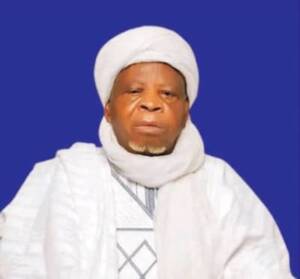
A group, Concerned Indigenous Yoruba Muslims, has dismissed a viral report claiming that the Chief Imam of Ibadanland and the League of Imams in Yorubaland rejected the authority of the Muhammad Sa’ad Abubakar in determining the commencement of Ramadan in the South-West.
The report, which circulated on social media ahead of Ramadan 1447AH, alleged that the Chief Imam of Ibadan declared that Yoruba Muslims were not bound by the authority of the Sultan of Sokoto regarding the announcement of the fasting period.
It further claimed that religious leaders in the region had aligned with indigenous structures, distancing themselves from the traditional role of the Sultan in announcing the sighting of the moon.
However, in a statement issued on Saturday, February 21, 2026 — the fourth day of Ramadan — and signed by public affairs analyst Nasrudeen Abbas on behalf of the group, the Concerned Indigenous Yoruba Muslims described the report as fabricated and misleading.
The group maintained that the statement attributed to the Chief Imam of Ibadan, said to be over 90 years old, could not have emanated from him and was a deliberate attempt to create division within the Muslim community.
They reaffirmed that Islam in Nigeria operates under established structures, particularly the Nigerian Supreme Council for Islamic Affairs (NSCIA), led by Muhammad Sa’ad Abubakar, who serves as President-General.
According to the group, the leadership structure of the NSCIA also includes the President of the Muslim Ummah of South West Nigeria (MUSWEN) as Deputy President-General (South), the Shehu of Borno as Deputy President-General (North), and other national officers.
They argued that any attempt by individuals or groups to distance themselves from this structure threatens the unity of the Muslim Ummah in Nigeria and contradicts Islamic principles that emphasize cohesion.
The statement also faulted the claim that the Sultan’s position is merely a traditional title limited to Sokoto State, stressing that his authority in religious matters is rooted in Islamic scholarship and the historical institution of the caliphate.
To buttress their argument, the group referenced the current Emir of Kano, Muhammadu Sanusi II, noting that emirs in Northern Nigeria often lead prayers and perform other religious duties, unlike most traditional rulers in Yorubaland, whose roles are largely cultural.
They also cited the late President-General of the League of Imams and Alfas in the South West, Sheikh Kazeem Yayi Akorede, recalling that he later accepted the Sultan’s authority in matters concerning moon sighting and Ramadan announcements after gaining clarification about the nature of the office.
The group further described as “unethical” portions of the viral report which allegedly stated that Yoruba Muslims were not religiously bound to submit to the authority of the Sultan and suggested that religious leadership should go beyond ceremonial duties.
According to them, such claims were politically motivated and aimed at promoting division under the guise of religious autonomy.
They urged those behind the publication to desist from actions capable of undermining unity among Muslims across the country and cautioned against politicising religious matters.
The group reiterated that the unity of the Muslim Ummah in Nigeria remains paramount and should not be compromised by what it described as sectarian or politically engineered narratives.
Quoting the established structure, the statement read: “Islam, as a universal religion, is not practiced individually but operates under a constituted authority epitomised by the Nigerian Supreme Council for Islamic Affairs (NSCIA). In Nigeria, the Sultan of Sokoto, currently His Eminence Alhaji Muhammad Sa’ad Abubakar, is the President-General; the President of MUSWEN, currently Alhaji Rasaki Oladejo, FCA, is the Deputy President-General (South); the Shehu of Borno Emirate, currently His Royal Highness Alhaji Dr Abubakar ibn Umar Garba Abba Kiyari el-Kanemi, is the Deputy President-General (North); Professor Is-haq Oloyede is the Secretary-General; and Professor Salisu Shehu is the Deputy Secretary-General.
This is the leadership structure of the Muslim Ummah in Nigeria, and Yorubaland is not exempted.”
The group further stated that for any individual or group to exclude themselves from this establishment in a way that threatens the unity of the Ummah, as enshrined in the Holy Qur’an, has no basis in Islam.
They added that describing the Sultan’s position as merely a traditional title limited to Sokoto State is erroneous. According to them, while Yoruba traditional rulership is often seen as culturally symbolic, the Sultan’s role historically combines both traditional and religious authority within the Sokoto Caliphate structure.
They cited examples to illustrate their position, noting that in some instances, Yoruba traditional rulers have held leadership roles in Islamic councils. For example, the late Awujale of Ijebuland, Oba Dr. Sikiru Kayode Adetona, once served as President-General of the Ogun State Muslim Council (OMC), and following his demise, the Oluwu of Owu Kingdom, Abeokuta, succeeded him.
Referencing a past account, the group recalled that Sheikh Kazeem Yayi Akorede reportedly acknowledged, after clarification, that the Sultan’s authority extends beyond traditional rulership and includes religious leadership, particularly regarding moon sighting and Ramadan announcements.
The statement further described as “unethical” the portion of the viral report that allegedly quoted the Chief Imam of Ibadan as saying, “We, as Yoruba Muslims, are not religiously bound to submit to the authority of the Sultan.”
According to the group, such statements risk fueling unnecessary division within the Muslim community.
They concluded by urging individuals and groups to refrain from politicising religious matters or promoting narratives capable of fragmenting national unity.
The group also referenced a contribution shared on a WhatsApp platform, where an unnamed respondent cautioned against external interference in strictly Islamic matters, emphasizing that the Muslim Ummah remains united and that religious issues should not be politicised.

Tinubu orders five-year National Security Threat Assessment, Strategic Defence Plan
Mercy Iheoma Ihedigbo President Bola Ahmed Tinubu has directed the im…