

Who is really corrupt in our nation?


POINTBLANK
With Smart Emmanuel
09066642354
Corruption is always at the center of our political discussions, sometimes religious sermons, social media discussions, and even everyday conversations at the marketplace or motor parks.
Yet, as much as we cry against corruption, our problem seems unending, perhaps because we have failed to look beyond the surface and confront the truth: corruption is not only a problem of leaders, politicians, or those in power. It is deeply rooted in our society, cutting across people, different communities, professions, and even families.
The hypocrisy in our understanding of corruption is quite alarming. Many times, people are quick to label a particular political group, leader, or government as corrupt simply because they are not part of that circle.
The moment their personal interest is captured, whether through an appointment, contract, or political favor, the same people will automatically change their tune.
Suddenly, the same government or politician they once called corrupt becomes “a good leader” or “a man of the people.” This selective perception of corruption is at the heart of our problem as a nation.
We live in a society where corruption is condemned only when we are not the beneficiaries. When it is our turn to “eat” from the national cake, we find all manner of justifications to excuse the very practices we once criticized.
A contractor who loses a bid to someone else will quickly cry foul and accuse the process of being rigged or corrupt. But let the same contractor be awarded the job, and suddenly the process becomes fair and transparent. A civil servant may lament about bribery in offices, but will not hesitate to demand “something for the boys” when he is in a position of authority.
The truth is that corruption has become a culture, a way of life, and almost a norm in our country. From the police officer who collects bribes at checkpoints, to the teacher who demands money from students for grades, to the religious leader who diverts offerings for personal luxury, down to the ordinary citizen who cheats in small daily transactions, all are guilty.
Let’s tell ourselves the truth. We often forget that the big corruption scandals we hear in government are only magnified reflections of the small, corrupt practices tolerated at the grassroots.
A fundamental issue is the way we personalize corruption. If someone in my tribe, religion, or political party is accused of corruption, I am quick to defend them and dismiss the accusations as lies or propaganda.
But if it is someone from the opposing side, I shout to the heavens that the person must be jailed. This bias makes the fight against corruption selective and hypocritical. Until we can call corruption by its name, irrespective of who is involved or what we stand to gain, we will remain trapped in this endless cycle.
Another dimension of the problem is the “survival justification.” Many people argue that corruption is inevitable because the system has failed to provide basic needs. They believe one must cut corners to survive.
For example, some justify stealing from government coffers by claiming “it is our money anyway.” Others rationalize bribery by saying, “if you don’t pay, nothing will move.” While these realities reflect the hardship people face, normalizing corruption only makes the system worse.
Our leaders are often accused of being corrupt, and rightly so in many cases. But leaders do not emerge from space; they come from among us. The same society that condemns corruption is the one that pressures politicians to share money during campaigns, to sponsor lavish ceremonies, or to give handouts after winning elections.
This culture of entitlement pushes leaders into desperate measures to recover what they spent or to maintain loyalty, thereby fueling more corruption. We cannot demand integrity from leaders while celebrating and rewarding corruption at the grassroots.
The way forward requires a shift in mindset. We must begin to redefine corruption not as an act committed only by politicians but as any dishonest or fraudulent conduct that undermines fairness, justice, and progress. From the smallest lie to the biggest embezzlement, corruption must be seen as evil. Our people must stop excusing corruption simply because they are beneficiaries.
Religious institutions, schools, communities, and families must intentionally teach and model integrity. The media should highlight not just political scandals but also the everyday corrupt practices that sustain the bigger crimes.
Furthermore, accountability must be strengthened. Systems should be designed to reduce opportunities for corruption, while rewards for integrity should be celebrated more than rewards for wealth.
A society that honors people for being honest, rather than for how much money they can throw around, will gradually shift away from corruption; therefore, there’s a need for us to shift from rewarding richness to Rewarding uprightness.
Therefore, in resolution, the real question is not just “who is corrupt?” but “who among us is willing to stand against corruption even when it does not favor us?” Corruption thrives because we personalize it and excuse it when it benefits us.
Until we as a people can rise above selfish interests and call corruption by its true name, irrespective of the person or party involved, our nation will remain trapped in this destructive cycle. Corruption is corruption, whether it is committed by a political giant or an ordinary citizen. The sooner we embrace this truth, the closer we move toward genuine national progress.
Yagazie!
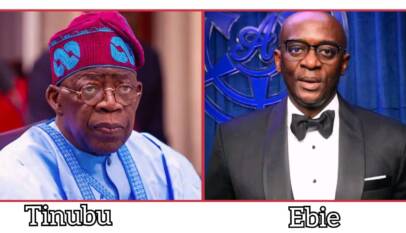


Tinubu’s reforms on course, yielding results — Ebie
Chairman, Governing Board of the Niger Delta Development Commission (NDDC), …
