
‘We feel forgotten’: Agura/Gberigbe residents cry out over bad roads, waste, darkness

Abdulqayyum Bashorun
For residents of Agura/Gberigbe, a grassroots community in Ikorodu Local Government Area of Lagos State, everyday life is a struggle against problems that appear to have become part of their existence.
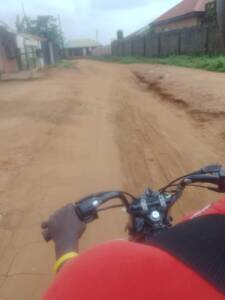
From muddy and neglected internal roads to indiscriminate dumping of refuse, prolonged power outages, insecurity and recurring communal land disputes, residents say they are living with challenges that have continued for years without meaningful intervention from the local government.
Their greatest pain, however, is not only the deplorable condition of their environment, but the feeling that they have been forgotten by the very government expected to be closest to them.
Across the community, residents expressed a common frustration: that while government officials make promises and hold meetings, the reality on the streets remains largely unchanged.
For Mr. Umukoro Obadaya, the condition of the internal roads has become one of the biggest obstacles confronting the community.
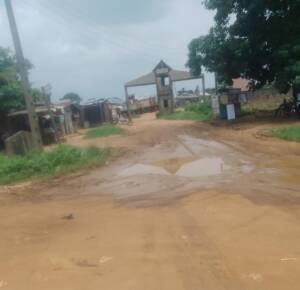
He said many roads connecting different parts of Agura/Gberigbe have not been properly graded or maintained for a long time, making movement increasingly difficult, particularly during the rainy season.
According to him, the poor condition of the roads has affected residents, farmers, traders and business owners, while motorbike riders are frequently exposed to accidents.
“Apart from the major roads that the state government has the responsibility of taking care of, the local government is supposed to make in-roads to different communities,” Obadaya said.
He explained that the absence of good internal roads has made it difficult for people to move freely and conduct their businesses, stressing that local farmers in particular are affected when their produce cannot easily reach markets.
The frustration is shared by Mr. Justice Ogbunna, who said residents are tired of hearing promises without seeing corresponding action.
He pointed to roads that were reportedly graded months ago but have since been abandoned, including the important route linking Igbogbo to the Agric axis.
“We want to see more implementation. Let’s see actions. Not just talking or going to the radio,” Ogbunna said.
For him, the community needs leaders who will go beyond announcements and physically inspect the areas where residents live.
But the challenges facing Agura/Gberigbe go beyond roads.
Miss Stephanie, a resident who has lived in the area for about five years, said the absence of an organised waste management system has contributed to the growing environmental problems in the community.
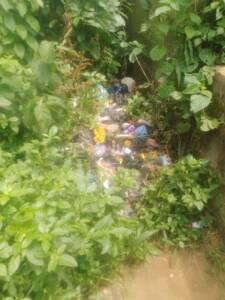
According to her, residents do not have enough designated waste disposal points or a consistent council-led sanitation system.
She said the lack of such facilities has created a situation where people sometimes dump refuse wherever they can.
“Because there are no systems, subconsciously we tend to litter anywhere because there’s nothing that says, ‘this is where you should dispose of waste,'” she said.
Stephanie added that the only noticeable development she could recall during her years in the community was the numbering of streets.
Even that, she said, was poorly implemented, with inconsistencies in the numbering system making it difficult to properly identify some locations.
As residents struggle with poor infrastructure and environmental challenges, the lack of electricity has further compounded their difficulties.
Mrs. Ayansola and other community stakeholders cited prolonged power outages as one of the problems affecting daily life in the area.
For families, the situation means additional expenses as residents are forced to look for alternative sources of electricity to power basic household appliances and run small businesses.
The power crisis, residents said, is also connected to concerns about security.
With inadequate lighting in some areas and rising insecurity, many residents are increasingly worried about moving around after dark.
The community is also reportedly facing recurring communal land disputes, adding another layer of tension to the already difficult living conditions.
For many residents, however, perhaps the most painful aspect of their experience is the perceived distance between them and the local government administration.
When asked about the identity of the current Local Government Chairman, several residents interviewed could not confidently name the council leader. Some could only vaguely remember that his first name was “Prince.”
To residents, this is more than a failure to remember a politician’s name. They see it as evidence of a wider disconnect between the people and the administration responsible for addressing their immediate needs.
They want the chairman and other council officials to leave the comfort of their offices and visit the communities under their jurisdiction.
“They should move around. At least they should know the well-being of the people,” Mrs. Ayansola pleaded.
She said residents are already struggling under the weight of the country’s economic challenges, including rising food and fuel prices, making it even more important for government at the grassroots to provide basic services and infrastructure.
For Obadaya, the recent implementation of local government financial autonomy should provide a new opportunity for councils to demonstrate their relevance.
He argued that with funds now going directly to local governments, residents should begin to see tangible projects and improved services in their communities.
The message from Agura/Gberigbe residents is therefore simple: they do not want more promises.
They want roads they can drive through without fear of accidents.
They want a waste disposal system that protects their environment.
They want electricity and improved security.
They want their leaders to visit them, listen to them and see the conditions under which they live.
Above all, they want to feel that their local government knows they exist.
For a community that has long felt forgotten, the residents’ appeal is a call for government to return to the grassroots, not just in words, but in visible action.