

University crisis: Piwuna blames FG, States over incomplete agreement implementation

Michael Olumide Alabi
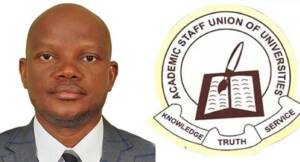
President, Academic Staff Union of Universities (ASUU), Prof. Christopher Piwuna, has called on the Federal and state governments to take responsibility for resolving the lingering crisis in Nigeria’s public university system.
Piwuna made the call while speaking on Frontline, a current affairs programme on Eagle 102.5 FM, Ilese-Ijebu, Ogun State.
His comments came days after ASUU warned that it could reactivate its suspended nationwide strike over the incomplete implementation of the December 2025 agreement, outstanding salary arrears and other welfare issues affecting university lecturers.
Piwuna said the December 2025 agreement was expected to provide a new direction for the university system by moving discussions away from recurring industrial disputes towards stability, improved working conditions and issues affecting the quality of education.
“It’s really painful to have a conversation on issues like this. Our expectation, when we signed an agreement in December 2025, was that we would talk about progress that we have made, the stability in the system and concern ourselves with issues that affect Nigerians,” he said.
According to him, implementation of the agreement has remained inconsistent, with both federal and state authorities yet to fully deliver on some of the commitments contained in the agreement.
He said the agreement covered funding for public universities, improved salaries and research support, among other provisions, but noted that several commitments remained outstanding.
“The agreement, when we signed it, had a provision for funding for public universities. It had provisions for improved salary, and it had provisions for the research council, amongst others,” Piwuna said.
The ASUU president explained that the situation had become more complicated because responsibility for the administration and funding of public universities is shared between the Federal Government and state governments, depending on the ownership of the institutions.
He said while some state governments had implemented parts of the agreement, others had yet to do so, creating disparities in the conditions of service for lecturers across public universities.
Piwuna specifically cited Abia State Governor, Alex Otti, as an example of a governor who, according to him, had embraced implementation of the agreement.
“Only Governor Alex Oti of the South-Eastern part has implemented it,” he said.
The ASUU president, however, stressed that the Federal Government also had outstanding responsibilities under the agreement.
He said the union had engaged the Minister of Education and the committee responsible for monitoring implementation of the federal government’s agreement.
“We have engaged them; the Minister of Education at the federal level, we engaged Senator Larry Tejuosho, the chairman of the implementation committee monitoring of the Federal Government agreement. We have reminded them to do the needful,” he said.
Piwuna also linked the renewed tension in the university system to salary payment challenges affecting lecturers.
He referred to the three-and-a-half months of salaries which ASUU says remain outstanding from the seven-and-a-half months withheld during the previous administration.
ASUU’s September 11 statement had identified the salary arrears, unremitted deductions and incomplete implementation of the agreement among the issues behind its warning of possible industrial action.
Piwuna said the situation was further complicated by the fact that individual universities sometimes had to engage their respective authorities over salary payments and implementation of agreed conditions of service.
“As we stand now, funding is not being done properly according to what was agreed to. Individual universities have to embark on a strike before salaries are paid. Some universities are cut off from the new salary structure,” he said.
He called on both the Federal and state governments to honour their commitments and address the outstanding issues to prevent further deterioration of industrial relations in the university system.
The ASUU president maintained that the union remained willing to engage the government through dialogue, but stressed that agreements reached after negotiations must translate into concrete action across the university system.
Piwuna also called for greater investment in education, describing adequate funding as essential to research, quality teaching and the overall development of Nigerian universities.
He said ASUU had advocated increased government spending on education, noting that higher investment could be achieved incrementally.
“So while negotiating with the government, we told the government to reduce the budget to 15 per cent, and they agreed. Although it may be difficult, it can be done incrementally,” he said.
Piwuna urged governments at both the federal and state levels to treat education as a tool for national development and prioritise the funding of universities under their respective control.
He said fulfilling agreed commitments would not only help reduce recurring industrial disputes but also create a more stable environment for teaching, research and learning in Nigeria’s public universities.


APC Campaign Council denies plot to assassinate Atiku, challenges Timi Frank
Stanley Ihedigbo All Progressives Congress (APC) Presidential Campaign Counc…