

Power under watch: When Presidents speak, prefects must learn
A global lesson from America, Venezuela, a warning to Nigeria


Dr. Egbo Paul
When the President of the United States speaks, the world listens—not merely to the rhetoric, but to the actions, tone, and institutional discipline that follow.
At that level, leadership is never local. Words become signals, policies become precedents, and conduct becomes instruction for leaders far beyond national borders.
There is a simple yet profound lesson embedded even in language: the letter “P” in President is the same “P” in Prefect.
Authority may differ in scope, but responsibility is identical in moral weight. Leadership, whether global or grassroots, is stewardship—not domination.
Recent developments and widely circulated reports surrounding Venezuela’s political leadership and members of the first family (a call for reflection), whatever their final legal outcomes may be, have reignited a timeless truth in global governance: power does not confer permanent immunity.
Offices may delay accountability, but they do not cancel it.
History repeatedly demonstrates that when leaders place themselves above the law, justice has a way of resurfacing—sometimes unexpectedly, and on many occasions, decisively.
This reality carries a sober message for Nigeria and Nigerians, particularly those entrusted with public authority.
Sovereignty is not a license for lawlessness.
Governance is not a tool for persecuting opposition. Power is not the right to intimidate institutions, weaponize security agencies, suppress dissent, or allow citizens to be dehumanized through policies, neglect, or force, while loudly proclaiming national independence.
A nation that invokes sovereignty but abandons justice is only postponing reckoning. When laws are bent for convenience, when courts are pressured, when critics are silenced rather than engaged, and when human life is treated as expendable, leadership loses its moral legitimacy.
Power without restraint becomes oppression; authority without accountability becomes destructive.
The global order is sending a clear signal:
The law exists to protect the people, not the powerful.
Opposition is not treason; it is a democratic necessity.
Human life is sacred; leadership that cheapens life invites judgment—by history, by institutions, and by posterity.
Leaders everywhere must beware. Time is impartial.
History is unsentimental. Power borrowed from the people will always demand an account. The apparent fall or public disgrace of once-untouchable leaders should humble every office holder, from presidents to prefects.
Nigeria stands at a crossroads.
The choice is between fear-driven governance and law-guided leadership; between intimidation and justice; between temporary control and enduring legitimacy. When presidents speak, prefects must be guided—not in how to dominate, but in how to lead with restraint, humility, and respect for the rule of law.
Egbo, egbo4christ@gmail.com
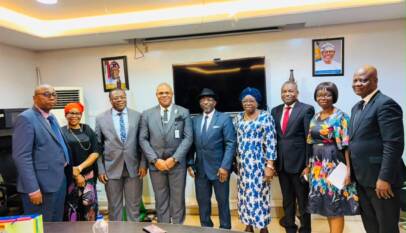



FCID AIG, Lagos Attorney-General seek stronger synergy for effective justice delivery
Michael Olumide Alabi Assistant Inspector-General of Police in charge of the Force …