

Liberian government raises alarm over Ayodele’s prophecies, seeks Nigeria’s help
Says matter is private as Ayodele tells President Boakai: 'You have already lost your second term'

Michael Olumide
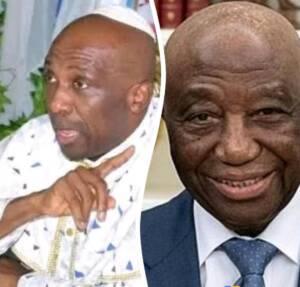
A diplomatic exchange has emerged between the Governments of Liberia and Nigeria following concerns raised by the Liberian authorities over a series of prophecies and public statements made by the Leader of INRI Evangelical Spiritual Church, Lagos, Primate Elijah Ayodele.
In a formal letter addressed to the Nigerian Government, the Republic of Liberia expressed concern over what it described as persistent negative prophecies and comments directed at President Joseph Nyuma Boakai, the Liberian Government, and its citizens by the Nigerian cleric.
According to the communication, the Liberian Government alleged that several prophecies and statements attributed to Primate Ayodele, circulated through publications and online videos, have generated anti-Nigerian sentiments among some Liberians and possess the potential to undermine peace and social harmony in the country.
The letter further accused the renowned prophet of interfering in Liberia’s domestic political affairs, particularly during the country’s 2023 presidential election, where he reportedly endorsed one of the candidates seeking the nation’s highest office.
While acknowledging Nigeria’s commitment to democratic values, freedom of speech, and religious liberty, the Liberian Government stressed that comments relating to a friendly and sovereign nation should be made with caution and responsibility.
It therefore appealed to the relevant Nigerian authorities to take necessary measures regarding the activities and utterances of the cleric.
However, in its response, Nigeria’s Ministry of Foreign Affairs clarified that the issues raised by Liberia do not fall within the constitutional and diplomatic responsibilities of the ministry.
The ministry emphasized that Nigeria remains a democratic society where citizens enjoy constitutionally guaranteed rights to freedom of expression and religious practice, provided such expressions do not violate the law or constitute libel.
According to the ministry, the concerns raised regarding Primate Ayodele’s prophecies are essentially private matters and do not warrant official government intervention.
The Nigerian Government further reaffirmed its commitment to the longstanding bilateral relationship between Nigeria and Liberia, noting that engagements between both countries should continue to focus on matters of mutual national interest and issues properly attributable to their respective governments.
The ministry expressed confidence that the strong diplomatic ties between the two West African nations would remain intact despite the controversy.
Reacting to the development, Primate Ayodele maintained that his prophecies concerning Liberia were divinely inspired and based on revelations he claimed to have received.
The cleric recalled how he predicted the defeat of former Liberian President George Weah during the 2023 presidential election.
“I said it clearly that if the election went into a second round, George Weah would lose. That prophecy came to pass exactly as revealed,” Ayodele stated.
He also responded strongly to the concerns raised by President Boakai’s administration, insisting that his prophetic declarations were not politically motivated.
Addressing President Boakai directly, Ayodele challenged the Liberian leader’s criticism of his prophecies and questioned his administration’s performance in office.
The cleric further claimed that he had previously prayed and made prophetic consultations concerning Liberia’s leadership but that his warnings were ignored by political actors in the country.
In one of his strongest remarks, Ayodele declared that President Boakai’s chances of securing re-election were already in jeopardy.
“Don’t worry yourself about a second term; you have already lost the second term,” the cleric stated.
The exchange has generated widespread discussion across political and religious circles in both countries, with observers viewing the incident as an unusual intersection of prophecy, diplomacy, and politics.
While Liberia seeks caution regarding statements it considers capable of influencing public perception and national stability, Nigeria has maintained that the constitutional rights of its citizens must be protected, provided they operate within the bounds of the law.
The development has once again brought to the fore the growing influence of religious leaders in political discourse across Africa and the delicate balance governments must maintain between freedom of expression and diplomatic sensitivities.


The Mirror Online TV debuts, features Nigerian Tribune Bureau Chief, Netcom Africa President, others
The Mirror Newspaper has expanded its digital media operations with the laun…