

Leadership, not democracy, behind Nigeria’s challenges — Mojeed Alabi

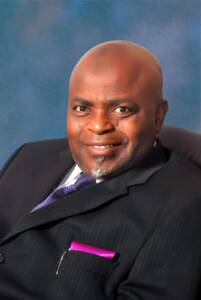
Mercy Iheoma Ihedigbo
Former Speaker of the Osun State House of Assembly and former member of the House of Representatives, Mojeed Alabi, has defended Nigeria’s democratic system, insisting that democracy cannot be held responsible for the country’s developmental challenges.
Speaking during an exclusive interview on Frontline, a current affairs programme on Eagle 102.5 FM, Ilese-Ijebu, Ogun State, Alabi maintained that leadership failures and weak institutions, rather than democracy itself, remain the major obstacles to Nigeria’s growth and development.
Marking 27 years of uninterrupted democratic governance in Nigeria, Alabi argued that democracy is fundamentally designed to promote participation, accountability and good governance, making it impossible for the system itself to be a source of underdevelopment.
“Democracy can never be, has never been, and will never be a factor for underdevelopment,” he stated.
According to him, Nigeria’s democratic journey should be viewed as an evolving process rather than a completed project.
He noted that while the country has successfully transitioned from military rule, the task of building strong democratic institutions and governance structures remains ongoing.
“Democracy is not a one-off thing. It is a process. It is something that has to be nurtured, something that has to be built over years and consolidated upon before we can reach the stage that advanced democracies have attained today. In fact, the new language I prefer is to say that we are in an emerging democracy,” Alabi said.
The former lawmaker, however, acknowledged that many Nigerians have become disillusioned due to persistent economic hardship, insecurity and inadequate public services. He cautioned that regular elections alone should not be mistaken for democratic consolidation if citizens continue to struggle under difficult living conditions.
Referring to President Bola Ahmed Tinubu’s Democracy Day address, Alabi said he was encouraged by the President’s acknowledgement that democracy had not yet delivered the level of benefits expected by many Nigerians.
“Of course, there are challenges. That is why I like that aspect of the President’s speech this morning, where he recognised that democracy has not brought the kind of dividends Nigerians desire. For me, that was an admission that government cannot rest on its oars, an admission that we are not yet at our destination and that we are still on the journey toward the consolidation of our democracy,” he said.
On the worsening security situation across the country, Alabi linked the rise in banditry, kidnapping, armed robbery and insurgency to widespread poverty and economic deprivation.
He argued that when citizens are unable to meet their basic needs through legitimate means, society becomes more vulnerable to criminal activities and social instability.
“In the midst of poverty, people are bound to resort to actions that further compound our problems. Insecurity, banditry, Boko Haram and armed robbery are, to a large extent, a function of the fact that our democracy has not been able to economically empower the average Nigerian to live comfortably without resorting to unorthodox means of survival,” he stated.
According to Alabi, individuals with sustainable sources of livelihood are less likely to engage in criminal activities, stressing that economic empowerment should remain a central objective of governance.
The former Speaker also weighed in on ongoing economic reforms, acknowledging that difficult policy decisions may be necessary to secure long-term stability and national prosperity.
However, he stressed that such reforms must be accompanied by measures that protect vulnerable citizens from excessive hardship. He further called for fairness and shared responsibility in implementing adjustment policies, insisting that public office holders must not be exempt from the sacrifices being demanded of ordinary Nigerians.
“We cannot afford a situation where people in government continue to live large while asking ordinary Nigerians to tighten their belts for a better future. If sacrifices are required for a better tomorrow, then the belt-tightening process must involve everyone, whether in government or outside government, whether in the ruling party or the opposition,” Alabi said.
He concluded by urging political leaders at all levels to strengthen institutions, promote accountability and ensure that democratic governance translates into tangible improvements in the lives of citizens.
Alabi maintained that while Nigeria’s democracy may still be evolving, its success ultimately depends on the quality of leadership and the commitment of public officials to deliver meaningful development and inclusive prosperity for all Nigerians.



Delta has lost a distinguished statesman, compassionate leader — Ebie mourns Uduaghan
Chairman of the Governing Board of the Niger Delta Development Commission (N…
