
Good governance will attract long-term investment to Nigeria, experts say

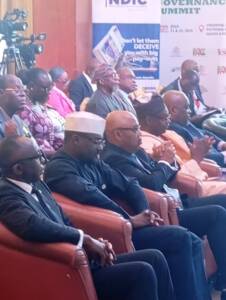
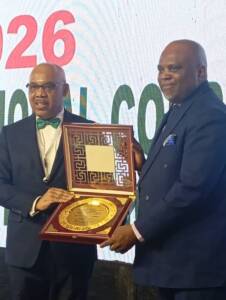
Strong corporate governance has emerged as one of Nigeria’s most critical competitive advantages in attracting sustainable domestic and foreign investment, stakeholders have declared at the Third National Corporate Governance Summit held in Lagos.
The experts said that as the global economy continues to face uncertainty, investors are increasingly looking beyond financial returns when deciding where to commit their capital, placing greater emphasis on transparency, accountability, institutional stability, regulatory certainty, environmental, social and governance (ESG) standards, as well as effective risk management.
They stressed that Nigeria’s ability to attract quality and long-term investment would depend largely on the strength of its institutions, the predictability of its regulatory environment and the commitment of both public and private sector leaders to ethical and accountable governance.
The stakeholders spoke at the Third National Corporate Governance Summit, which brought together policymakers, regulators, investors, corporate executives and other professionals to discuss the role of effective corporate governance in strengthening Nigeria’s economy and improving its investment climate.
Speaking at the event, the Chairman of the Board of Governors of the IoD Centre for Corporate Governance (IoDCCG), Urum Kalu Eke, said good corporate governance was essential to building strong institutions, improving accountability and restoring confidence among investors.
Eke noted that when governance principles were properly entrenched in both public and private institutions, the resulting confidence could contribute significantly to sustainable economic growth and long-term national development.
He said, “When corporate governance is entrenched, institutions become stronger, accountability becomes the norm, investor confidence grows, and the economy is better positioned to achieve sustainable growth and long-term national development.”
Also speaking, the Executive Secretary and Chief Executive Officer of the Financial Reporting Council of Nigeria (FRC), Dr. Rabiu Olowo, said the summit was designed to strengthen collaboration among key stakeholders and build on the progress recorded at previous editions.
Olowo explained that the summit had provided an important national platform for policymakers, regulators, investors and corporate leaders to engage in meaningful discussions on the challenges confronting corporate governance and identify practical solutions that could contribute to economic development.
He said sustained collaboration among stakeholders was necessary to ensure that governance principles moved beyond policy documents and became firmly established in the day-to-day operations of organisations and institutions.
Participants at the summit observed that Nigeria already has several legal and regulatory instruments designed to promote responsible corporate conduct.
They cited the Nigerian Code of Corporate Governance, the Companies and Allied Matters Act, the Financial Reporting Council of Nigeria Act and various sector-specific governance codes as important frameworks for promoting transparency, accountability and responsible leadership.
However, the participants argued that the major challenge facing the country was not necessarily the absence of governance laws and frameworks, but the weak implementation of existing rules and the lack of institutional discipline.
They therefore called for stronger enforcement mechanisms and greater commitment to compliance, stressing that governance frameworks would only deliver meaningful results when institutions and individuals were held accountable for their actions.
The summit also placed emphasis on the growing influence of Environmental, Social and Governance (ESG) principles in global investment decisions.
According to the speakers, companies that demonstrate strong governance structures, responsible business practices and effective risk management are increasingly better positioned to attract international capital and withstand economic shocks.
They noted that global investors are becoming more conscious of how companies are managed, how they treat their stakeholders and communities, and how effectively they manage environmental and social risks.
The experts consequently urged Nigerian businesses to view corporate governance not merely as a regulatory requirement or compliance exercise but as a strategic investment capable of improving their competitiveness and long-term sustainability.
They maintained that organisations with transparent decision-making processes, accountable leadership and effective risk management were more likely to earn the trust of investors and other stakeholders.
The summit further underscored the need for Nigeria to strengthen its institutions and create a business environment where investors can operate with confidence and certainty.
The stakeholders said effective corporate governance could help reduce risks associated with corruption, poor management and regulatory uncertainty while improving the overall credibility of Nigerian businesses and institutions.
They argued that stronger governance standards would not only benefit individual companies but could also contribute to national economic growth by creating an investment climate that encourages long-term capital inflows.
The event was jointly convened by the IoD Centre for Corporate Governance (IoDCCG), Financial Reporting Council of Nigeria (FRC), Institute of Chartered Secretaries and Administrators of Nigeria (ICSAN), and the Ministry of Finance Incorporated (MOFI).
Other prominent figures associated with the summit included Dr. Armstrong Takang, Managing Director/Chief Executive Officer of the Ministry of Finance Incorporated; Kyarri Abba Bukar, Chairman of the event; and Dr. Tope Fasua, among other stakeholders and participants.
The summit ended with renewed calls for greater commitment to ethical leadership, institutional accountability and effective implementation of corporate governance principles.
Participants maintained that if Nigeria could successfully strengthen its governance systems and ensure consistent adherence to established standards, the country would be better positioned to attract quality investment, improve economic resilience and consolidate its position as one of Africa’s leading business destinations.





The Mirror Online TV debuts, features Nigerian Tribune Bureau Chief, Netcom Africa President, others
The Mirror Newspaper has expanded its digital media operations with the laun…