

Future of personal branding: Insight from a top strategist


By Obieze Kelly
Preciousgift Ajudie-Ogunsanya is a Personal Branding Specialist with extensive experience working on the personal brands of C-suite executives across diverse industries, including Agriculture, Waste Management, Real Estate, Security, Confectionery, Education, Coaching, and more.
She helps Visionaries and Intentional Individuals who aim to inspire and lead within their niches transform their expertise, experience, and skills into mentorship platforms, coaching programs, and published works.
With a wealth of experience in guiding individuals, she specializes in helping purpose-driven people achieve their personal branding goals.
She is the Founder of Glass and Craft PR, a Personal Branding and Public Relations Agency. Additionally, she is the founder of GZ AFRICA, a community committed to nurturing the potential of Generation Z. Through this platform, young individuals between the ages of 15 and 25 are mentored and coached at no cost to become leaders, innovators, and change-makers.
In this interview, Preciousgift shares the importance of personal branding in today’s digital world and how it can empower individuals to make a meaningful impact.
How do you define Personal Branding, and why do you think it’s essential in today’s digital age?
For me, personal branding is about intentionally and strategically showcasing your unique strengths and qualities. It’s more than just a concept—it’s a way to distinguish yourself in a world full of people with diverse skills and experiences.
For instance, in Nigeria alone, there were about 218 million people as of 2022. Across Africa, the population reached around 1.3 billion in 2021, and globally, we have over 7 billion people. These numbers represent individuals, not just statistics. Each person has unique skills, gifts, and life experiences.
Personal branding is saying, ‘This is who I am; this is what sets me apart from everyone else.’ It is highlighting what you’re good at and building a brand that reflects your strengths and individuality. In a world full of people, personal branding allows you to define yourself clearly and stand out by showing what makes you unique.”
What initially drew you to the field of personal branding? Can you share your personal branding journey, including how you established yourself as an authority in this field and began your career as a personal brand strategist?
Thank you for asking. I used to work at a design agency with a focus on Integrated Marketing Communication, and there was a time when my boss needed to sell a product- a book, in this case. I was tasked with marketing it, and as I started working on the project, something struck me that I hadn’t considered before. I realized that to effectively sell the book, people needed to know and trust the person behind it.
Up until that point, I didn’t fully understand the concept of personal branding, or even that it was a thing. It became clear to me that this could be a major challenge for many professionals and entrepreneurs. They might offer exceptional services or products, but they struggle with visibility because people are naturally inclined to connect with other people, not just faceless businesses.
This realization was a lightbulb moment for me. I understood that there was a gap that needed to be bridged. People needed to become more intentional about their Personal Brands and not just focus all their energy on their Business Brands. Humans prefer to buy from humans, and they want to feel a connection to the person behind a product or service. That’s when it hit me that personal branding was not just an option; it was essential for anyone looking to build trust and credibility in their field.
I have always had a deep interest in people and their stories. I think one of my greatest strengths is my genuine interest in others, regardless of whether I know them well or not. I see people alongside their potential and I try to protect and support them. This passion for understanding and helping others is what led me to my career in personal branding.
I find immense joy in working with individuals and helping them realize strengths they never knew they had. Building a personal brand is not just about visibility; it’s about self-discovery and empowerment. When people come to me after a session and say, ‘Thank you, I never saw myself that way, it’s incredibly rewarding for me. It’s powerful to see someone start to view themselves differently and recognize their unique strengths.
Personal branding helps you to intentionally shape how you’re perceived by others, but more importantly, it helps you see yourself in a new light. When we are conscious and deliberate about our personal brand, we can truly express who we are and what we stand for.
I’ve had the privilege of seeing people break free from their limitations and embrace their full potential. There’s nothing more fulfilling than watching someone I’ve worked with step into their power and share their talents with the world. That’s why I do what I do. It’s not just about the money, but the joy of helping people discover their purpose and make a meaningful impact.
Aside from personal branding, you are also a Human Resources (HR) Manager. How do these additional responsibilities influence or complement your work as a brand strategist? Are there any transferable skills from HR that enhance your expertise in personal branding?
As a Human Resources (HR) manager, I get to work with people. While some might shy away from the complexities and challenges that come with managing people, I find it fascinating. It’s something I’m genuinely passionate about. My role in HR, which I do from 9 to 5, Monday to Friday, allows me to connect with people and help them thrive in their professional lives. However, the office environment imposes certain limitations and dynamics on how I interact with individuals, given the boundaries of a professional setting.
My HR role allows me to observe people’s strengths and weaknesses during recruitment processes, interviews, and even in their day-to-day job performance. This insight is invaluable when it comes to identifying areas where they could improve or better present themselves, both personally and professionally.
The intersection of HR and personal branding has been very synergistic for me. I use my personal branding skills to help people become better at their jobs while my HR skills allow me to better relate with my clients as a Personal Branding Strategist, understanding their needs and how they can best present themselves. This dual approach has enabled me to support individuals in developing a cohesive personal brand that aligns with their professional goals and personal identity.
What are some common misconceptions people have about Personal Branding?
A lot of people think personal branding is just about ‘packaging’ yourself, putting on a façade, or projecting an image that isn’t genuine. For me, authenticity is at the core of what I do as a personal branding specialist. Personal branding is not about ‘faking it until you make it’ or just curating content for the sake of appearances. It’s a journey of growth, offering value and self-discovery.
Being a personal brand means continually evolving. Who I was three years ago, even as a personal brand strategist, is different from who I am now. As I grow and learn, my approach to branding changes, and those who work closely with me can see that evolution. It’s about bringing your true self to the table and showing up as you are, while also being open to growth and change.
Another common misconception is that you need to have everything figured out or be at the peak of your career to start building a personal brand. That’s simply not true. You can start from where you are, whether you’re at the beginning of your journey or further along. Do you have skills, expertise, or a message you’re passionate about? If the answer is yes, then you have the foundation for a personal brand. It’s about sharing your knowledge and experiences, even if they aren’t perfect or fully developed yet.
You don’t need to wait until you’ve ‘made it’ to begin sharing your story or your expertise. There’s always someone who can benefit from what you have to offer, no matter what stage you’re at. Personal branding isn’t just about what happens online; it’s equally important to build your brand offline, in the real world, through genuine interactions and relationships.
What are the benefits of building a Personal Brand?
Personal branding offers endless opportunities. For me personally, every job I’ve ever gotten has come through referrals because people could vouch for me and my work. This is the power of a strong personal brand that speaks for you, even when you’re not present. Your personal brand is like a footprint, a legacy that you leave behind.
Think of it this way: everyone will eventually pass on, but what will remain of your name? Having a personal brand means you’re intentionally creating a legacy by showcasing your expertise and values. In a sense, your brand is your light. Just like the Bible says, ‘Let your light shine,’ it’s crucial to let your light shine because there are people who will not become until you share you shine your Light. Their Lives depend on your shining. Some people are waiting to benefit from your knowledge, expertise, and message. Don’t leave them Stranded.
Many people mistakenly think personal branding is just about packaging yourself or curating a perfect online persona, but it’s so much more than that.
Then some people think you have to be fully established to start building a personal brand, but that’s not true. You can start from wherever you are right now. Do you have skills, expertise, or a passion for something? If yes, then you can start building your brand around them. Your personal brand is about bringing your strengths and knowledge to the table, even if you’re not an expert yet. There are always people who can benefit from what you have to offer.
In this digital age, having a personal brand also makes you more visible in your industry. It sets you apart from others with similar skills or experiences. As an HR manager, I often look up candidates online to see their digital footprints. A strong personal brand can help you stand out in such searches, making you more attractive to potential employers or clients.
A good example of the power of personal branding is my sister-in-law, Kemi Ogunsanya, an educator in Nigeria who through consistently investing in her personal brand, has received numerous recognitions and awards. It’s not just because she teaches well-there are many good teachers, but because she constantly shares her Knowledge and has intentionally positioned herself as a thought leader in the Education Niche.
The benefits of personal branding are endless. It keeps you constantly updated, aware, and engaged in your field. As a thought leader, people look up to you for quality and insight, and that motivates you to keep delivering your best. Quality never goes unnoticed, you know.
In conclusion, personal branding is about shining your light—whether that light is your knowledge, expertise, or passion. Countless people need what you have to offer, and by building a strong personal brand, you ensure that your light reaches those who need it most. Remember, the world is waiting for your manifestation; don’t hold back your gifts.
Can you share a challenging situation you’ve had with a client and how you navigated the situation to successfully build their brand?
One of the most challenging experiences I’ve had was with a high-profile client in the real estate industry who wanted to build his personal brand. From the beginning, he was enthusiastic about the idea and seemed ready to dive in. However, as we started working together, it became clear that he believed hiring a personal branding manager meant he didn’t have to do any of the work himself.
The mistake many people make is thinking that a personal brand strategist will handle everything, and they can sit back and reap the benefits. But that’s not how it works. Personal branding is a collaborative effort. As a personal brand manager, I can guide you, develop strategies, and help refine your content, but I can’t create your story or make your personal experiences resonate. You have to be involved, authentic, and committed to the process.
With this client, it was a struggle to get him to engage. He wouldn’t show up for planned live sessions, often postponing them, and was reluctant to share his personal stories or insights. He wanted everything done for him, without putting in the effort to authentically represent himself. This was a big challenge because authenticity is crucial in personal branding.
To navigate this situation, I had to explain that without his genuine input and presence, his personal brand would lack the authenticity and credibility needed to connect with his audience. I devised a new plan that required minimal effort on his part initially, to slowly ease him into the process.
This experience taught me that a successful personal branding journey requires a shift in mindset. For personal branding to be effective, the individual must be actively involved and committed to sharing their real stories and values.
For someone just starting to build their Personal Brand, what are the top 3 actions they should focus on?
For someone just starting to build their personal brand, the first thing you need to do is sit down and have a deep, honest conversation with yourself. You need to ask questions like, “Who am I?” “What do I want to be known for?” “What are my strengths?” “What do I want to build my brand around? Are you looking to attract employers, clients, industry peers, or a specific community?
Next, decide which platforms and content types align with your brand message and target audience. Personal branding isn’t limited to online platforms, you can also establish a strong presence offline. If you’re focusing online, choose platforms that best suit your goals. For instance, LinkedIn is great for professional networking, Instagram is ideal for visual content, and TikTok is perfect for creative, short videos. It’s also crucial to determine the types of content you are most comfortable with, whether it’s writing, podcasting, or making videos. Selecting the right platform and content style is key to reaching your audience effectively.
Lastly, be consistent and focus on continuous improvement. Building a personal brand requires persistence. Your initial efforts might not gain much traction, but it’s important to keep going. Consistency helps build credibility and trust over time. Invest in your growth by taking courses, reading, or even signing up with a personal branding agency. The goal is to keep learning, adapting, and refining your brand. Personal branding is an ongoing journey, so staying consistent and continuously improving will help you succeed in the long run.
Looking back at your career, what are you most proud of as a Personal Brand strategist?
I’ve had a lot of proud moments in my career, but one that comes to mind now is when I made a post on LinkedIn about a personal brand case study I did on Obiageli “Oby” Ezekwesili. To my surprise, she engaged my post! I remember feeling so excited. For context, Oby Ezekwesili is a former Minister of Solid Minerals and Minister of Education in Nigeria. She’s the co-founder of the Bring Back Our Girls movement and is currently an economic policy expert and the CEO of FixPolitics Nigeria. At one point, she was even appointed as the Vice President of the World Bank Africa region. She’s a woman I look up to, so getting her attention and having her commend my work was a highlight for me. I even took a screenshot of the comment to keep for future reference!
Another proud moment was helping one of my clients create a mentorship community. It’s so rewarding to see the impact of the work we do together. Also, one of my clients is about to publish a book, and although it’s not out yet. Moments like these remind me why I love what I do and the importance of building a strong personal brand.
What do you think is the future of Personal Branding and how are you preparing yourself for the future?
The future of personal branding is evolving, and I believe a few trends will shape the landscape. First, videos will overtake written content as the primary medium for personal branding. Videos allow for more dynamic and engaging content, providing a more personal touch that audiences connect with. As technology continues to advance, creating high-quality video content will become a non-negotiable.
Second, content AI is becoming increasingly prevalent. This shift means that more people will leverage AI tools to create, curate, and optimize their content. While content has always been king, AI will make content creation more efficient and tailored, flooding the market with personalized, data-driven content.
I predict that in the coming years, personal branding will become universally understood and widely practiced. Everyone will recognize its importance, and people will be more intentional about how they present themselves both online and offline.
My concern, however, is that as people invest more in content creation and visibility, there could be a trend where they prioritize showcasing over substance. The focus might shift towards appearing successful rather than genuinely building a strong, authentic personal brand.
I’m more concerned that in the future, people might become overly focused on getting in front of the camera and the microphone, seeking to be seen and heard, rather than working on themselves. I fear that people will prioritize appearances—looking good over actually being good. This shift could lead to a marketplace crowded with flashy but shallow brands, lacking the depth and authenticity that truly resonate and make a lasting impact.
One piece of advice you wish every person knew about building a Personal Brand?
When you pass on and face God, there will be a reckoning about what you did with the talents given to you- not just your talents, but also your knowledge and experiences. Many of us fall into the trap of thinking everyone knows what we know and that everyone has the same skills and perspectives. But that’s simply not true. Each of us has unique gifts and insights that others might not have.
This reminds me of the parable of the talents. We shouldn’t be like the servant who buried his talent out of fear or complacency. We often come up with excuses like “I don’t have time,” “I don’t have the resources,” “I don’t know what I’m good at,” or “I’m afraid of failing.” These are just excuses.
If we want to make the most of our lives, we must strive to be like the servant with the five talents, who invested what he had and saw it grow. If we invest in ourselves, in our skills and knowledge, we grow our capacity. It’s about starting small, taking what we have, and nurturing it. That’s how you make the most of what you’ve been given.
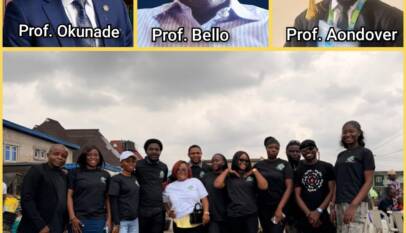


Caleb University Postgraduate Students celebrate Bello, Aondover, Okunade’s academic elevations
Mercy Iheoma Ihedigbo 2025/2026 Set of postgraduate students of Mass Communi…