
Part three: From youth bulge to demographic dividend


A demographic dividend doesn’t happen just because a country has many young people. It happens because a country prepares its young people to become productive adults.
That distinction may be the most important conclusion of this entire conversation. Nigeria’s demographic structure is not a curse. Neither is it a guarantee. It is an opportunity whose outcome depends on choices. Those choices must begin with a radical shift in how Nigeria thinks about its youth.
First: Stop treating young people as a policy category
A 19-year-old university student is not the same as a 19-year-old apprentice. A 23-year-old software developer is not the same as a 23-year-old unemployed graduate. A young farmer in Kaduna has different constraints from a young entrepreneur in Lagos. A young woman in rural Nigeria faces different barriers from a young man in a technology hub.
A school dropout requires a different intervention from a university graduate. This means “youth empowerment” cannot remain a vague slogan attached to occasional government programmes. Nigeria needs a youth productivity architecture. The objective should be simple: Every young Nigerian should have a credible pathway into learning, skill acquisition, productive work, entrepreneurship or further education. Not necessarily a university or even a polytechnic. Not necessarily white-collar employment. But productive capability.
Second: Rebuild the status of technical and vocational education
For too long, Nigeria has treated university education as the only respectable form of education.
That is a mistake. A country cannot function without technicians. Germany did not become an industrial powerhouse by producing only university graduates. Modern economies require electricians, welders, machinists, mechanics, plumbers, refrigeration specialists, construction technicians, laboratory technologists, agricultural technicians, medical technicians, software engineers and thousands of other specialised occupations.
And it’s only in Nigeria that this category of productive workers and essential contributors to the GDP emerges from the concept of society drop-outs or failures! Nigeria should therefore make technical education prestigious, modern and economically rewarding.
A young Nigerian should be able to say: “I am a certified industrial electrician.” And society should hear competence, not failure. A young person should be able to become a master machinist without being regarded as someone who “could not make it to university.” I believe this is the idea behind our polytechnics, and they have failed remarkably. The future demands a hierarchy of competence, not a hierarchy of certificates.
Third: Connect education to the economy
Nigeria cannot continue producing graduates and then asking the economy to figure out what to do with them. Education policy and industrial policy must speak to each other. If Nigeria needs agricultural engineers, train them. If it needs technicians for renewable-energy systems, train them. If it needs healthcare workers, train them. If it needs cybersecurity professionals, train them. If it needs construction specialists, train them. If it needs data scientists, train them.
If it needs food-processing engineers, train them; if it needs teachers who can actually teach mathematics and science, prioritise them. The question should not be: “How many students graduated?” It should increasingly be: “What capabilities did the economy gain?”
Let Nigeria train the experts it needs to the exact specifications it needs, not just produce certificate-carrying graduates with no relevant competence. This is the way to go.
Fourth: Make cyberspace a productive frontier
The digital economy deserves particular attention because the smartphone that can become a tool for fraud can also become a tool for enterprise. The same young person who can manipulate digital platforms for illegal purposes may possess valuable technical instincts. The challenge is to redirect those capabilities. Cybersecurity. Software development. Cloud computing. Artificial intelligence. Digital design. Animation. Gaming. Fintech. E-commerce. Digital marketing. Data analysis. Remote professional services.
These are not imaginary possibilities. Nigeria already possesses significant entrepreneurial and creative energy in these fields. But digital talent requires structure. Young people need training, certification, mentorship, reliable internet, electricity, access to global markets and legitimate pathways to monetise expertise.
The objective should not merely be to tell young people to “avoid Yahoo.” It should create a digital economy where a young Nigerian can say, “I can make more money solving legitimate problems than committing fraud.” That is a far more powerful anti-crime strategy.
Fifth: Make agriculture young again
Nigeria cannot solve its food-security and employment challenges by treating agriculture as a last-resort occupation. Agriculture needs a new identity. Young Nigerians should encounter agriculture not merely as subsistence farming but as an integrated business ecosystem. Government and private investors can support: mechanisation services; irrigation; climate-smart farming; storage; cold-chain infrastructure; agricultural technology; extension services; processing; packaging; logistics; export certification; agricultural finance; insurance; digital marketplaces.
FAO’s assessment of Nigeria’s agricultural sector makes the opportunity and the obstacles clear: agriculture remains central to GDP and employment, but infrastructure, financing, technology, land, climate and market constraints limit productivity.
The solution, therefore, is not simply to “tell youths to farm.” Make farming profitable, technologically sophisticated and investable. Then watch young people come.
Sixth: Create an honest path to capital
Entrepreneurship without capital is often little more than motivational speaking. A young Nigerian may have an excellent business idea but lack the resources to buy equipment, rent a workspace, obtain inventory or survive the first six months.
Access to affordable finance therefore, matters. But financing must be accompanied by financial literacy, business mentoring, market access and accountability. Otherwise, credit becomes debt without development. Government can also improve the environment in which small businesses operate by reducing unnecessary regulatory burdens, improving infrastructure and creating predictable rules. The goal should be an economy in which a competent young person with a good idea can actually build something.
Seventh: Repair the social contract
Economics alone cannot solve this moral dimension. Young Nigerians need to believe integrity isn’t foolishness. They need evidence that honesty can lead somewhere. They need to see public officials held accountable. They need to see contracts awarded transparently.
They need to see merit rewarded. They need to see institutions work. They need to see successful Nigerians who acquired wealth through legitimate enterprise celebrated alongside those whose achievements came through public office or inherited privilege because young people learn from examples.
A society cannot preach integrity while rewarding its opposite. That contradiction is devastating.
Eighth: Families have work to do
The state cannot raise Nigeria’s children alone. Parents matter, schools matter, religious institutions matter, traditional institutions matter, professional associations matter, the media matter, popular culture matters, and perhaps most importantly, peer culture matters. Young people imitate what they admire.
If we want different outcomes, we must make different people admirable. Celebrate the young woman who builds a successful agricultural-processing company. Celebrate the young man who becomes a brilliant engineer.
Celebrate the teacher who transforms a school. Celebrate the mechanic who builds a sophisticated workshop. Celebrate the programmer who creates a Nigerian technology product. Celebrate the doctor serving underserved communities. Celebrate the entrepreneur who employs 50 people.
Celebrate the researcher who solves a Nigerian problem. Celebrate the honest civil servant. Celebrate the craftsman. Celebrate the farmer. Celebrate the innovator. Not because wealth is bad. But because the contribution deserves visibility.
Ninth: Government must think beyond “Empowerment”
A peculiar language has long surrounded Nigerian development. “Empowerment.” A government announces an empowerment programme. Some young people receive small grants. Photographs are taken. Speeches are made. The programme ends. And the underlying structural problem remains. Nigeria needs something more ambitious. We need systems, not spectacles. A serious youth strategy should have measurable outcomes: How many young people gained marketable skills? How many found productive employment? How many businesses survived three years? How many jobs were created? How much agricultural productivity increased?
How many apprentices became certified? How many young people moved from informal survival activities into formal productive enterprises? How many young women entered the productive economy? How many school dropouts returned through second-chance education? How many young Nigerians acquired internationally competitive digital skills? Those are the numbers that matter. Not the number of launch ceremonies.
And what of the ” Japa” Phenomenon?
Nigeria must also confront an uncomfortable reality. When young Nigerians leave for Britain, Canada, America, Australia, Germany and elsewhere, the response should not simply be anger.
People leave for many reasons. Some seek education. Some seek security. Some seek better professional opportunities. Some want higher incomes. Some want a different life. A functioning country should not demand that its citizens remain physically within its borders to prove patriotism. The deeper issue is whether Nigeria can become a country people choose to return to, invest in and build from. That requires making the domestic environment more productive.
And there is an opportunity here. The Nigerian diaspora is not merely a lost workforce. It can become a source of capital, knowledge, technology, networks and investment if Nigeria creates credible channels for engagement. The question should therefore not only be: “How do we stop our young people from leaving?” It should also be: “How do we make Nigeria sufficiently productive that leaving is a choice rather than an escape?”
My final remarks
Ultimately, this is not a story about bad youths. Nor is it a story about bad parents. Nor is it solely a story about bad government. It is a story about a society at a crossroads. Nigeria has inherited an extraordinary demographic opportunity. The World Bank’s description of the country’s persistent youth bulge captures the scale of the challenge: more young people are entering the labour market, and that pressure will continue. The choice is therefore not abstract.
Every year that passes without sufficient investment in education, skills, jobs, infrastructure and institutions produces another cohort. Another generation cannot be “empowered” with slogans.
It must be equipped with capabilities. And yet, amid all the anxiety, there is reason for hope. Nigeria’s young people are already demonstrating extraordinary creativity. They are building businesses, writing software and creating music. Making films. Trading. Farming. Designing. Researching. Teaching. Engineering. Innovating. Solving problems. The raw material is there.
What is missing is a national system that can convert that raw material into sustained productivity at scale. That is the task before Nigeria. Not to suppress youth ambition. Not to romanticise poverty. Not to demonise technology. Not to condemn every young person who wants wealth. It is to prepare our bulging youth population for the vibrant future that lies ahead.
But to construct a society in which the legitimate road to prosperity is sufficiently real, sufficiently rewarding and sufficiently respected that criminal shortcuts lose their attraction. Nigeria’s young population can become one of the country’s greatest strengths.
But demographic dividends are not gifts from heaven. They are built. They are educated into existence. They are trained into existence. They are employed into existence. They are governed into existence. Culture and institutions cultivate them. And the rule of law protects them. So the question with which we should leave ourselves is not: “What is wrong with Nigerian youths?” Perhaps the more consequential question is: “What kind of Nigeria are we building for the young Nigerians who will inherit it?”
Because one day, sooner than we think, they will inherit our institutions. Our hospitals. Our schools. Our farms. Our businesses. Our technologies. Our courts. Our public service. Our politics. Our national debt. Our culture. Our consequences. And when that day comes, Nigeria will discover whether today’s young population was an investment or an opportunity we let slip through our hands. The future of Nigeria is not merely growing up. It is being formed right now.
The Conscience Chronicler.



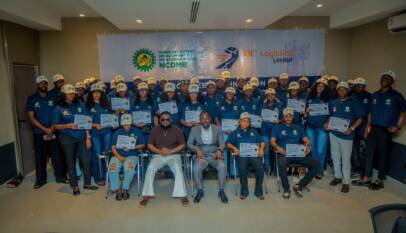

50 Delta youths benefit from NCDMB’s digital oilfield, data analytics training
Stanley Ihedigbo Nigerian Content Development and Monitoring B…