

FG should focus on transparent, effective governance structure, welfare of citizens – Sen. Onwe

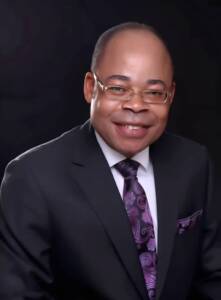
In this insightful interview with Amah-Ugbor Nnachi, a seasoned politician, Sen. Emmanuel Onwe, former Senator of the Federal Republic of Nigeria, and Commissioner for Information and State Orientation under Governor David Umahi, who also has a deep commitment to rural development, shares his thoughts on the state of the nation’s post-2023 elections, the future of agriculture, and the importance of democratic principles.
It’s a pleasure to have you here. Given the recent 2023 elections, what’s your perspective on the political climate in Nigeria?
The 2023 election was quite an event, particularly in Ebonyi Central Senatorial District, where I vied. The results were commendable under the All Progressives Grand Alliance (APGA), showcasing a heroic performance. However, post-election, I chose to retreat into my private life and focus on farming, cultivating about three hectares of cassava.
Farming seems to be a significant part of your life. What has been your experience in agriculture, especially in light of recent challenges?
Yes, indeed. I’ve been farming for the last 11 to 12 years, growing rice and cassava. Unfortunately, the 2022-2023 season was particularly harrowing due to unexpected flooding, which resulted in the loss of over 50 hectares of cassava farm, an enormous financial setback. Despite this, I find joy in farming and believe it’s essential for addressing the future food security of our country.
You mentioned the importance of food security. What are your thoughts on the current agricultural policies and budget allocations?
The national budget for agriculture is troubling. A significant portion of the budget goes to extraneous projects rather than to critical areas like land preparation and food preservation. The Ministry of Agriculture’s budget is filled with provisions for unrelated projects, like building mosques and fencing residences, instead of focusing on the essential needs of farmers. We need a paradigm shift where the budget reflects real agricultural needs, particularly in a country where food security is paramount.
Moving on to governance, how do you assess the current administration’s performance?
It’s important to remember that we’re still in the midst of the current administration’s term. While I think there have been challenges, like the removal of fuel subsidies, it’s too early for a final evaluation. Instead, we should focus on the need for a transparent and effective governance structure that prioritizes the welfare of the citizens. Democracy thrives on opposition and diverse political opinions, and we uphold these principles to move forward.
You’ve been critical of the political landscape. What recommendations do you have for improving the political process in Nigeria?
We need to cultivate a political environment that is free from violence and thuggery. Engaging citizens in civil discourse and allowing for genuine debate is essential. Democracy is about more than just elections; it’s about creating avenues for all voices to be heard. The practices we see in countries like South Korea and Singapore offer valuable lessons on how to adapt democracy to our unique cultural context.
Lastly, what is your outlook for the future of Nigeria, especially in the context of the upcoming 2027 elections?
The future of Nigeria hinges on our collective ability to engage constructively in the political process. We must continue to challenge ourselves to think beyond party lines and focus on the individuals who represent us. Political parties are merely platforms; it is the people within them that matter. As we approach 2027, I urge everyone to evaluate candidates based on their character and past performance rather than their party affiliation. I emphasize the interconnectedness of agriculture, governance, and democracy in Nigeria. I call for thoughtful engagement and a commitment to food security that will illustrate the path forward for a country yearning for progress. This is because a robust political dialogue, underpinned by democratic values, remains vital for the nation’s future.
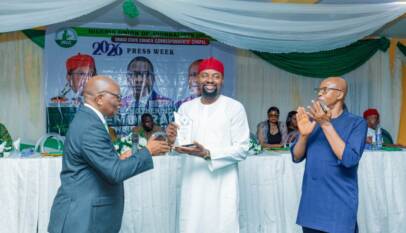



NUJ honours FCC Commissioner Peter Eze for Outstanding Youth leadership in Enugu
Stanley Ihedigbo Nigeria Union of Journalists (NUJ), Enugu State Coun…
