

FG flags off nationwide vocational training, promises starter packs for 18,510 beneficiaries

Mercy Iheoma Ihedigbo
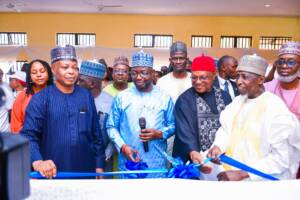
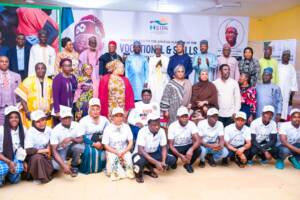
Federal Government has launched the Renewed Hope Vocational and Skills Training Programme (VSTP), an ambitious nationwide initiative aimed at equipping 18,510 Nigerians with practical vocational and entrepreneurial skills to promote self-reliance, job creation and sustainable economic growth.
The programme, unveiled in Abuja by the Honourable Minister of Humanitarian Affairs and Poverty Reduction, Dr. Bernard M. Doro, is part of President Bola Ahmed Tinubu’s Renewed Hope Agenda and is designed to shift poverty reduction efforts from short-term relief interventions to long-term economic empowerment through skills development.
A statement issued by the Minister’s Senior Technical Adviser on Information Systems and Data Analysis, Dr. Abimbola Fasanu, said the programme was officially flagged off at the Government Technical College, Area 3, Garki, Abuja.
Speaking at the launch, Dr. Doro described the initiative as a strategic investment in Nigeria’s human capital, noting that it reflects the Federal Government’s determination to provide citizens with practical skills capable of transforming lives and creating lasting economic opportunities.
According to him, the programme represents a significant departure from traditional poverty alleviation measures by focusing on vocational education, entrepreneurship and economic independence.
He explained that under the Renewed Hope Agenda, the Federal Government is creating sustainable pathways out of poverty by empowering Nigerians with marketable skills rather than relying solely on palliative interventions.
The Minister noted that the Vocational and Skills Training Programme is one of the flagship initiatives of the National Social Investment Programme Agency (NSIPA), which will provide practical training to beneficiaries drawn from all the 36 states of the federation and the Federal Capital Territory.
He disclosed that participants would be trained in 14 high-demand vocational trades carefully selected to meet current labour market demands and encourage entrepreneurship.
The vocational areas include Automobile Technology, Agric-Tech, Baking and Confectionery, Carpentry, Cooks and Catering, Electrical Installation, Housekeeping, Jewellery and Bead Making, Masonry, Plumbing, Welding, Sewing and Fashion Design, Grinding Operations and Vulcanising.
Dr. Doro further explained that the programme forms part of the Ministry’s broader reform agenda under the One Humanitarian–One Poverty Response System (OHOPRS), a coordinated national framework designed to harmonise humanitarian assistance, social protection and poverty reduction programmes across the country.
According to him, integrating the vocational training programme into the National Social Investment architecture will ensure that beneficiaries receive more than technical skills, as they will also be linked to entrepreneurship opportunities, cooperative societies and structured poverty graduation pathways capable of supporting long-term economic independence.
To ensure participants can immediately put their newly acquired knowledge into practice, the Minister announced that every beneficiary would receive a starter pack corresponding to his or her chosen vocational trade upon successful completion of the intensive two-week training programme.
He stressed that the Federal Government would measure the programme’s success not by the number of certificates awarded but by the number of successful entrepreneurs and sustainable businesses created across the country.
Dr. Doro expressed optimism that the initiative would produce thousands of self-employed Nigerians who would eventually become employers of labour and contribute significantly to national economic development.
He commended the National Social Investment Programme Agency, training institutions, development partners and private sector organisations supporting the programme for their commitment to its successful implementation.
The Minister urged all stakeholders to maintain high training standards, ensure effective monitoring and evaluation, and provide sustained post-training support to enable beneficiaries to establish viable businesses.
Reaffirming the commitment of the Ministry of Humanitarian Affairs and Poverty Reduction, Dr. Doro said the Federal Government would continue implementing reforms that promote coordinated interventions, practical skills acquisition and sustainable livelihood opportunities for vulnerable Nigerians.
He maintained that the Renewed Hope Vocational and Skills Training Programme reflects President Tinubu’s vision of building a resilient and economically empowered population through investments in human capital development, entrepreneurship and inclusive economic growth.





Methodist Men’s Fellowship President, Dele Taiwo, congratulates youngest female SAN, Adekunle
Stanley Ihedigbo President of the Methodist Church Nigeria West Zone Men’s F…