

Editorial: Nigeria’s missing rail link to South-East, South-South — A costly neglect

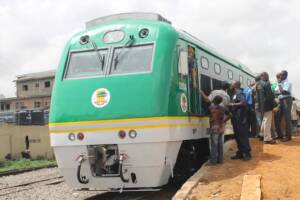
In a country striving for economic growth and national integration, the absence of a functional rail network connecting Lagos to the South-East and South-South regions remains one of Nigeria’s most glaring infrastructure failures.
At a time when transportation costs continue to skyrocket, this gap has worsened the burden on millions of Nigerians who rely heavily on road travel for commerce, family ties, and survival.
The situation is both troubling and perplexing. In 2026, Africa’s most populous nation still lacks an effective and modern rail system linking its major economic and population hubs.
While Lagos stands as the commercial heartbeat of the country, its disconnection from key southern regions such as Anambra, Imo, Abia, Rivers, Bayelsa, Akwa Ibom, Delta, and Cross River represents not just an infrastructural oversight but a profound economic setback.
Today, travelers and traders moving between Lagos and these regions are left at the mercy of road transport operators. The result is a relentless hike in transportation fares, often arbitrary and unregulated. This has created a system where ordinary citizens are subjected to exploitation, with little or no alternative.
For traders, the high cost of moving goods eats deeply into profits, driving up the prices of commodities and further worsening inflationary pressures.
The absence of rail connectivity has also placed immense strain on Nigeria’s already fragile road infrastructure. Highways linking Lagos to the southern regions are overburdened with heavy-duty vehicles, leading to rapid deterioration, frequent accidents, and long travel hours. What should be a seamless journey of a few hours often turns into an exhausting and risky expedition.
It is therefore imperative for the Federal Government to rethink its infrastructure priorities. Rather than channeling scarce resources into so-called “elephant projects” with limited direct impact on the lives of citizens, attention must shift toward practical, people-centered investments such as rail transportation.
Rail systems are not merely a convenience; they are a catalyst for economic transformation, regional integration, and national unity.
A well-planned rail line originating from Lagos and extending through Ogun, Ondo, Edo (Benin City), Delta, and branching into the South-East and South-South states would be a game-changer.
Such a network would significantly reduce travel time, lower transportation costs, and enhance the movement of goods and services. It would also open up rural and semi-urban areas, attracting investment, boosting tourism, and creating employment opportunities.
Beyond economics, rail connectivity fosters social cohesion. It bridges cultural divides, strengthens inter-regional relationships, and reinforces the idea of Nigeria as one united entity. In a time when the nation grapples with divisions and distrust, infrastructure that connects people physically can also help connect them emotionally and economically.
Moreover, the environmental benefits of rail transport cannot be overlooked. Compared to road transport, trains are more energy-efficient and produce fewer emissions. Investing in rail is therefore not only an economic necessity but also an environmentally responsible choice.
The argument is simple: Nigeria cannot achieve meaningful development while leaving critical regions disconnected. The South-East and South-South are rich in human capital, natural resources, and entrepreneurial spirit. Denying these regions efficient access to Lagos—the nation’s primary commercial hub—is akin to stifling their potential and, by extension, the nation’s growth.
The time has come for decisive action. Policymakers must move beyond rhetoric and commit to building a comprehensive rail network that serves all regions equitably. Public-private partnerships, transparent funding mechanisms, and strict project monitoring can ensure that such ambitions are not derailed by corruption or mismanagement.
In conclusion, the lack of rail lines from Lagos to the South-East and South-South is more than a transportation issue—it is a symbol of misplaced priorities. Addressing this challenge will not only ease the suffering of millions but also unlock vast economic opportunities for the nation. Nigeria must choose progress over neglect, connectivity over isolation, and impact over extravagance.
The tracks to the future must be laid now.




D’CEM Awards honours Inojie, Mr Raw, Doc Curry, Tray Chaney with Hall Of Fame
Hollywood and Nollywood stars, award-winning filmmakers, musicians, actors a…