

EDITORIAL: Nigeria needs a Ministry of Railways

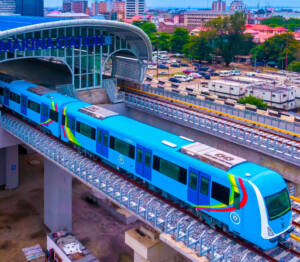
Time to give rail transportation the institutional attention it deserves. Nigeria has made considerable progress in the development of its railway infrastructure in recent years.
New rail lines have been constructed, existing routes have been rehabilitated, modern coaches have been introduced, and ambitious projects have connected important cities and economic centres.
Yet, despite these developments, the railway sector remains without a dedicated ministry solely responsible for driving its development, coordination, regulation and long-term expansion.
This must change.
If Nigeria can maintain a dedicated Ministry of Aviation to give focused attention to air transportation, and a Ministry of Marine and Blue Economy to coordinate and promote the enormous economic potential of the maritime sector, there is a compelling case for the creation of a Ministry of Railway.
The proposal is not about creating another bureaucracy for the sake of creating one. It is about recognising railway transportation as a strategic pillar of Nigeria’s economic development and giving it the institutional structure required to realise its full potential.
Railways cannot remain an afterthought
For decades, railway development in Nigeria has suffered from policy inconsistency, inadequate investment, bureaucratic delays, maintenance challenges and the absence of sustained national attention.
Even when governments embark on ambitious railway projects, continuity, maintenance, expansion and effective utilisation can become difficult when responsibility for the sector is spread across different institutions and competing priorities.
The result is that Nigeria may spend billions of naira developing railway infrastructure without achieving the efficient, integrated and commercially viable railway system the country desperately needs.
A dedicated Ministry of Railway would provide a central institutional home for the sector and ensure that railway development is treated as a continuing national project rather than an administration-specific initiative.
Railway is bigger than transportation
The importance of railway transportation goes beyond moving passengers from one city to another.
An efficient railway system can reduce pressure on Nigeria’s highways, lower transportation costs, improve the movement of agricultural products and industrial goods, stimulate regional commerce, create employment and connect rural communities with major markets.
It can also reduce the enormous economic losses associated with congestion, road deterioration and long-distance haulage.
For a country with a population of more than 200 million people and a rapidly expanding economy, Nigeria cannot afford to depend excessively on road transportation.
The railway must become an integral component of a modern multimodal transportation system involving road, rail, aviation and maritime transportation.
We must consolidate the gains already made
It is important to acknowledge that Nigeria has not been standing still.
Significant investments have already been made in railway infrastructure. The Abuja-Kaduna railway, Lagos-Ibadan railway and other major projects demonstrate that Nigeria possesses the capacity to develop modern rail infrastructure.
The ongoing expansion of rail projects across different parts of the country also provides an important foundation upon which a comprehensive national railway network can be built.
However, infrastructure alone is not enough.
The country must ensure regular maintenance, operational efficiency, safety, security, affordability, reliable scheduling, professional management and sustainable financing.
This is where a dedicated Ministry of Railways can make a major difference.
A national railway master plan is urgently needed
The proposed ministry should be given a clear mandate to develop and implement a long-term National Railway Development Master Plan covering passenger and freight transportation.
Such a plan should establish clear priorities for connecting Nigeria’s geopolitical zones, major commercial cities, seaports, airports, industrial clusters, agricultural belts and border communities.
Nigeria should also develop an integrated rail freight system capable of moving containers and bulk commodities efficiently from ports and production centres to markets across the country.
The Lagos ports, Lekki Deep Sea Port, industrial corridors, agricultural production centres and major inland commercial hubs should all be strategically connected to the national railway network.
The future must be electric, modern and technology-driven
The creation of a Ministry of Railway should not simply reproduce the railway system of the past.
Nigeria must look towards the future.
The country should gradually embrace modern railway technologies, digital ticketing, real-time passenger information, modern signalling systems, improved security surveillance and, where economically viable, electrification of railway routes.
The ministry should also encourage partnerships with the private sector, international investors and development institutions to expand railway infrastructure without placing the entire financial burden on the government.
The railway deserves political continuity
Perhaps the greatest advantage of a dedicated ministry would be continuity.
Railway infrastructure requires long-term planning and enormous capital investment. A railway line cannot be planned, constructed, maintained and expanded within the lifespan of one political administration.
Nigeria, therefore, needs a national railway policy that survives changes in government.
The Ministry of Railway should be staffed by professionals and operate under clear national policies, measurable performance targets and transparent accountability mechanisms.
The Federal Government should act
The creation of a Ministry of Railway should therefore become part of the national conversation.
The Federal Government, National Assembly, state governments, private investors, transportation experts and other stakeholders should begin discussions on the appropriate structure, mandate and responsibilities of such a ministry.
The objective should not merely be the creation of another cabinet position. The objective should be to build a railway system capable of supporting Nigeria’s economic transformation for generations.
Nigeria has already demonstrated that it can build modern railway infrastructure.
What is required now is the institutional commitment to manage, expand, integrate and sustain it.
If aviation deserves dedicated institutional attention, and the maritime sector is important enough to have a ministry under the Blue Economy agenda, then railway transportation—given its enormous economic, social and strategic importance—also deserves focused ministerial attention.
The time has come for Nigeria to create a Ministry of Railways.
Failure to take this step may mean that the country continues to make isolated investments in railway projects without achieving the fully integrated national railway system that Nigerians deserve.
Nigeria does not need another generation to rediscover the importance of the railway.
The time to act is now.




Coffie condoles NAF, families of victims of Ondo plane crash
Tony Okoh, Uyo 2023 Governorship Candidate of the Accord Party in Akwa Ibom …