

Editorial: Fuel price discount, relief for Nigerians or another political promise?

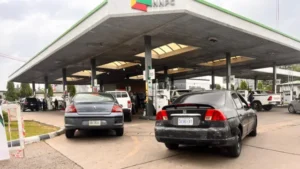
The Federal Government’s proposed fuel price discount has raised an important question among Nigerians: What exactly is the discount, who qualifies for it, how much will consumers save, and when will the relief begin?
For millions of Nigerians struggling with the high cost of transportation, food and other essential commodities, any genuine reduction in the cost of petrol would be welcome.
However, when a government announces a discount without providing clear, practical details that citizens can understand and verify, the announcement risks creating more confusion than relief.
The issue is not whether Nigerians deserve cheaper fuel. They do. The issue is whether the proposed discount represents a clearly defined policy that will reduce the burden on households and businesses, or merely an announcement that raises expectations without providing immediate, measurable benefits.
At a time when many families are forced to make difficult choices between transportation, food, healthcare and other necessities, Nigerians need clarity, not uncertainty.
A fuel price discount should be more than a headline. It should be a policy with clearly stated terms, a credible implementation plan and a measurable impact on the prices consumers pay at filling stations.
The Federal Government announced on October 8, 2026, a 30-day petrol discount arrangement through the Nigerian National Petroleum Company (NNPC) Retail, with priority intended for public transport operators. The Presidency subsequently explained that NNPC Retail would forgo its retail profit margin and sell petrol at cost as a temporary measure to cushion the impact of rising global oil prices.
Yet, rather than ending the confusion, the announcement has raised further questions about the scope, implementation and practical benefits of the intervention.
Reports published on October 10 indicated that motorists visiting some NNPC filling stations in Abuja had to use the company’s mobile application and pay digitally to obtain the advertised ₦66-per-litre discount. Customers paying directly at the pump were reportedly charged ₦1,405 per litre, while app users paid ₦1,339.
The government must clarify whether the ₦66 reduction is the full extent of the current offer or whether the subsequent announcement of NNPC Retail’s willingness to forgo its profit margin represents an additional concession.
The distinction matters because Nigerians deserve to know precisely what has changed and what they can expect at the pump.
NNPC has confirmed that its discount initiative is scheduled to continue until October 31, 2026, across its retail stations nationwide. It has also stated that the initiative does not establish a uniform national petrol price or restore the former subsidy regime.
That explanation is important, but it does not remove the need for more effective public communication.
That distinction should be understood. However, the debate cannot end with a technical explanation of how the discount is financed. What matters to ordinary Nigerians is whether the arrangement makes petrol more affordable and reduces the cost of daily living.
When citizens hear announcements of relief but struggle to understand how to access it, or cannot identify the savings available to them, the government creates a communication gap that can undermine public confidence.
It would be premature to conclude, without evidence, that the initiative is deliberately misleading or solely politically motivated. Nevertheless, any public policy announced with considerable publicity but implemented without sufficient clarity risks being perceived as political messaging rather than meaningful economic relief.
The government should not expect Nigerians to judge an intervention by the announcement alone. The people must be able to see, access and measure its benefits.
Petrol prices influence transportation, food distribution, manufacturing, small businesses and the general cost of living. Even where a motorist saves money on fuel, the benefit to the wider public may remain limited if transport fares, market prices and delivery charges do not respond.
The Federal Government should therefore explain how it intends to ensure that commercial transport operators who benefit from the discount pass on reasonable savings to passengers. It should also publish clear information on participating outlets, eligibility requirements, payment procedures, the amount of the discount and the duration of the scheme.
A transparent monitoring mechanism would help Nigerians determine whether the intervention is reaching its intended beneficiaries or merely benefiting a limited number of customers.
The government should equally provide regular updates on the number of beneficiaries, the volume of petrol sold under the arrangement and the total value of the savings delivered. Such information would enable the public to assess the programme based on evidence rather than political claims.
The administration has also announced proposals to negotiate a ceiling on petrol supply costs and expand forward sales of crude oil to domestic refineries. These are distinct measures whose practical effects will depend on their final terms, implementation and transparency.
Such initiatives deserve careful assessment, but the public should not be asked to celebrate projected benefits before the arrangements are fully explained and their results become evident.
Nigeria needs an energy pricing framework that is transparent, predictable and responsive to the needs of consumers and businesses. It also needs targeted support for vulnerable households, effective competition in the petroleum market and policies that improve the efficiency of transportation and domestic production.
The government must recognise that economic reforms are ultimately judged by their effects on people’s lives. The language of market margins, price ceilings and fiscal sustainability may be necessary, but it must be accompanied by clear explanations that ordinary citizens can understand.
We believes that every genuine effort to reduce the burden of high fuel prices deserves serious consideration. However, the Federal Government must do more to eliminate the confusion surrounding its proposed discount.
It should clearly distinguish between the ₦66-per-litre promotional reduction, the announced plan for NNPC Retail to forgo its profit margin, and the separate proposals intended to moderate future price volatility. It should explain whether these measures overlap, how each will operate and what consumers can realistically expect.
Above all, the administration must demonstrate that the initiative is delivering tangible benefits rather than relying on announcements to create an impression of relief.
The question is not simply whether the Federal Government has announced a fuel discount. The question is whether Nigerians can access it, understand it and feel its impact.
Until the government provides clear answers and verifiable evidence of the savings delivered, uncertainty will continue to overshadow the initiative.
A government committed to public welfare must communicate clearly, implement transparently and measure success by the relief citizens actually receive. Nigerians need affordable transportation and reduced living costs, not another policy whose benefits they struggle to understand.
Fuel price relief must be visible at the pump, felt in transport fares and reflected in the daily lives of Nigerians. Anything less will leave legitimate questions about the purpose, reach and effectiveness of the initiative.



Indonesia offers training opportunities to African maritime instructors through MOWCA
Secretary General, Maritime Organisation of West and Central Africa (MOWCA), Dr. Paul Adal…