

Could religion save Nigeria?

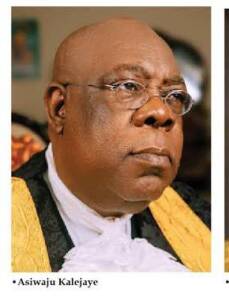
By Asiwaju Kunle Kalejaye SAN
I am an Ijebu Christian. I state this not as a division, but as a perspective shaped by experience in a deeply plural society where Christians, Muslims, and traditionalists have long shared the same streets, families, and festivals.
Growing up in Ijebuland, religion did not feel like a wall—it felt like a bridge.
The much-celebrated Ojude Oba festival, though culturally rooted in Islamic traditions and closely linked with Eid al-Adha (Ileya), has grown into a communal celebration that belongs to everyone. In Ilese-Ijebu, Ileya was never “their” festival. It was our festival.
In my extended family, the Lajogan lineage reflects this blending clearly. One branch is Christian, the others Muslim, yet we live not as rivals but as relatives bound by blood and tradition, not separated by doctrine.
On Ileya mornings, Christian Boys Brigade groups would move with drums to accompany Muslim leaders and Imams to the Eid praying grounds. Christian leaders, sometimes even priests in cassocks, would stand respectfully at the edges of the prayer field. No tension. No fear. Only shared understanding.
After prayers, we moved together into the next ritual of community life—helping to skin sacrificed rams. What we called “eeja” became both reward and sustenance. For a young boy, enough visits could mean protein for weeks.
Then came another cycle of exchange: notes were kept of families who shared meat, cooked rice, or gifts. These gestures were not just social—they were moral accounting, a form of communal reciprocity that crossed religious lines. At the next Christian celebrations, the giving was returned. Life was balanced, predictable, and human.
Even cultural excesses were checked. The fearsome Egungun masquerades, who once disrupted Ramadan prayers, were eventually restricted from public interference. Order was maintained not by violence, but by community consensus.
That was the society I grew up in—religiously diverse, but socially integrated.
So when my grandson—a sharp, highly observant child—began asking questions, I was not surprised. He listened to my stories of good Christians and bad Christians, good Muslims and bad Muslims, and asked the question adults often avoid:
If religion produces both good and bad people, why do bad people still act in the name of religion?
Then he offered a shocking suggestion with childlike simplicity: “Why not outlaw all religions, so evil has nothing to hide behind?
It was not a joke. It was logic from a child trying to solve a complex moral crisis.
But I could not agree with him.
Religion is not the root of evil. It is a vehicle—one that can carry both compassion and cruelty, depending on who is steering it. The problem is not belief itself, but the way belief is used, manipulated, and politicized.
Yet his final question lingered longer than I expected: “If religion is not the problem, what is?”
That question is where Nigeria must begin its real search for answers.
Because the issue is not that Nigerians are religious. It is that many have separated religion from morality, and faith from responsibility. Religion has become identity, not integrity. In some cases, it has become a shield for injustice rather than a call to conscience.
So, could religion save Nigeria?
Yes—but not in its current form of competition, hypocrisy, and division.
Religion can only help save Nigeria if it returns to what it once helped build in places like Ijebu land: shared humanity, mutual respect, and moral accountability that goes beyond labels.
Without that, religion will remain what it too often is today—not a solution, but a language that both saints and sinners speak fluently.
And Nigeria will still be searching for answers that were once quietly lived, not loudly preached.
Kalejaye SAN,
Chairman, Eagle102.5 FM Ilese-Ijebu


NCC moves to strengthen Broadband infrastructure for $1trn economy
Stanley Ihedigbo Nigerian Communications Commission (NCC) has stepped up eff…