

NDDC’s 12th Board Meeting: Unity, continuity, collective action at heart of regional development

By Jerome-Mario Utomi
There is a profound difference between an institution that merely exists and one that is deliberately working to fulfil the purpose for which it was created. In the Niger Delta, where the expectations of millions of citizens have for decades been shaped by questions of infrastructure, environmental sustainability, employment, security and inclusive development, the effectiveness of the Niger Delta Development Commission (NDDC), matters enormously.
It is against this background that the growing unity and synergy between the NDDC Governing Board and Management deserve commendation.
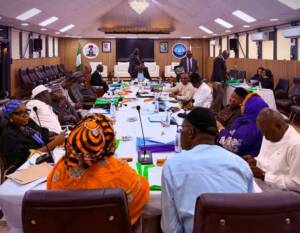
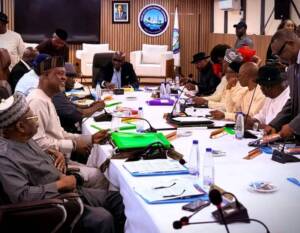
The recent 12th Meeting of the 7th Governing Board of the Commission in Port Harcourt, Rivers State, provides another opportunity to reflect on an increasingly important feature of the Commission’s administration: the apparent effort to ensure that strategic oversight and executive implementation work in harmony rather than at cross-purposes.
The significance of this cannot be overstated.
The NDDC Governing Board, under its Chairman, Mr Chiedu Ebie, and the Management team led by Managing Director, Dr Samuel Ogbuku, operate at different levels of responsibility.
Yet, the success of the Commission depends on how effectively those responsibilities complement one another. The Board provides oversight and strategic direction, while Management translates approved policies and priorities into programmes, projects and administrative action.
That distinction has been explicitly recognised by the Commission. At its 2025 Board and Management Strategic Retreat, the NDDC called for a “strong synergy and shared vision” between the Board and Management, while emphasising respect for their respective roles and boundaries.
This is not merely an administrative principle. It is a development principle.
Where a governing board and management team understand their respective responsibilities, communicate effectively and pursue a common institutional objective, an organisation is better positioned to maintain continuity, make decisions efficiently and deliver measurable results.
For the Niger Delta, such institutional stability is particularly important.
The region does not need another cycle of abandoned projects, interrupted programmes and constantly changing priorities. It needs continuity of vision and consistency of execution.
Indeed, NDDC management has publicly linked previous leadership instability to interruptions in the Commission’s development efforts. The Commission reported that between 2015 and 2023, it had nine Managing Directors, while its present leadership has stressed the importance of continuity so that projects can be completed rather than abandoned.
The current approach represents a different philosophy: establish direction, maintain institutional cooperation, execute projects, monitor outcomes and build on what has already been achieved.
That philosophy is visible in the Commission’s approach to regional planning.
In 2025, the NDDC Board and Management adopted a new stakeholder-generated Regional Development Master Plan to replace the previous 15-year plan, which had expired in 2020. The retreat that produced the resolution also emphasised integrating the needs of the nine member states into project conception and involving beneficiary communities throughout project implementation.
This is important because sustainable development cannot be achieved through isolated projects conceived without reference to a wider regional strategy.
A road should connect economic communities. Electricity should support businesses and social services. Educational investments should develop human capital. Health interventions should improve productivity and quality of life. Environmental programmes should protect the ecological foundations upon which communities depend.
Development becomes sustainable when these interventions are connected by a coherent vision.
The NDDC’s governance reforms reinforce this direction. In February 2026, the Commission announced the adoption of new Standard Operating Procedures and Governance Advisory Policies approved by the Governing Board.
The Commission said these would guide its processes and operations while strengthening accountability, communication and institutional performance.
The same management retreat called for stronger project sustainability plans, clearer job descriptions, continuous stakeholder engagement and implementation of the revised Niger Delta Regional Master Plan.
These measures may sound administrative, but they have direct consequences for ordinary people.
A stronger procurement process can affect whether a project is delivered efficiently. Better monitoring can determine whether the infrastructure remains functional after commissioning.
Clear responsibilities can reduce bureaucratic delays. Proper planning can help ensure that scarce public resources are directed towards genuine development needs.
In other words, good governance eventually becomes visible on the streets and in the communities.
There are already examples of the Commission’s infrastructure interventions demonstrating this connection.
In 2024, the NDDC reported the commissioning of several major projects, including the 27.5-kilometre Ogbia-Nembe Road in Bayelsa State, constructed in partnership with Shell Petroleum Development Company; the 6-kilometre Iko-Atabrikang-Akata-Opulom-Ikot Inwang-Okoroutip-Iwochang Road and 600-metre Ibeno Bridge in Akwa Ibom; the 9-kilometre Obehie-Oke-Ikpe Road in Abia; and a 45-kilometre double-circuit 33KV feeder line from Omotosho Power Station to Okitipupa in Ondo State.
These are not simply statistics. Roads reduce isolation, bridges improve connectivity, electricity expands economic possibilities, and infrastructure can strengthen the ability of communities to participate in the wider economy.
The Commission has also continued to support security-related infrastructure.
In March 2026, the Chief of Air Staff, Air Marshal Sunday Kelvin Aneke, commended NDDC for interventions supporting security agencies, including solar lighting, 713 solar inverters and a multipurpose facility for the Nigerian Air Force at Kolo-Otuoke in Bayelsa State.
This illustrates another important dimension of the Board-Management relationship: development must include the conditions that allow communities and businesses to function safely.
Peace and development reinforce each other.
Where infrastructure improves mobility, economic activity can expand. Where young people gain access to education and opportunity, social inclusion can deepen.
Where communities see projects that respond to genuine needs, confidence in public institutions can increase.
The NDDC’s human-capital interventions equally demonstrate that its development agenda is broader than physical infrastructure.
In September 2026, for example, the Commission organised its annual Moot and Mock Trial Competition for law faculties across the Niger Delta, with its Governing Board Chairman, Chiedu Ebie, highlighting the importance of practical advocacy skills and capacity development for young people.
This matters because a region cannot build sustainable prosperity with roads and bridges alone. It must also invest in the people who will operate its institutions, run its businesses, develop its industries and shape its future.
The same principle applies to the emerging economic agenda of the region.
In March 2026, NDDC leadership called for greater private-sector investment in the Niger Delta and emphasised the need to move from transactional engagements towards transformational development. The discussion also highlighted opportunities in agriculture and the blue economy, and the importance of regional collaboration.
The message is clear: the ultimate objective is not simply to spend development funds. It is to create an environment in which infrastructure, human capital, investment and institutional capacity reinforce one another.
This is why the unity between the Board and Management is so important.
When strategic oversight and executive implementation are aligned, the Commission has a better opportunity to maintain a consistent development trajectory. The Board can exercise its statutory oversight while Management concentrates on implementation.
Both can hold one another accountable without allowing institutional differences to become obstacles to service delivery.
That is the essence of synergy.
Synergy does not mean the absence of disagreement.
A healthy institution should permit rigorous debate, scrutiny and questioning. What matters is that disagreement ultimately strengthens decisions rather than paralysing the institution.
The NDDC’s own governance reforms point in this direction. Its 2026 management retreat emphasised internal cohesion, mutual accountability, improved communication and teamwork as foundations for better service delivery.
There is therefore reason to view the recent 12th meeting of the 7th Governing Board not simply as another statutory gathering, but as part of a broader pattern of institutional engagement.
The real value of such meetings lies in what happens after the meeting: whether decisions translate into action, whether projects move from approval to completion, whether communities feel the impact and whether the Commission learns from previous interventions.
That is ultimately how institutional credibility is built.
The Niger Delta has vast human, economic and ecological potential. But potential alone does not produce prosperity. It requires planning, continuity, accountability, investment, peace and disciplined implementation.
The present Board-Management relationship at NDDC, therefore, carries significance beyond the personalities occupying leadership positions. If the culture of collaboration continues, it can help entrench systems that survive individual tenures and political transitions.
That is the real test of sustainable development.
Institutions should not be judged only by the number of projects they commission, but by whether those projects remain useful, whether they stimulate further economic activity, whether communities participate in protecting them and whether subsequent administrations can build upon them.
The Niger Delta deserves such continuity.
The region has waited for development that can be seen, touched and sustained. It deserves roads that remain useful, electricity that supports enterprise, schools that expand opportunity, health facilities that serve communities, environmental programmes that protect livelihoods and economic policies that create opportunities for young people.
The emerging cooperation between the NDDC Governing Board and Management provides an institutional platform for pursuing these objectives.
The lesson is straightforward: when oversight and management are complementary, when planning replaces improvisation, when continuity replaces disruption and when projects are connected to a broader development vision, an institution becomes capable of delivering more than individual interventions.
It becomes an instrument of transformation.
The Niger Delta’s development journey is far from complete. Significant challenges remain, particularly in infrastructure, environmental protection, employment, investment, security and human-capital development.
But sustainable transformation is never achieved in a single stroke.
It is built through consistent decisions, completed projects, accountable leadership, community participation and institutional continuity.
The 12th meeting of the 7th Governing Board in Port Harcourt is therefore another reminder of the importance of keeping the two sides of the Commission’s leadership united around one central purpose: delivering measurable and sustainable development to the people of the Niger Delta.
If that unity continues to translate into disciplined execution, stronger governance and projects that respond to genuine regional needs, the NDDC can strengthen its role as an institution capable of helping the Niger Delta move from dependence on its enormous potential to the practical realisation of that potential.
For the people of the region, that is ultimately what matters most: not simply that leaders meet, but that their collective decisions produce roads, opportunities, stronger communities, safer environments and a more sustainable future.



Paradigm Initiative sets April 2027 for Digital Rights Forum in Lagos
Stanley Ihedigbo Pan-African organisation, Paradigm Initiative…