

Boko Haram is insurgency, not terrorism — Williams warns against mislabeling security threats

Michael Olumide
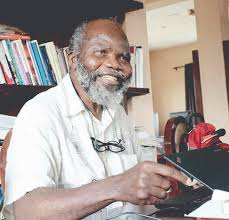
A retired Nigerian Army Major General, Ishola Williams, has raised concerns over what he described as a dangerous confusion in Nigeria’s approach to security challenges, insisting that the failure to properly distinguish between insurgency, terrorism, kidnapping, and separatist agitation has weakened national response strategies.
Speaking during a current affairs programme on Eagle 102.5 FM, Ilese Ijebu, Ogun State, Williams said Nigeria’s security crisis has been aggravated by inconsistent definitions of threats at the policy level, leading to misdirected military and policing responses.
He drew a clear distinction between terrorism and insurgency, explaining that terrorism is typically sporadic, fear-driven violence targeted at civilians, while insurgency is a prolonged, structured ideological struggle against the state aimed at establishing an alternative system of governance.
According to him, the activities of Boko Haram in the North-East should be understood primarily as an insurgency rather than isolated acts of terrorism.
Williams argued that the group operates with an ideological framework and long-term ambition, including attempts to establish a caliphate in parts of Borno State. He maintained that their activities are largely concentrated within a defined operational space rather than a nationwide expansion agenda.
He also made remarks linking some conflict dynamics in the region to overlapping networks of criminality and identity-based influences, while cautioning strongly against ethnic generalisations, stressing that such patterns should not be interpreted as collective indictments of any group.
On kidnapping, Williams rejected its classification as terrorism, describing it instead as organised criminal activity motivated by financial gain, even when it operates within broader conflict environments. He warned that misclassification of such crimes has contributed to strategic confusion in Nigeria’s security response.
Turning to separatist movements, Williams differentiated between armed ideological insurgencies and political agitations. He described Indigenous People of Biafra as a separatist group driven by perceived marginalisation rather than an ideological war aimed at overthrowing the Nigerian state.
He argued that such movements require political engagement, dialogue, and constitutional solutions rather than prolonged military operations. According to him, treating political grievances as military threats has only deepened tensions and prolonged instability.
In contrast, he said Boko Haram represents a fundamentally different category of threat because it seeks to impose an alternative governance system through force, making it an insurgency rather than a political protest movement.
Williams further urged Nigerian authorities to adopt more precise security classifications to ensure appropriate responses, insisting that misdiagnosis of threats has led to ineffective deployment of security resources.
He also criticised Nigeria’s long-standing reluctance to implement structural reforms in the security sector, arguing that the crisis has evolved over many years without sufficient institutional restructuring.
According to him, earlier warnings about the need to reorganise the armed forces were not adequately addressed by successive administrations, contributing to the present complexity of Nigeria’s security challenges.
Williams concluded that Nigeria must urgently rethink its security doctrine, stressing that accurate threat identification is essential for designing effective and lasting solutions to insurgency, criminality, and separatist agitation.



Ogun moves to geological explanation as experts investigate earth crust gas release in schools crisis
Chinedum Ukaegbu Ogun State Government has confirmed that ongoing investigations into the …