

Nigeria operating “State Police without law” — Williams demands legal backing for Amotekun, others

Chinedum Ukaegbu
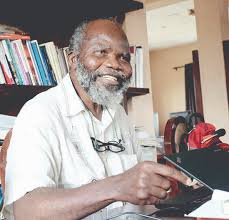
A retired Nigerian Army Major General, Ishola Williams, has argued that the ongoing debate over the creation of state police in Nigeria is largely unnecessary, insisting that the country already operates a form of state policing in practice and only requires a constitutional amendment to properly legalise and structure it.
Speaking during an interview on Frontline, a current affairs programme on Eagle 102.5 FM, Ilese Ijebu, Ogun State, Williams said security arrangements across several states already reflect decentralised policing, particularly through regional security outfits such as the Southwest security network, Amotekun.
According to him, these structures are already functioning on the ground but lack constitutional recognition, coordination, and clear operational authority.
“We’ve already got a state police in practice, what we actually need now is a constitutional amendment to recognise and properly structure what already exists on the ground,” he said, adding that prolonged national debate has only delayed meaningful reform.
Williams argued that Nigeria’s worsening insecurity is not only a result of operational weakness but also of policy inconsistency and overlapping institutional responsibilities that have left security agencies working at cross purposes.
He warned that the country is facing what he described as a “dual national emergency,” where citizens are simultaneously battling insecurity and economic hardship.
“The reality is that Nigerians are now living in fear and deprivation at the same time,” he said. “When both fear of hunger and fear of violence exist together, then the nation is in danger.”
The retired general criticised what he described as weak coordination within the national security architecture, questioning the visibility and effectiveness of key government offices responsible for homeland security.
He expressed concern that the Office of the Special Adviser to the President on Homeland Security appears inactive despite rising insecurity across the country, noting the absence of public engagement and clear strategic communication.
“We have an office that was created for homeland security, but there is no public engagement, no briefing, no visible strategy,” he said.
Williams also dismissed proposals suggesting mass recruitment of untrained operatives as a solution to kidnapping and banditry, arguing that such measures lack operational value against organised criminal networks.
He further questioned Nigeria’s intelligence capacity and decision-making processes, claiming that external observers often express disbelief at the country’s security coordination structure.
“My colleagues outside the country ask me whether we have people who are thinking at all in our homeland security system,” he said.
The retired officer also lamented that several policy recommendations he had previously submitted—particularly on school protection—were ignored by authorities.
On operational response to insecurity, Williams stressed the importance of swift action within critical hours of an incident, arguing that delays often embolden criminals.
He referenced recent kidnapping incidents in parts of Oyo State, including the Oriire Local Government area, saying a more decisive deployment of special forces, drones, and helicopters could have changed outcomes.
“As soon as they announced that they had been kidnapped, special forces with drones and helicopters should have gone after these people,” he said.
Williams also criticised the lack of a clear distinction between public safety and national security, warning that the confusion weakens operational effectiveness.
“Stop confusing public safety with security. That is a confusion, and the government is confused,” he said emphatically.
He further argued that overlapping responsibilities among security institutions have created inefficiencies, while institutional self-interest has slowed reform efforts, including proposals for state police restructuring.
The retired general also questioned the sincerity of ongoing political discussions around security reform, alleging delays in decision-making and a lack of urgency from key actors.
He insisted that Nigeria already has multiple security structures operating at different levels, but without proper coordination or constitutional backing.
“We’ve already got a state police, what is Amotekun? Tell me. What is Amotekun?” he asked, reinforcing his position that existing frameworks only require legal empowerment rather than duplication.
Williams concluded that Nigeria’s security crisis is rooted in structural confusion, weak accountability systems, and the absence of constitutional clarity, warning that without urgent reform, insecurity and institutional breakdown may continue to worsen across the country.





The Mirror Online TV debuts, features Nigerian Tribune Bureau Chief, Netcom Africa President, others
The Mirror Newspaper has expanded its digital media operations with the laun…