

Traders under threat: RULAAC decries punitive measures amid sit-at-home crisis in Southeast

Stanley Ihedigbo
Traders at Onitsha Main Market are facing severe threats not just from ongoing sit-at-home orders but also from the government’s punitive response, as the Rights, Law and Accountability Advocacy Centre (RULAAC) warned that sealing markets and threatening penalties criminalize victims of insecurity rather than addressing the root causes of the crisis.
According to the Executive Director of the group, Com. Okechukwu Nwanguma, the ongoing standoff between the Anambra State Government and traders at the Onitsha Main Market, describes the government’s approach as punitive, disproportionate, and a violation of human rights.
He noted that the weekly sit-at-home order imposed by separatist agitators in the Southeast has long disrupted economic activity, hitting traders, artisans, transporters, and workers particularly hard.
He emphasized that compliance with such orders is driven largely by fear, not free choice.
“Traders who defy these directives risk harassment, physical attacks, and even death, often with little or no protection from security agencies.
“Often, compliance is not voluntary; it is a survival strategy,” said
Nwanguma.
“Punishing traders for staying away from their shops is a form of double jeopardy: they suffer economic loss due to insecurity, then face punitive measures from the state for their attempts to protect their lives.”
The Anambra State Government recently sealed the Onitsha Main Market and has threatened prolonged closure or demolition, a move RULAAC describes as “grossly disproportionate and punitive.”
The human rights body asserted that the government’s strategy criminalises vulnerability rather than addressing the root causes of the problem, which include persistent insecurity, weak intelligence-led policing, and a lack of public confidence in law enforcement.
RULAAC also expressed concern over police warnings against peaceful protests, stressing that lawful demonstrations are constitutionally protected as part of citizens’ rights to freedom of expression, assembly, and association.
The group argued that law enforcement should facilitate security for peaceful assemblies, rather than suppress civic participation.
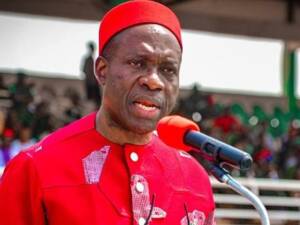
While Governor Chukwuma Soludo may have aimed to restore order and economic activity, RULAAC insisted that good intentions cannot justify rights violations.
“The enforcement of order must adopt a human rights-based approach,” Nwanguma said.
“Coercion, intimidation, and collective punishment risk portraying the government as a bully rather than a partner to the people.”
The rights group called for dialogue, engagement with traders’ unions, market leaders, civil society organizations, and security agencies to develop a sustainable, confidence-building strategy that protects citizens while addressing the menace of sit-at-home orders.
Until citizens are genuinely safeguarded from reprisals by violent non-state actors, any attempt to enforce compliance through punishment will only deepen resentment and fear, further shrinking civic and economic space in the Southeast.
“A democratic government must never punish people for being afraid when it has failed to make them safe,” RULAAC concluded.





When leadership transforms lives: Peter Eze’s story
By Akweke Francis Chidozie Okoye, Leadership is never defined by the title one bear…