

No LASTMA official should harass Any road user in Lagos – Olalekan, GM

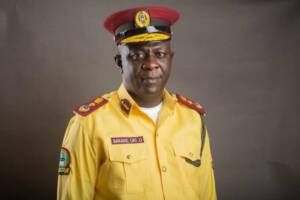
General Manager of the Lagos State Traffic Management Authority (LASTMA), Bakare-Oki Olalekan, a Master’s degree holder in Transport Management/Planning from the University of Lagos, speaks with selected newspaper editors about the agency’s operations, achievements, innovations, and other key issues. Stanley Ihedigbo was there. Excerpts:
What has the experience been like heading such a vital agency in the state?
Immediately I assumed office as head of the agency, fully aware of the task ahead and the agency’s role in the state, I set things in motion to reposition LASTMA for more effective and efficient service delivery. I introduced year-round training, retraining, and orientation programmes for our officers.
For 2025, we implemented training for our men — both internal and external — beginning in January and extending throughout the year. We already have a training room that accommodates up to 200 participants, and we use our facility regularly. The trainings cover enforcement without aggression, emotional intelligence, and the fundamentals of our modus operandi. We emphasize why our officers must be good ambassadors of the agency and the Lagos State Government, conducting themselves in a professional and courteous manner at all times.
We also saw the need to revamp our disciplinary system. We reactivated it to ensure our officers step up their performance, particularly in effective monitoring. We established daily checks and balances, with field visits to various LASTMA posts across Lagos. Additionally, we set up a surveillance unit that operates in plain clothes, using unmarked vehicles to monitor activities and act as watchdogs.
In July 2024, LASTMA commissioned a toll-free line as part of efforts to receive real-time feedback and evaluate our operations. The toll-free line allows Lagosians and road users to report emergencies, traffic congestion, accidents, and the conduct of our officers. We have 10 responders handling calls, and we ensure prompt response. Since its establishment, the call centre has received over 7,000 calls, all promptly attended to. We communicate in English, Yoruba, and Pidgin to accommodate all Lagosians. The toll-free number — 080000527882 — is widely publicized and accessible.
We also run a programme known as the School Advocacy Programme, supervised by my Public Relations Officer. The unit visits both public and private primary and secondary schools across Lagos, educating pupils on traffic rules and safety standards.
This initiative is deliberate. It aims to raise a future generation that values safety and order on the roads, instilling a culture of responsibility and proper road usage from a young age.
We’ve also strengthened our Research and Statistics Department to create a credible and coherent database. Since I assumed office, we’ve upscaled data collation, and I can confidently say we now have accurate records of vehicular activities across the state.
In 2024 alone, LASTMA apprehended 16,824 traffic offenders through critical enforcement efforts. Our productivity has further improved with the adoption of technology. This shift was intentional — to reduce direct interactions between our officers and the public and minimize the agency’s exposure to legal challenges. It has helped mitigate potential backlash and ensures transparency.
How does the agency handle incidents involving confrontations between your officers and road users?
No LASTMA official should insult or harass any road user in Lagos. Over the years, the agency has faced numerous attacks from road users — often a reflection of the frustrations people carry due to the general state of the nation. People are often overwhelmed mentally, and when confronted for traffic violations, they react with aggression.
A clear example is dealing with commercial bus drivers, popularly known as danfo. To apprehend a danfo driver who violates traffic rules, an officer doesn’t just contend with the driver and conductor — you’re likely to face resistance from all 14 passengers as well.
In such situations, our officers are advised to take photographic evidence instead of engaging directly. Later, we track and apprehend such vehicles safely. Our training emphasizes that officers should prioritize safety — theirs, the driver’s, and the passengers’ — during enforcement.
Take Ikorodu Road, for instance. You often see danfo drivers driving against traffic. When a LASTMA officer attempts to stop or impound the vehicle, the driver may drive recklessly, endangering lives. If an accident occurs, the public doesn’t blame the driver — they blame LASTMA. So, we train our men to act with discretion and prioritize safety.
You must agree that commercial bus drivers remain a menace in Lagos. However, the Lagos State Government, through the Ministry of Transportation, is actively working to checkmate their excesses.
What’s being done to address that menace?
The Ministry of Transportation has introduced the Bus Reform Initiative. The Lekki-Ajah axis is the pilot scheme. Under this initiative, commercial bus operations are being franchised to reputable companies that must meet specified standards, including vehicle quality, colour codes, and body numbers.
With this system, LASTMA no longer needs to chase offending buses. Once a violation occurs, the body number is recorded, and the company responsible for the vehicle is contacted. If everything goes according to plan, this scheme will be replicated across the five divisions of Lagos State before the end of next year.
You mentioned the toll-free line. What kind of feedback does the agency typically receive, and how do you handle staff welfare, given the risks involved in their duties?
As I mentioned earlier, we have strengthened our disciplinary system to curtail excesses. Any officer found wanting is subjected to disciplinary measures under the Lagos State Public Service Rules. We gather substantial evidence, then the officer is queried and presented for disciplinary action at Alausa.
Since 2023, when I assumed office as General Manager, we have sanctioned about 60 LASTMA officers. Nine were dismissed, 18 were demoted, and others received written or final warnings. Any further misconduct, and they’ll be shown the way out.
On welfare, Governor Babajide Sanwo-Olu has been very supportive. Apart from the standard insurance scheme for all Lagos State staff, our officers enjoy an additional, specialized insurance package — a clear sign of the governor’s commitment to our wellbeing.
Given the risks LASTMA personnel face, we have strong partnerships with all Lagos State hospitals and health centres. When an officer is injured or attacked, our welfare unit ensures they are taken to the nearest facility where they receive treatment free of charge. Afterward, we write to the governor’s office for financial support, which is usually granted. Officers are also given monetary incentives as a form of encouragement.

Restoring petrol subsidy: Atiku’s proposal raises fiscal, legal, economic questions
Stanley Ihedigbo Presidency has criticised former Vice President Atik…