

Tinubu orders five-year National Security Threat Assessment, Strategic Defence Plan

Mercy Iheoma Ihedigbo
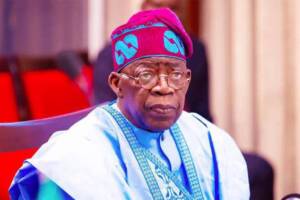
President Bola Ahmed Tinubu has directed the immediate preparation of a comprehensive National Threat Assessment and a rolling five-year Strategic Defence Operations Plan as part of renewed efforts to strengthen coordination among Nigeria’s defence, intelligence and security agencies.
The President gave the directive on Wednesday during the Federal Executive Council meeting at the State House, Abuja, stressing the need for a unified and coherent framework to address the country’s evolving security challenges.
Under the directive, the President’s Special Adviser on Homeland Security, Major General Adeyinka A. Famadewa, will coordinate and provide secretariat support for an 11-member committee constituted to develop the strategic defence operations plan.
According to the Special Adviser to the President on Information and Strategy, Bayo Onanuga, the committee comprises key officials responsible for Nigeria’s national security architecture, including the National Security Adviser, Malam Nuhu Ribadu; Minister of Defence, General Christopher Musa; Minister of State for Defence, Alhaji Bello Muhammad Matawalle; and Chief of Defence Staff, General Olufemi Oluyede.
Also serving on the committee are the Chief of Army Staff, Lt. General Waidi Shaibu; Chief of Air Staff, Air Marshal Sunday Kelvin Aneke; and Chief of Naval Staff, Vice Admiral Idi Abbas.
The Director-General of the Department of State Services, Tosin Ajayi, and the Director-General of the National Intelligence Agency, Ambassador Muhammed Muhammed, are also members.
President Tinubu said the initiative was designed to establish a common understanding of the security threats confronting the country, define operational objectives and determine the capabilities required to effectively respond to those threats.
According to the President, the increasingly complex nature of security challenges requires greater coordination and a clear medium-term strategy that brings together the various components of the nation’s security architecture.
He pointed to recent security operations, particularly the rescue of pupils and teachers abducted in Oriire Local Government Area of Oyo State, as evidence of what can be achieved when security, defence and intelligence agencies operate with a shared objective and adequate intelligence.
“The operation demonstrated what can be achieved when our agencies work together with a clear objective and the necessary intelligence,” the President said.
The President observed that operational requirements had often been considered separately by individual agencies, without adequate reference to an agreed national threat assessment or a unified medium-term operational plan.
Such an approach, he noted, could make coordination more difficult and limit the efficient deployment of resources to areas of greatest security need.
The proposed National Threat Assessment is expected to provide the strategic foundation for addressing the problem.
According to the directive, the assessment will identify the principal threats facing Nigeria, establish their relative urgency and determine the operational objectives required to address them.
The Strategic Defence Operations Plan will then translate the findings of the threat assessment into specific operational priorities.
It will identify the forces and capabilities required across different theatres of operation, assess existing capability gaps, determine equipment and logistical support requirements and establish an implementation timetable.
The initiative is also expected to provide a clearer basis for defence spending and procurement, ensuring that limited national resources are directed towards identified security priorities rather than being deployed without a coordinated medium-term framework.
The committee has been empowered to consult or co-opt representatives of other ministries, departments and agencies whenever their expertise or participation is considered necessary.
President Tinubu directed the committee to commence work immediately and submit the completed National Threat Assessment and Strategic Defence Operations Plan to him for consideration and approval within 90 days.
Once approved, the plan will become the principal framework for coordinating military and defence operations over the medium term.
It will also serve as the foundation for developing a corresponding multi-year defence expenditure and procurement plan, linking national security priorities with the resources and capabilities required to achieve them.
The President further directed the Secretary to the Government of the Federation and the Office of the National Security Adviser to take all necessary steps to ensure the immediate implementation of the directives.
The move comes as the administration continues to emphasise intelligence-led operations, inter-agency coordination and the strengthening of Nigeria’s capacity to respond to terrorism, banditry, kidnapping and other emerging security threats.
By requiring a comprehensive national assessment and a five-year operational framework, the President is seeking to move security planning beyond isolated and short-term responses towards a coordinated strategy that aligns intelligence, military capabilities, equipment, funding and operational priorities.
The committee’s 90-day deadline is therefore expected to produce a strategic document capable of guiding Nigeria’s defence and security operations and associated resource allocation over the medium term.



Tompolo-backed PBAT Movement takes free medical outreach to Ugboha
The PBAT Door-to-Door Movement has organised a free medical outreach in Ugbo…