

US, Israel–Iran war turns economic boom
Negotiates $2m toll tax per ship …“It’s a beautiful deal” — Trump …“Our military will escort ships” — Iran

Camilius Nnaji
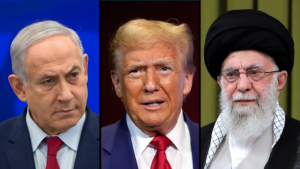
As tensions begin to ease following a fragile two-week ceasefire in the war involving the United States of America, Israel, and Iran, one area of potential economic boom is Iran’s tax proposal at the Strait of Hormuz, which has reportedly been corroborated by the US.
The US, Israel, and Iran had been engaged in intense conflict since February 28 this year, leading to the killing of Iranian spiritual leader, Ayatollah Ali Khamenei.
The US and Israel had warned that Iran must not possess nuclear capability and proceeded to bomb nuclear enrichment facilities, aiming to obliterate the programme.
In response to the bombing of these facilities, Iran retaliated with intercontinental ballistic missiles targeting US allies in Kuwait, Qatar, and Israel. For nearly a month, there have been dangerously escalated hostilities, with missiles and counter-missiles striking enemy territories.
Iran subsequently closed the 21-mile Strait of Hormuz, a critical global corridor through which about 20 percent of the world’s energy supply passes to countries including India, China, and those in Europe and the Middle East.
The disruption has driven up global oil prices, with the cost of petroleum products rising worldwide. Over 300 vessels are reportedly stranded at the strait due to the blockade.
As US and Iranian representatives currently engage in talks over a potential permanent ceasefire, Iran has proposed a levy of $1 per barrel of crude oil transported by ships.
Based on estimates, this would amount to about $2 million per vessel per passage through the Strait of Hormuz. Iran cited the need for security provision by its armed forces, reconstruction of war-damaged infrastructure, and clearance of mines and missiles in the waterway.
US President Donald Trump was reported to have described the proposal as “a beautiful deal,” provided the US receives a 50 percent share, thereby creating an emerging economic partnership between the two countries.
Trump stated that US forces would be deployed on land, sea, and air at the strait to supervise safe passage and closely monitor Iranian activities.
The American president described the joint management of the chokepoint as beneficial, noting that it would enhance security while generating massive revenue.
However, controversy surrounds Iran’s proposed system, dubbed the “Tehran Tollbooth.” The arrangement would require vessels to undergo a strict approval process before entering the seaway.
Ships would be required to submit cargo and ownership details to Iran’s Islamic Revolutionary Guard Corps (IRGC). Upon clearance, vessels would be required to pay a $2 million fee per trip, expected in cryptocurrency or Chinese yuan.
Approved vessels would then receive armed escort through the strait.
Energy users worldwide are already reacting to the proposal, citing concerns over additional financial pressure on an already strained global energy market.
The economic implications could be enormous. If sustained, the policy could generate billions of dollars for Iran within a few years.
Critics argue that the Strait of Hormuz should remain a free international passage and warn that introducing such a tax could disrupt global energy trade, increase fuel prices, and heighten geopolitical tensions.
According to Jesse Watters of Fox News, skepticism remains over the feasibility of a US–Iran agreement on managing the strait, given the hostile relationship between the two nations.
He stated, “I would rather have Iranians tax vessels than be bombing them.”
At a United Nations Security Council meeting convened to address the crisis, members called for the unconditional reopening of the oil passageway, stressing that Iran should not exercise unilateral control over the strait.
However, Russia and China voted against the resolution.
US Ambassador Mike Waltz stated that no country has the right to hold the global economy to ransom. “No one should tolerate a situation where the global economy is held at gunpoint, yet today Russia and China chose to do so,” he said.
“They sided with a regime that seeks to intimidate the Persian Gulf region into submission, even as it suppresses its citizens during national internet blackouts for daring to demand dignity and freedom.”
Bahrain’s Foreign Minister, Abdullatif Alzayani, warned that failure to adopt the resolution sends the wrong signal to the international community, suggesting that critical waterways can be threatened without decisive action from global institutions responsible for maintaining peace and security.
The resolution, though vetoed, emphasized the need to protect commercial maritime routes, ensure safe navigation, and demand that Iran halt attacks on merchant vessels and refrain from impeding freedom of navigation through the strait.
It would be recalled that Iran, in its proposed ceasefire terms, also requested the establishment of an investment and financial fund to cover losses incurred during the war.
The proposal includes levies on ships transiting the Strait of Hormuz, with proceeds earmarked for post-war reconstruction.




Excitement as Akwa Ibom people await presidential visitors
By Solomon Essiet Other things being equal, His Excellency, President Bola Ahmed Ti…