

UNICEF backs social policy institute, reaffirms commitment to child rights


Tony Okoh, Uyo
United Nations Children’s Fund (UNICEF) has pledged continued support for initiatives and programmes aimed at advancing child rights and the achievement of the Sustainable Development Goals (SDGs) in Nigeria.
The Chief of UNICEF Field Office, Enugu, Mrs Juliet Chiluwe, spoke in a speech delivered at the Memorandum of Understanding (MoU) Drafting and Curriculum Finalisation Workshop for the proposed Institute of Social Policy at the University of Calabar, held in Uyo, Akwa Ibom State.
Chiluwe said UNICEF was proud to be part of the partnership with the University of Calabar, assuring the institution, the academia and Nigerians of the agency’s continued support for efforts towards the realisation of the rights of children and the achievement of the SDGs.
“We are proud to be part of this partnership, and we assure the University of Calabar, the academia, and Nigerians that we will continue to support efforts and initiatives anchored towards the realisation of child rights and the Sustainable Development Goals,” she said.
According to her, UNICEF’s work for women and children is driven by partnerships with government institutions and other stakeholders to develop and implement strategies and programmes that respond to the needs of vulnerable populations, particularly children and women.
She explained that such partnerships also seek to strengthen government capacity to develop policies and implement sustainable programmes that enable children and women to survive and thrive.
Chiluwe said the engagement with the University of Calabar would also help build a strong knowledge base and empower a critical mass of professionals and stakeholders with the strategies, programmes and expertise required to drive positive change and sustainable development.
She expressed confidence that the proposed Institute of Social Policy would serve as a knowledge hub for capacity building among government institutions, individuals and other stakeholders on national and global policy frameworks designed to advance the SDGs.
She added that the institute would provide strategic support for the training of professionals in social policy and contribute to strengthening national policy dialogue, policy development, implementation and monitoring.
“This would invariably enhance sustainable development for the children and women of Nigeria,” she said.
Chiluwe further expressed hope that the workshop would strengthen focused and sustained collaboration between UNICEF, the academia and other partners, noting that academic institutions possess human resources and convening capacity that can be leveraged to advance the rights of children and women in Nigeria.
Earlier, the Vice Chancellor of the University of Calabar, Prof. Offiong Effanga Offiong, said the workshop formed part of the collaborative engagement between UNICEF and the university towards establishing an Institute of Social Policy at the institution.
The Vice Chancellor said institutionalising social policy at the University of Calabar was timely and responsive to the realities confronting Nigeria.
He noted that issues such as affordable healthcare, quality education, social security, social safety nets for vulnerable and disadvantaged groups, and housing support remained areas where public resources needed to be effectively channelled to improve citizens’ well-being and promote social justice.
According to him, social policy must balance accessibility, inclusivity and affordability to ensure the long-term sustainability of social protection programmes.
Offiong expressed appreciation to UNICEF for recognising the potential of the University of Calabar to serve as a centre for innovation and knowledge construction in social policy and for selecting the institution for the collaborative partnership.
Also speaking, the Director of the Institute of Social Policy, University of Calabar, Prof. Grace Etuk, described the workshop as a significant milestone in the collective effort to bridge the gap between academic research, effective policy design and sustainable human development.
Etuk said the need for evidence-based social interventions had become more urgent in a world characterised by volatility, uncertainty, complexity and ambiguity, alongside significant socio-demographic and economic changes.
“In a globe now characterised by volatility, uncertainty, complexity and ambiguity (VUCA), as well as socio-demographic and economic shifts, evidence-based social interventions are needed more than ever,” she said.
She stressed the need for tertiary institutions and relevant agencies to move beyond traditional academic theory and contribute directly to actionable policy innovation.
According to her, the establishment of the Institute of Social Policy represents a proactive response to the growing demand for evidence-based policy interventions.
She explained that the institute is expected to serve as a hub for postgraduate studies, interdisciplinary research, capacity building and policy advocacy.
“It is also aimed at equipping the new breed of policy thinkers, development practitioners, and social engineers with the analytical capacity needed to formulate, implement, and evaluate social safety policies and protection frameworks,” she said.
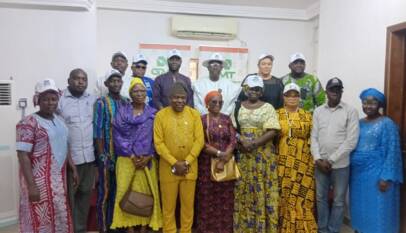
The workshop brought together representatives of UNICEF, the University of Calabar and other stakeholders to advance the development of the proposed institute, including its curriculum and institutional framework.




Kaduna 2027: ADC will spring surprises despite internal crisis, says Miqati
Stanley Ihedigbo African Democratic Congress (ADC) governorship aspir…