

Sahel conflicts, climate change worsening Nigeria’s insecurity — NIIA Professor

Michael Olumide
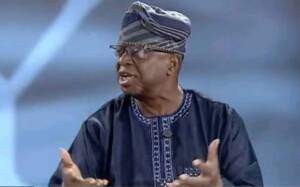
A Research Professor, Nigerian Institute of International Affairs (NIIA), Professor Olufemi Otubanjo, has raised fresh concerns over Nigeria’s worsening security situation, warning that the country’s challenges are increasingly being driven by the internationalisation of terrorism and armed conflicts across the Sahel region.
According to the international relations expert, insurgents and armed criminals displaced by conflicts in neighbouring countries are finding their way into Nigeria, making the nation’s security crisis more complex and difficult to tackle.
Speaking during an exclusive interview on Frontline, a current affairs programme on Eagle 102.5 FM, Ilese-Ijebu, Ogun State, on Thursday, Otubanjo explained that while Nigeria’s insurgency was previously dominated by Boko Haram, the security landscape has expanded into a regional problem involving armed groups operating across national borders.
“The problem is that insurgency has become so international. It used to be Boko Haram alone, but it looks like the insurgents are running away from different parts of the world, including Sudan. We are beginning to see Sudanese in Nigeria as bandits, coming to kidnap us,” he said.
He observed that some of those fleeing armed conflicts elsewhere in Africa are taking advantage of Nigeria’s vast ungoverned spaces to establish criminal networks.
According to him, areas with little or no government presence provide safe havens for criminal elements to infiltrate communities, launch attacks and escape before security agencies can effectively respond.
“There are many places that have no presence of government. So, everybody can walk in and take over a couple of times. And then, of course, at the end of the day, if government intervenes, those people will run away,” he stated.
Otubanjo also linked the growing instability across the Sahel to the devastating effects of climate change, noting that desertification, environmental degradation and declining agricultural productivity have displaced thousands of people.
“We don’t know how much climate change is creating havoc in terms of population and livelihood. A lot of people have lost their homes. They have lost their jobs because the dunes have taken over their villages and communities. They are taking over their farms. And they are moving down,” he explained.
He cautioned against labelling every migrant from northern parts of the region as a terrorist, stressing that many are simply victims of economic hardship and environmental disasters.
“A lot of the northerners that we see in Lagos, and we think that, oh, maybe they are terrorists, they are economic migrants. They are running away from hopelessness and joblessness in the north because there is no new investment,” he said.
Despite acknowledging the persistence of insecurity, the professor maintained that it would be unfair to conclude that the Federal Government and security agencies are doing nothing to address the problem.
“There is a challenge of security in Nigeria. No doubt about it. And we have not overcome it, but that is not to say that the government is not doing what is necessary,” he said.
Otubanjo explained that defeating insurgency and banditry requires patience, sustained military operations, effective intelligence gathering and strong regional cooperation rather than expecting immediate victories.
“The government cannot tell you every day that we killed two or three people today; we are ending the insurgency tomorrow. It’s not done. It’s a process. The people, of course, are impatient. Yes, we don’t want to see kidnapping again. We don’t want to see bandits. But it doesn’t happen like that. It’s a process,” he added.
He also paid tribute to members of the armed forces, noting that many soldiers continue to make enormous sacrifices, with some paying the ultimate price in the fight against terrorism.
“In summary, let me say that I’m not so sure I can vouch for Tinubu’s record on terrorism, but you know that they are not lying idle. They are working. Soldiers are dying. So we must give it to them and pray that they will do better and get us out of this mess,” he said.
Addressing suggestions that deteriorating relations between Nigeria and some military-led governments in the Sahel have worsened insecurity, Otubanjo dismissed the argument.
He pointed out that countries such as Niger, Mali and Burkina Faso are themselves battling insurgency on multiple fronts and therefore remain focused on their own internal security challenges.
“Niger has its own insurgency almost on three fronts. Mali is fighting. Burkina Faso has its own challenges. These are all countries that are fighting insurgency themselves,” he noted.
The professor added that regional governments continue to cooperate through multinational security arrangements designed to combat terrorism across the Sahel.
“We have a multinational joint task force that’s supposed to cooperate among countries in the Sahel to fight insurgency. And it’s working,” he said.
Nigeria Enjoys Friendly Relations Across Global Blocs
Beyond security, Otubanjo described Nigeria’s foreign policy as one of its greatest strengths, saying the country maintains cordial diplomatic relations with virtually every nation and is not involved in any state-to-state conflict.
He argued that Nigeria remains one of the few countries able to sustain friendly ties across major geopolitical blocs despite increasing global tensions involving powers such as the United States, Russia and China.
“In terms of overall foreign policy, we have peaceful relations with almost everyone. Nigeria is one of the greatest countries in the world in terms of having no enemies,” he stated.
The international relations scholar stressed that occasional disagreements between nations should not be interpreted as hostility, insisting that diplomatic differences are normal features of international relations.
“The United States is our friend. Even between wives and husbands, there’s a quarrel once in a while. It doesn’t mean they are enemies,” Otubanjo said.



APC Campaign Council denies plot to assassinate Atiku, challenges Timi Frank
Stanley Ihedigbo All Progressives Congress (APC) Presidential Campaign Counc…