

Our Nation, our voice: Power of citizens who refuse to stand aside

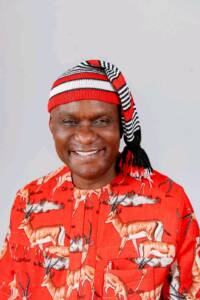
By Rt Hon Chinedum Enyinnaya Orji
A democracy is not a gift that arrives fully formed and then runs itself. It is a living agreement between the governed and those who govern, renewed every day by the choices, voices, and vigilance of ordinary people.
When citizens step forward, governance stops being a distant affair conducted behind closed doors and becomes a shared responsibility carried in town halls, market squares, radio discussions, and ballot boxes. That is how nations are shaped, and how they are galvanized into greatness.
Active citizen participation is the oxygen of democratic life. Without it, institutions grow brittle. With it, institutions breathe, adapt, and respond to the real needs of the people who pay taxes, raise families, and build communities.
A government that must answer to an engaged public cannot afford to be careless, because it knows someone is watching, someone is asking questions, and someone will show up to demand better.
Elections are the clearest expression of that agreement. They are not merely a ritual held every few years. They are the moment when sovereignty, which belongs to the people, is exercised in its most direct form. To vote, to campaign, to observe, to debate candidates, is to remind every office-seeker that power is borrowed, and that the lender is the citizen.
One of the greatest benefits of citizenship participation is accountability. When citizens attend constituency meetings, track budgets, and speak out on public issues, leaders learn that promises have consequences. A councilor who knows his community will show up at the next town hall thinks twice before abandoning a local market rehabilitation project.
A governor who knows that civil society groups monitor spending is less likely to treat public funds as personal property.
Another benefit is better representation. A democracy that draws energy from teachers, farmers, traders, nurses, students, and artisans produces laws that reflect real life. Policies crafted in isolation often miss the mark.
Policies shaped by citizens who live with the problems tend to be practical, because they are tested against everyday experience before they ever reach the statute books.
Citizen involvement also strengthens the fight against corruption. Darkness thrives where no one asks questions. An engaged electorate insists on transparency, demands asset declarations, and supports independent journalism.
Over time, that culture of scrutiny raises the cost of misconduct and lowers the tolerance for it. Nations that have made progress did not do so by accident. They did it because citizens refused to look away.
Beyond institutions, participation builds social cohesion. When we deliberate together, we learn the art of disagreement without hatred. We discover that a neighbor with a different view is not an enemy, but a partner in solving shared problems like water, electricity, security, and jobs.
Democracy teaches us that our fates are tied together, and that progress comes when we work across our differences.
The electoral process magnifies these advantages. When citizens register, verify their names, and turn out to vote, they confer legitimacy on the government that emerges.
Legitimacy is not a slogan. It is the moral authority that allows a government to make difficult decisions and ask for public sacrifice, because the people know they had a hand in choosing who leads.
Elections managed with broad citizen involvement also protect peace. A contest that people believe is fair is a contest people will accept. Monitors at polling units, party agents who understand the rules, voters who know their rights, and communities that reject thuggery all combine to make violence less attractive and less possible. That is how democracies manage conflict without breaking.
There is an educational benefit too. Every election season forces us to read manifestos, compare records, and weigh trade-offs.
Citizens who participate become more informed about how budgets work, how laws are made, and how power is checked. An informed citizenry is harder to deceive, and a nation of informed citizens is harder to misrule.
In our Nigerian context, this truth is written into our history. From the struggles for independence to the long walk to restore civil rule, progress came because ordinary people decided that silence was not an option.
Market women, students, journalists, labor leaders, and faith communities all played a part. Our democracy was not handed to us. It was earned, and it must be earned again in every generation.
Yet the danger we face today is not the absence of elections. It is apathy. Apathy tells us that one vote does not matter. Apathy tells us that politics is dirty and should be left to “them.” Apathy tells us to sit at home while decisions about our children’s schools, our hospitals, and our roads are made without us.
But apathy is not neutrality. Apathy is a vote for the status quo, and too often the status quo is not serving us.
We must therefore refuse to give room to apathy. Register when registration opens. Collect your PVC. Study the candidates beyond party colors. Ask for town halls.
Volunteer as observers. Hold elected officials to their campaign promises after the ballots are counted. Democracy does not end on election day. It begins again the next morning.
We must also shun divisive tendencies in our electoral choices. Ethnic chauvinism, religious bigotry, and the politics of “son of the soil” have done enough damage. They reduce elections to a census and governance to a sharing formula. They reward those who know how to inflame, and punish those who know how to build.
A nation as diverse and gifted as ours cannot afford leaders chosen for the narrowness of their appeal.
Our strength has always been in our plurality. The same diversity that some exploit for division is the same diversity that, when properly harnessed, becomes our competitive advantage.
Let us choose candidates on the basis of competence, character, and a clear plan. Let us reward ideas over insults, and service over slogans.
When citizens participate fully, governance improves in tangible ways. Budgets reflect priorities that communities actually named. Contracts are awarded with more scrutiny.
Security agencies feel the pressure to protect voters, not intimidate them. Courts understand that the public is watching. This is not theory. It is what happens when power knows it is being watched.
Citizen involvement in elections also expands opportunity. Young people who volunteer on campaigns learn organizing skills. Women who run for office and win change the conversation about what leadership looks like.
Persons with disabilities who demand access to polling units make democracy more inclusive. Each act of participation widens the circle.
Let us remember that no country was developed by spectators. Roads were built because citizens demanded them. Schools were equipped because parents organized.
Health centers were staffed because communities refused to accept excuses. The same energy must now be directed at the ballot and beyond it.
The future we want will not arrive by wishful thinking. It will arrive because we show up. Because we vote. Because we debate respectfully.
Because we reject vote-buying and reject the merchants of violence. Because we choose leaders who can unite rather than those who profit from division.
This is our nation. Its promise belongs to us, and its problems will not be solved by waiting for someone else. The work of democracy is the work of citizens, and the time to do that work is now.
So let us rise. Let us participate. Let us vote with conviction, govern with vigilance, and build with unity. Our nation is not waiting to be saved. It is waiting to be claimed by citizens who understand that when we own the process, we own the future.
Enyinnaya Orji, writes from Amaokwe Ugba Umuahia Ibeku and the APC Candidate for Ikwuano Umuahia Federal Constituency


APC Campaign Council denies plot to assassinate Atiku, challenges Timi Frank
Stanley Ihedigbo All Progressives Congress (APC) Presidential Campaign Counc…