

Nigeria needs Tinubu’s second term for stability – Bassey

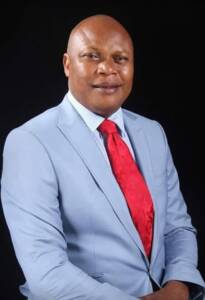
Cleric and political activist, Pastor Bassey James, is the founder of the Southern Coalition for President Bola Tinubu 2027. In this interview with our correspondent, Tony Okoh, he speaks on why the President’s second-term bid should be supported.
You have been a youth activist and a political organiser, among others. What is your impression of the present government and its performance so far?
President Bola Tinubu has done his best. He has achieved many remarkable things, especially in the areas of infrastructure development, capacity building, and education. He has also shown great ability in transforming governance, and I believe he should be allowed to complete his eight-year tenure like other presidents. If you look at his style of governance, you will see that it is a work in progress.
I consider him a transformational and futuristic leader—one who understands the dynamics of Nigerian politics. As I said to some people recently, for someone to be out of government for almost 16 years, build a political structure, win the presidential primary against all odds, and eventually become President, is something we should celebrate.
The political terrain in Nigeria is always very tough, but for this President to weather the storm and succeed is remarkable. We have always said that what is good for the goose is also good for the gander. The immediate past president, Muhammadu Buhari of blessed memory, spent eight years in office, so naturally, whoever succeeded him should also spend eight years.
As remarkable as that is, would you say this government is really impacting people at the grassroots?
Well, there is no single president who can solve all our problems. The grassroots do not necessarily need millions to survive; what they need most is development. The real issue is not the grassroots themselves but the quality of governance they receive.
Regarding local governments, this President has, for the first time in a long while, worked hard to ensure direct allocation to them. The states are also receiving increased funds. Therefore, I believe the grassroots should hold local government chairmen and state governments accountable for development.
You speak highly of the President and his performance. Is that why you formed a support group for him?
Yes. The Southern Coalition for President Bola Tinubu 2027 is one of the biggest NGOs currently, and we are working in collaboration with the Akpabioism Centre, which I also established.
We aim to engage market women, youths, religious leaders, and political stakeholders across Southern Nigeria, while also partnering with organisations that believe in President Tinubu. He is our own, and as the saying goes, one tree cannot make a forest. We must collaborate, reach out, and contribute. The support has been massive.
We are already holding meetings across the southern region and building strong relationships with our northern counterparts, especially the youth. This is the only way we can build a united nation based on equity, fairness, and justice.
I have always supported good governance, and this administration has shown capacity. The influx of governors into the APC is unprecedented and speaks volumes about the current political dynamics.
Do you see these defections as a positive development in Nigeria’s political landscape?
It depends on perspective. I am against a one-party state and the imposition of candidates. However, in this case, no one is being forced—people are joining the APC willingly. There is no evidence of coercion.
People simply want to be part of what is happening. Nigeria has reached a point where many are genuinely interested in national development. The movement toward President Tinubu goes beyond party lines and is something commendable.
You are pro-Tinubu and pro-APC?
Yes, I am pro-Tinubu and pro-APC. I obtained my party card a long time ago. The President is performing well in implementing the party manifesto and providing direction as the national leader of the party.
You cannot separate the achievements of the President from the party that brought him to power. I am a fully registered member of the APC, and I believe the growing support for Tinubu will enable him to complete his eight years in office.
This support group is also working on mechanisms for sustainable governance, ensuring that after Tinubu, power rotates to the North for another eight years. This will promote stability, considering Nigeria’s ethnic, religious, and political realities.
Under this government, your university was approved. Has that influenced your support for the President?
The university met all requirements, but without the President’s approval, Southern Atlantic University would not exist. Supporting him is my way of showing appreciation.
This is the first university in Ibibio land, and my people are very happy. It reflects our culture and identity. For me, as someone from a humble background, establishing a university under this administration is a significant achievement.
Additionally, under President Tinubu, an Akwa Ibom son, Godswill Akpabio, became the Senate President, the number three citizen in the country. This is unprecedented since the time of Senator Joseph Wayas.
So, the Southern Coalition is our way of expressing gratitude for both the university and the Senate presidency.
Does this mean your governor joined Tinubu’s camp in appreciation?
The governor followed the trend. Before he joined the APC, several others had already done so. I wouldn’t call him a latecomer.
I was once a member of the People’s Democratic Party (PDP), but when you see change, you align with it. That is simply the reality on the ground.
Q: What is your assessment of your governor’s performance in Akwa Ibom State?
Akwa Ibom State has been fortunate to have good governors since 1999, from Obong Victor Attah to Chief Akpabio, Udom Emmanuel, and now Pastor Umo Eno.
Umo Eno is performing well. His ARISE Agenda is positively transforming the state, and he deserves continued support. He is also my in-law and is doing well across all sectors.
Many Nigerians are concerned about insecurity. As a security expert, do you think the President deserves commendation?
Yes, I am a security expert, and I can say that President Tinubu inherited about 99% of these challenges. While people were previously crying out, there are now signs of improvement.
No president wants to see citizens harmed. Years ago, we developed a security plan in collaboration with a police officer covering Ogoni, Port Harcourt, and Akwa Ibom, but it was never implemented.
Why do you support community policing over state police?
State police can help tackle crime at the grassroots level due to familiarity with the terrain. However, there is a risk of political misuse by those in power, which creates public concern.
To address insecurity, we need a strong community policing framework where citizens actively participate in their own security.
This problem can be resolved within a year with the right structure. During Akpabio’s tenure as governor, a joint task force was established, and I handled communications. Infrastructure such as police stations, barracks, and security villages was built, an unprecedented effort.
If similar systems are replicated across all 774 local government areas, much of the insecurity can be addressed even without federal intervention.
Do you support the inclusion of hunters and vigilantes in security operations?
Yes, but we must go beyond that. Hunters are not professionals. A structured community policing system is needed, led by the Divisional Police Officer (DPO), with community participation and regular reporting.
Can citizens trust government officials in such a system?
Trust is a challenge, but structures can be improved. If necessary, the local government chairman can head the committee, with the DPO as a key member responsible for reporting through official channels.
If communities organise themselves—say, with 30 local security volunteers working with youth leaders and traditional rulers—they can significantly reduce insecurity. Replicating this nationwide would greatly improve security.



Clinical Research: ACRES Summit targets stronger African talent, local capacity
Michael Olamide Alabi The 2026 edition of the Africa’s Clinical Research Ecosystem …