

Nigeria facing “Undeclared War” as insecurity, poverty deepen — CHRICED


Michael Olumide
Resource Centre for Human Rights and Civic Education (CHRICED) has raised alarm over Nigeria’s worsening security, economic hardship, and what it described as a deepening democratic decline, warning that the country is “at a breaking point” requiring urgent national reflection and reform.
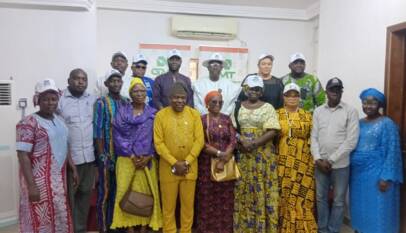
Speaking at a State of the Nigerian Nation press conference held at Professor Abubakar Momoh House in Gwarinpa, Abuja, the Executive Director of CHRICED, Comrade Ibrahim M. Zikirullahi, said Nigeria is facing a convergence of insecurity, poverty, corruption, and governance failures that threaten the survival of the state.
Zikirullahi said the situation in the country reflects what he described as a broken social contract between government and citizens, where insecurity, hunger, and disillusionment have become widespread.
He warned that Nigeria is effectively confronting “an undeclared war,” citing escalating attacks by armed groups, mass abductions, and killings across several regions of the country.
According to him, more than 1,100 people have been abducted since January 2026 alone, while hundreds have been killed in coordinated attacks by insurgents, bandits, and other criminal networks operating across the Northeast, Northwest, North Central, and southern regions.
He noted that Boko Haram and ISWAP continue to launch deadly assaults in the Northeast, while banditry in the Northwest and North Central has evolved into a “sophisticated criminal enterprise” involving mass kidnappings and village raids.
The CHRICED boss also raised concern over rising insecurity in the southern region, stressing that no part of the country is immune from violence.
He described the killings in Plateau State and other parts of the Middle Belt as part of a broader pattern of “expanding geography of death,” warning that repeated massacres have left communities displaced and livelihoods destroyed.
Zikirullahi further referenced a reported military airstrike in Borno State, which allegedly killed between 100 and 200 civilians, describing it as evidence of deep dysfunction within Nigeria’s security operations, where citizens are increasingly caught between insurgents and state errors.
He also highlighted the killing of a senior military officer, Brigadier General Oseni Braimah, during an attack on a military base in Borno State, describing it as a symbolic moment that exposes the fragility of Nigeria’s security architecture.
According to him, the attack demonstrated intelligence failures, weakening morale within the armed forces, and growing boldness among insurgent groups.
The rights advocate criticised what he described as “symbolism without substance” in government responses to insecurity, saying official visits to affected areas have failed to provide meaningful relief or reassurance to victims.
He also decried rising political tensions and alleged harassment of opposition figures and civil society actors, warning that Nigeria’s civic space is shrinking and democratic institutions are under strain.
Citing concerns about electoral integrity, Zikirullahi called for stronger independence of the electoral body and urged reforms to restore public confidence in the democratic process.
The CHRICED director also condemned what he described as the normalisation of corruption in public office, particularly the appointment of individuals with unresolved allegations into high-level positions, including diplomatic postings.
He warned that such practices damage Nigeria’s international reputation and erode public trust in governance and justice systems.
On the economy, CHRICED painted a bleak picture of worsening living conditions, citing high inflation, rising fuel prices, and increasing poverty levels across the country.
Zikirullahi noted that youth unemployment remains alarmingly high, with millions of young Nigerians unemployed or underemployed, describing the situation as a “wasted generation” if urgent action is not taken.
He also criticised what he called government extravagance amid widespread hardship, pointing to lavish spending by public officials despite rising hunger and economic distress among citizens.
The organisation further expressed concern over Nigeria’s rising debt profile, warning that continued borrowing without sustainable economic planning could mortgage the country’s future.
On social development, CHRICED highlighted the collapse of public education, the rising number of out-of-school children, deteriorating healthcare systems, and high maternal mortality rates, describing them as signs of systemic failure.
It also condemned forced evictions in parts of the country, particularly Abuja, calling for the protection of indigenous communities and respect for human rights and due process.
CHRICED outlined wide-ranging recommendations to the government, political parties, INEC, judiciary, civil society organisations, the media, citizens, and the international community.
The group called for a comprehensive security overhaul, investment in job creation, protection of civic space, judicial reforms, and stronger accountability mechanisms across all levels of governance.
It also urged political actors to promote internal democracy and ethical leadership, while calling on INEC to strengthen its independence and address public concerns about neutrality in the electoral process.
Zikirullahi further stressed the need for a revitalised judiciary, active civil society engagement, responsible media reporting, and greater citizen participation in governance.
He concluded by urging Nigerians to remain vigilant and engaged in defending democracy, quoting the late Professor Abubakar Momoh that “democracy is not a spectator sport.”
According to CHRICED, Nigeria stands at a defining moment, where urgent reforms are required to prevent further deterioration and secure the country’s democratic future.



APC Campaign Council denies plot to assassinate Atiku, challenges Timi Frank
Stanley Ihedigbo All Progressives Congress (APC) Presidential Campaign Counc…