

New media proliferation raises fresh challenges for Press Council — EFCC


Stanley Ihedigbo
Nigerian Press Council (NPC) has sought a stronger partnership with the Economic and Financial Crimes Commission (EFCC) to deepen Nigeria’s fight against corruption, economic and financial crimes.
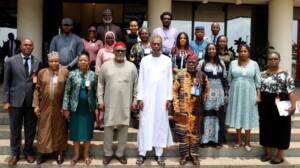
The Executive Secretary of the NPC, Dr. Dili Ezughah, made the call when he led the top management team of the Council on a courtesy visit to the corporate headquarters of the EFCC.
According to the Head, Media & Publicity, EFCC, Mr. Dele Oyewale, Ezughah commended the anti-graft agency for what he described as its productive engagement with the media, noting that the Commission’s commitment to transparency, accountability, integrity and good governance had contributed significantly to the country’s anti-corruption efforts.
He described the EFCC as a strategic national institution and expressed the Council’s appreciation for the Commission’s professional relationship with journalists and the media.
According to him, a free, responsible and ethical press remains critical to promoting transparency, accountability and good governance, stressing that the NPC was interested in building a mutually beneficial and enduring relationship with the EFCC.
“The Nigerian Press Council regards the EFCC as a strategic national institution whose unwavering commitment to transparency, accountability, integrity and good governance has significantly strengthened Nigeria’s fight against corruption,” Ezughah said.
He also commended the Commission for its commitment to engaging the media professionally and recognising the important role of a free, responsible and ethical press in promoting public accountability.
The NPC boss proposed several areas of collaboration between the two institutions, including joint capacity-building programmes for journalists, collaborative public enlightenment campaigns on economic and financial crimes, structured information-sharing channels, as well as joint research and advocacy on media ethics and accountability.
He said such collaboration would help deepen public confidence in the anti-corruption campaign while promoting responsible and professional journalism.
Ezughah noted that journalists require continuous training and access to credible information to effectively report issues relating to corruption, financial crimes and public accountability.
He said improved collaboration between the press regulatory body and the EFCC would also provide opportunities for journalists to better understand emerging forms of economic and financial crimes and report them accurately and responsibly.
The NPC Executive Secretary, however, identified some challenges affecting the effectiveness of the Council, including the absence of a permanent headquarters and operational vehicles.
According to him, the challenges have adversely affected the Council’s operational efficiency, stakeholder engagement and its ability to conduct training and other professional activities effectively.
Responding, the Secretary to the EFCC, Muhammad Hammajoda, who represented the Commission’s Executive Chairman, Ola Olukoyede, welcomed the visit and assured the NPC delegation that the issues and proposals raised would be communicated to the EFCC Chairman.
“I want to assure you that we are delighted with this visit. I have noted all you said, and I wish to assure you that your positions will be duly communicated to the Executive Chairman,” Hammajoda said.
He acknowledged the important role played by the Nigerian Press Council in promoting professional standards and ethical conduct within the media industry.
Hammajoda said the NPC performs a critical function in ensuring compliance with professional standards, monitoring the activities of media organisations and fostering a harmonious relationship between the media and members of the public.
“I wish to appreciate you all for the sacred role you play in upholding press standards and fostering a harmonious relationship between the media and members of the public, as well as in monitoring the activities of the press with the view of ensuring media houses’ compliance with the code of professional and ethical conduct,” he said.
He stressed that the EFCC holds the Nigerian press in high esteem, describing the media as one of the Commission’s critical stakeholders and an indispensable partner in its successes.
“I wish to state here that we hold the press in high esteem as one of our critical stakeholders. Indeed, the Nigerian press has been an indispensable partner in our successes as a Commission, and I wish to assure you that we relish the cordial relationship and have been doing our utmost to sustain it,” he added.
Hammajoda also urged the NPC to intensify its regulatory and professional responsibilities, particularly in view of the rapid expansion of the new media space
He observed that the proliferation of digital platforms had created additional challenges for media regulation, professional standards and ethical journalism.
“I wish to emphasize that yours is an onerous task, especially with the unregulated proliferation of the new media. The increasing expansion of the media space can only mean more work, focus and dedication from you,” he said.
The EFCC Secretary reaffirmed the Commission’s willingness to work with the NPC in areas of mutual interest, particularly those that could contribute to the fight against corruption and strengthen public confidence in anti-graft institutions.
“We value collaboration, being one of our core values. And will collaborate with you,” he stated.
The visit underscores the growing importance of cooperation between anti-corruption institutions and the media in the fight against corruption and financial crimes.
With the media serving as a major channel for public enlightenment and accountability, closer cooperation between the NPC and EFCC could provide a platform for strengthening journalists’ capacity, improving public awareness and promoting ethical reporting of corruption-related matters.
It is also expected that sustained engagement between both institutions will contribute to a more informed public and a more professional media environment, while supporting broader efforts to promote transparency, accountability and good governance in Nigeria.




NUJ honours FCC Commissioner Peter Eze for Outstanding Youth leadership in Enugu
Stanley Ihedigbo Nigeria Union of Journalists (NUJ), Enugu State Coun…