

Low voter turnout, not registration figures, should worry Nigeria — Ologun

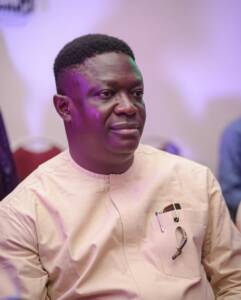
Michael Olumide Alabi
Executive Director, Center for Responsive Governance, Ayodeji Ologun, has criticised the Independent National Electoral Commission (INEC) over its approach to the Continuous Voter Registration (CVR) exercise, describing the practice of fixing a closing date for what is termed “continuous” registration as both contradictory and unlawful.
Speaking on Monday during an interview on Frontline, a current affairs programme on Eagle 102.5 FM, Ilese-Ijebu, Ogun State, Ologun argued that Nigeria’s voter registration system requires a complete overhaul to make registration accessible throughout the year without interruption.
His comments followed the conclusion of INEC’s nationwide Continuous Voter Registration exercise, which officially ended on Sunday after the commission extended the deadline by two weeks from July 10 to July 26, 2026.
“It is illegal. It is unfair that you call something continuous voter registration, and then you put a peg on it and say it has closed. What justifies the grammatical use of the word ‘continuous’?” Ologun asked.
INEC had explained that the extension was granted to accommodate the large number of last-minute applicants and respond to appeals from civil society organisations seeking more time for eligible Nigerians to register ahead of the 2027 general elections.
Following the expiration of the extension, however, the electoral body ruled out any further extension, citing Section 17 of the Electoral Act 2022, which requires voter registration to be suspended at least 90 days before a general election. The commission also said the closure would enable it to clean up the voter register, eliminate duplicate registrations and produce Permanent Voter Cards (PVCs) ahead of the polls.
But Ologun maintained that the current system reflects outdated administrative practices rather than modern electoral management.
“We are living an archaic life in Nigeria. Voter registration should not have an opening day or a closing day. The reason they call it continuous and then announce a closing date is that the same officials handling registration are the same personnel INEC deploys for elections,” he said.
According to him, technology should make voter registration a seamless process available all year round, eliminating the need for periodic registration exercises.
He proposed a fully digital registration system that would allow Nigerians who attain the age of 18 to register online from anywhere, upload the required information, choose a preferred PVC collection centre or even have the card delivered directly to their homes.
“Voter registration should be something you can do from the comfort of your home, just as the new international passport application process has become. Once you turn 18, you should be able to log into the INEC website, upload your data, register and indicate where you want to collect your Permanent Voter Card or even have it delivered to your doorstep,” he said.
Ologun also advocated stronger integration of government databases, arguing that information already captured by the National Identity Management Commission (NIMC) should be sufficient for voter registration and other public services.
“I think one of the reasons we are unifying our data through NIMC is that one database should be sufficient for all government services,” he stated.
Reviewing the just-concluded registration exercise, Ologun noted that although it lasted nearly a year—from August 2025 to July 2026—and became the longest voter registration exercise since Nigeria’s return to democratic rule in 1999, it failed to achieve its primary objective of expanding electoral participation.
“It became the longest voter registration exercise in our democratic history, but the question is whether it achieved its intended purpose. The answer is a capital no,” he declared.
He argued that the repeated extensions granted by INEC demonstrated widespread reluctance among Nigerians to participate in the electoral process, warning that voter apathy poses a serious threat to democracy.
“Nigerians are reluctant to register. This further confirms what civil society organisations and political observers have been saying—that voter apathy is increasing. When citizens refuse to participate, only a minority determines who governs everyone else,” he warned.
Ologun further stressed that the true measure of electoral success should not be the number of registered voters but the number of citizens who actually cast their ballots on election day.
He observed that Nigeria has more than 80 million eligible voters, yet fewer than 45 million are currently registered, while less than half of the registered voters eventually participate in elections.
“We have over 80 million qualified voters who are eligible to vote in Nigeria, yet the total number of registered voters is less than 45 million. Of those who register, less than half eventually come out to vote. The question is: what happens to those who stay away from the polls?” he queried.
The governance advocate also highlighted practical obstacles discouraging voter participation, including insecurity, uncollected Permanent Voter Cards, population mobility and the difficulties experienced by students who register while in tertiary institutions but later relocate after graduation before collecting their PVCs.
Citing Osun State as an example, Ologun recalled reports that gunmen attacked a PVC collection centre in Oru Local Government Area shortly after distribution commenced, carting away uncollected voter cards.
He questioned how INEC intends to invalidate the stolen PVCs before the next general election and ensure that they are not misused.
“What process will INEC adopt to ensure that those stolen voter cards become invalid before the elections?” he asked.
Ologun concluded by urging INEC and relevant government agencies to embrace technology-driven reforms capable of making voter registration simpler, more accessible and more attractive to Nigerians, insisting that improving electoral participation remains essential to strengthening the country’s democracy.


Excitement as Akwa Ibom people await presidential visitors
By Solomon Essiet Other things being equal, His Excellency, President Bola Ahmed Ti…