

Investigate Fayose’s claim on Oyo kidnappings, Afenifere tells security agencies

Michael Olumide
The pan-Yoruba socio-political organisation, Afenifere, has called on security agencies to launch a comprehensive investigation into allegations made by former Ekiti State Governor Ayodele Fayose regarding recent kidnapping incidents in Oyo State, insisting that the matter should not be ignored despite its political undertones.
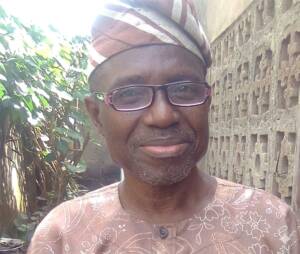
Speaking on Frontline, a current affairs programme on Eagle 102.5 FM, Ilese-Ijebu, Afenifere’s National Publicity Secretary, Comrade Jare Ajayi, said the organisation views the issue from a broader security and governance perspective rather than through the lens of political rivalry.
Ajayi noted that Nigeria is already entering a politically charged period ahead of future elections, making it necessary for authorities to carefully examine allegations that touch on insecurity and governance.
“Well, we are in a political era; we are in an election era, let me put it that way, because elections are coming. We have seen a lot of things happening between political parties and all that,” he said.
According to him, political competition should not be used to dismiss legitimate concerns about security challenges or to shield any institution from scrutiny.
The controversy followed comments by Fayose during an appearance on Channels Television’s Politics Today on June 1, 2026, where he alleged, without presenting evidence, that the administration of Oyo State Governor Seyi Makinde orchestrated the abduction of schoolchildren and teachers in the state to embarrass President Bola Ahmed Tinubu and portray his government as ineffective in tackling insecurity.
Reacting to the allegation, Ajayi said Afenifere lacks the authority to verify or dismiss the claim but believes it deserves attention from the appropriate investigative and security agencies.
“As for what he said, the allegation, if you permit me to use that word, those who have the authority to investigate matters, I think it is an area they should not forget to look at,” he stated.
Ajayi argued that insecurity in Nigeria is multifaceted and often involves several actors operating at different levels. He said politicians, security personnel, community leaders and even foreign interests seeking economic advantage could be connected to the broader insecurity landscape.
“There are various layers to this issue, escalating insecurity, kidnapping and all that. Politicians are implicated. Those in security agencies are implicated. Some community leaders could be implicated, just as foreign interests who are interested in the solid minerals in Nigeria,” he said.
The Afenifere spokesman further suggested that some criminal networks may have motives beyond ransom collection, alleging that displacement of communities sometimes creates opportunities for illegal mining and other forms of economic exploitation.
“They don’t just stop at kidnapping and getting ransom. They go further by ensuring that they force people out of their communities. If you look at some places where people have been displaced, the next thing you see is that illegal mining starts occurring in those places,” he added.
Ajayi also referenced reports of arrests involving foreign nationals allegedly linked to illegal mining operations in parts of northern Nigeria, arguing that such developments underscore the need for broader investigations into the roots of insecurity.
While acknowledging that Fayose’s allegation may be politically motivated, Ajayi maintained that security agencies should not restrict their inquiries to any one individual.
“It is an area that should be looked into, but it should not even be limited to the person whom the former governor Fayose is alleging or suspecting. It should be widened,” he said.
According to him, Nigeria’s security challenges require deeper interrogation to determine whether criminal activities are influenced by political calculations, economic interests or organised networks operating behind the scenes.
Ajayi also referred to previous comments by Senate President Godswill Akpabio suggesting that insecurity often subsides after elections, saying such observations have contributed to concerns that some security challenges may be linked to political manoeuvring.
“It is a possibility of political and military manoeuvring or masterminding that is sustaining this particular thing,” he stated.
The discussion generated strong reactions from listeners, many of whom expressed frustration over the country’s worsening security situation and declining confidence in public leadership.
One caller, Abdul Wasiu from Ago-Iwoye, rejected Fayose’s allegation outright, arguing that many Nigerians would find it difficult to take the former governor seriously.
“No Nigerian will believe him. The issue of insecurity has been our problem in this country, and our leaders have failed to solve it,” he said.
Another caller insisted that insecurity should primarily be seen as a failure of governance rather than a political conspiracy.
“The security of the people is directly in the hands of the government, but none of this is taking place in this country now. Now somebody is telling me political. Political as how?” the caller queried.
A third caller, Emmanuel, raised concerns about what he described as unequal media attention to insecurity incidents across different parts of the country.
Responding, Ajayi clarified that Afenifere was not attributing all insecurity to politics but was merely insisting that the political dimension should not be overlooked.
“We are not saying the whole thing is political. No. We are saying that the political angle should also not be ignored. It could be,” he explained.
He added that insecurity often involves possible collusion among different actors, including security operatives and local collaborators, citing past incidents involving attacks on security personnel as evidence that internal betrayal remains a significant concern.
Ajayi also defended the media against accusations of sensationalising insecurity, arguing that journalists are merely carrying out their constitutional responsibility as watchdogs of society.
“The southern media, to the best of my knowledge, are playing their role as the fourth estate of the realm. Sometimes they are even accused of overdoing it,” he said.
He maintained that media coverage reflects realities on the ground and should not be dismissed because of regional or political sensitivities.
The Afenifere spokesman concluded by reiterating the organisation’s longstanding call for the establishment of state police, describing it as one of the constitutional reforms needed to strengthen security architecture and improve responses to emerging threats across the country.




Return of Garrison Politics: Warning shots to democracy!
By Asiwaju Kunle Kalejaye SAN Chief Jonathan Akinremi Odebiyi(1923 -2005) wa…
