

Hajj terror arrests raise questions over Nigeria’s security screening – Bashir Kurfi

Jeremiah Adeshina
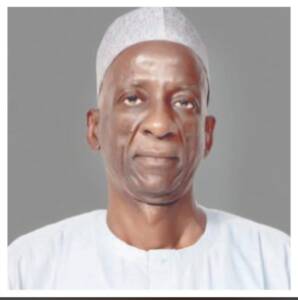
A security analyst and Convener of the Katsina Security Community Initiative, Bashir Kurfi, has called for a transparent investigation into allegations that some suspected bandit commanders travelled to Saudi Arabia for the 2026 Hajj pilgrimage, with claims that some may have been sponsored by state governments.
Kurfi, who spoke during an interview on Frontline, a current affairs programme on Eagle 102.5 FM, Ilese-Ijebu, Ogun State, said his comments were based on allegations already circulating in the public domain and stressed that it was the responsibility of government authorities to either confirm or disprove them through credible investigations.
The retired lecturer at the School of Business, Ahmadu Bello University (ABU), said he never presented the claims as established facts but maintained that they deserved serious attention from the nation’s security agencies.
“Now, I said that there is an allegation that these bandits, many of their commanders, were in Saudi Arabia. I also said there was another allegation that some of them were sponsored by state governments. What we want is for the government to come out and disprove these allegations because nobody said they had been confirmed,” he said.
Kurfi explained that the controversy began after an earlier interview he granted to Trust TV, where he mentioned reports that some bandit leaders were participating in the Hajj pilgrimage.
According to him, the Katsina State Commissioner for Internal Security initially dismissed the allegations.
However, he noted that the narrative changed after the Minister of Interior reportedly confirmed that suspected terrorists had been arrested on their return from the pilgrimage through Katsina Airport.
“First, the state commissioner said there was nothing like that. Then, within 24 hours, the Minister of Interior confirmed that suspected terrorists were arrested on their return from Mecca at Katsina Airport. That is why there is a need for proper investigation,” he stated.
Kurfi questioned how individuals allegedly linked to terrorism could have successfully passed through Nigeria’s extensive Hajj screening procedures without being detected.
He explained that intending pilgrims undergo several stages of documentation, verification by their local governments, orientation programmes and other security checks before travelling to Saudi Arabia.
“When we talk about intelligence, there is a process. Pilgrims must have valid travel documents, they must be verified through their local governments, and they undergo orientation programmes before departure. If all these processes were followed, how were such people not detected?” he asked.
The security expert also argued that allegations of government sponsorship should not be ignored, insisting that even if public funds were used to sponsor Islamic clerics, such practice would contradict Islamic teachings on the pilgrimage.
“If government paid for them, even if they were Imams, using public funds to sponsor Hajj is against Islamic principles because Islam teaches that one should perform Hajj only when financially capable,” he said.
Kurfi further warned that allowing individuals accused of terrorism-related activities to travel internationally could create fresh security challenges for Nigeria.
According to him, such trips could provide opportunities for contacts with international extremist networks if adequate monitoring is not carried out.
“It may even be part of a peace arrangement. But the danger is that they could establish contacts with international groups, creating greater security threats when they return. Government should strengthen intelligence operations and thoroughly screen everyone returning from Hajj, whether in Katsina, Lagos or anywhere else,” he said.
Speaking on the evolution of banditry in northern Nigeria, Kurfi described bandits as criminal elements with no stable economic or social identity, making them difficult to rehabilitate or integrate into productive activities.
He said many of them initially engaged in cattle rustling before expanding into kidnapping for ransom and collaborating with terrorist organisations for logistics and financial benefits.
“They started with cattle rustling, but because of weaknesses in the system, they expanded into kidnapping for ransom and later established links with terrorist organisations for logistics and financial support. They live in forests and launch attacks on communities and travellers,” he explained.
Kurfi narrated a personal experience from his village to illustrate the brutality of bandit attacks.
According to him, armed men abducted the wife of a theatre nurse along with her two-month-old twins and their five-year-old son while the husband was performing surgery at a hospital.
He said the family spent two months in captivity before a ransom of N5 million was paid.
Even after receiving the ransom, the kidnappers allegedly demanded an additional N1 million before releasing the five-year-old boy, who remained in captivity for two more weeks.
“When the boy was eventually brought home, he had more than 20 cigarette burn marks on his body. His mother told me they were chained throughout their captivity. These are the kinds of atrocities these criminals commit,” he lamented.
Kurfi maintained that many bandits are not foreigners but people from the affected communities who are familiar with the terrain and local population.
He claimed that residents often know where many of the bandits live, as well as their families, arguing that such local knowledge should be effectively utilised by security agencies.
“These people are not from another country. They are locals. Many of the bandits in my area, I know where they are. I know their houses and even their parents. Anyone who genuinely wants to locate them can come to me, and I will show them,” he said.
Kurfi called on the Federal Government and security agencies to intensify intelligence gathering, strengthen travel screening processes and thoroughly investigate all allegations surrounding the participation of suspected terrorists in the 2026 Hajj pilgrimage, insisting that transparency and accountability are essential to safeguarding Nigeria’s security.





Unlock Nigeria’s ₦25tr fish economy through policy, investment — Nnadi
Stanley Ihedigbo Nigeria’s fish economy, estimated at ₦25 tril…