

Fix Nigeria’s existing roads, before chasing Mega Highway dreams

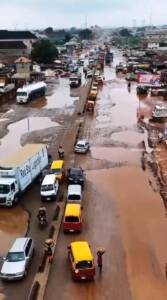
For thousands of Nigerians, travelling on the Benin-Lagos Expressway has become a nightmare. What should ordinarily be a journey of a few hours now stretches into days as motorists and passengers remain stranded because of failed sections of the road.
Families sleep in their vehicles, businesses lose valuable time and money, perishable goods are destroyed, and commuters face the constant threat of accidents and criminal attacks.
The situation raises a fundamental question: Should a nation neglect its existing critical infrastructure while committing billions of naira to new mega highway projects?
The Federal Government deserves commendation for its ambition to improve Nigeria’s transport network through projects such as the Lagos-Calabar Coastal Highway, the Badagry-Sokoto Super Highway and the Lagos-Abidjan Highway. These projects have the potential to boost regional trade, tourism and economic integration.
However, these long-term investments should not come at the expense of roads that millions of Nigerians depend on every day.
The Benin- Lagos Expressway is not just another road. It is one of Nigeria’s busiest economic corridors, linking the South-West with the South-South and South-East. Every day, thousands of commercial vehicles, petroleum tankers, food transporters and private motorists depend on this route.
When traffic is brought to a standstill, the effects ripple across the nation’s economy, leading to increased transport costs, higher food prices, delayed deliveries and avoidable economic losses.
It is unacceptable that in a country blessed with abundant human and natural resources, citizens should spend days on a federal highway. Such an experience reflects poorly on infrastructure planning and government priorities.
Infrastructure development should not be about announcing grand projects alone. It should also focus on preserving and maintaining existing national assets.
A well-maintained road network is often more beneficial to the economy than constructing new roads while old ones deteriorate beyond repair.
The Federal Government must therefore adopt a balanced approach. While flagship projects continue, urgent intervention should be directed toward repairing strategic highways across the country.
Roads such as the Benin-Lagos Expressway, Abuja-Kaduna Highway, Enugu-Port Harcourt Road, East-West Road and several others require immediate rehabilitation to restore confidence in Nigeria’s transport system.
Beyond emergency repairs, there is also a pressing need for a sustainable road maintenance policy. Too often, roads are abandoned until they become completely impassable, requiring expensive reconstruction instead of routine maintenance.
This cycle wastes public funds and exposes Nigerians to unnecessary hardship.
The Federal Ministry of Works should intensify monitoring of contractors handling federal road projects and ensure that rehabilitation contracts are executed promptly and to acceptable standards. Delays in project execution only worsen the suffering of road users.
A nation’s development is measured not only by the number of new projects it launches but also by how effectively it maintains existing infrastructure.
Nigerians deserve roads that are safe, reliable and fit for economic activities.
As citizens continue to endure endless gridlock and sleepless nights on the Benin-Lagos Expressway, the government must act with urgency. The promise of future highways should never overshadow the immediate responsibility of fixing the roads that millions rely upon today.
Nigeria cannot afford to celebrate ambitious highway projects while its major economic arteries remain broken. The time has come to prioritise the rehabilitation of existing federal roads alongside new infrastructure development. Nigerians deserve nothing less.




NDLEA freezes drug traffickers’ accounts, seizes hotels, assets
Taiwo Adeyeye National Drug Law Enforcement Agency (NDLEA) has intensified i…