

FENRAD raises alarm over Uzuakoli gully erosion, seeks urgent government intervention

Nkem Ukaegbu, Umuahia
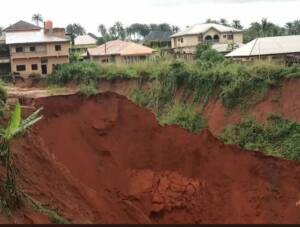
Foundation for Environmental Rights, Advocacy and Development (FENRAD) has expressed deep concern over the worsening gully erosion crisis in Uzuakoli, Bende Local Government Area of Abia State, describing the situation as both an environmental catastrophe and a humanitarian emergency requiring urgent and coordinated intervention.
In a statement issued and signed by its Executive Director, Comrade Nnanna Nwafor, the organisation said the Uzuakoli erosion site has become one of the most severe ecological threats confronting Abia State, with decades of unchecked land degradation endangering lives, destroying livelihoods, displacing families and threatening critical public infrastructure.
According to FENRAD, the continuous expansion of the gully has exposed surrounding communities to serious environmental hazards while undermining agricultural productivity, local economic development and the resilience of affected communities.
The organisation acknowledged recent efforts by stakeholders to draw national attention to the crisis, stressing that environmental disasters of such magnitude require collaboration among government agencies, development partners, civil society organisations, host communities, traditional institutions and the private sector.
FENRAD noted that the Abia State, Nigeria Erosion and Watershed Management Project (NEWMAP) possesses the technical expertise, engineering capacity and institutional framework needed to provide sustainable solutions to the erosion menace.
It therefore urged the Abia State Government and relevant Federal Government agencies to leverage the experience and implementation capacity of NEWMAP in delivering long-term remediation and ecological restoration for the affected communities.
The organisation’s environmental assessment revealed that the erosion has caused extensive environmental, social and economic damage, including the loss of fertile agricultural land, declining food production, destruction of indigenous vegetation and biodiversity, increased sedimentation of streams, deteriorating water quality and disruption of aquatic ecosystems.
It also identified inadequate drainage infrastructure and poor watershed management as factors accelerating surface runoff and enlarging erosion channels, thereby increasing flood risks during heavy rainfall.
According to FENRAD, the advancing gully now threatens residential buildings, schools, healthcare facilities, religious centres, roads, electricity infrastructure and other public assets.
The organisation further warned that continued vegetation loss has reduced the area’s capacity for carbon sequestration, increased greenhouse gas emissions and heightened the vulnerability of communities to climate-induced disasters.
Beyond the environmental consequences, FENRAD described the humanitarian impact as devastating, with families losing homes, farms and businesses while many children face disruption to their education. Access to healthcare has also been affected, worsening economic hardship among vulnerable residents, particularly women, children, the elderly and persons living with disabilities.
To address the crisis, FENRAD called on the Abia State Government, the Federal Ministry of Environment, the National Emergency Management Agency (NEMA), the Ecological Project Office, the National Environmental Standards and Regulations Enforcement Agency (NESREA), the Niger Delta Development Commission (NDDC), relevant legislative committees and international development partners to urgently implement coordinated interventions.
The recommended measures include comprehensive geotechnical and hydrological investigations, emergency stabilisation of active gully heads, construction of sustainable drainage and stormwater management systems, ecological restoration through afforestation and watershed rehabilitation, climate-resilient land-use planning, continuous environmental monitoring and community-based disaster risk reduction programmes.
The group also appealed to the Abia State Government to prioritise the Uzuakoli erosion site through the institutional framework of NEWMAP and other relevant environmental programmes to ensure a comprehensive and sustainable response.
On the humanitarian front, FENRAD called for immediate deployment of relief materials, temporary shelters for displaced families, safe water, sanitation and hygiene services, medical outreach programmes, psychosocial support, educational assistance for affected children and livelihood restoration initiatives for farmers and small business owners.
The organisation further recommended the establishment of a transparent multi-stakeholder response framework involving government institutions, environmental experts, academia, civil society organisations, traditional rulers, youth groups, women’s organisations, host communities and development partners.
According to FENRAD, such a framework should promote transparency, accountability, community participation, evidence-based planning, climate resilience and long-term environmental sustainability.
The organisation also advocated increased investment in climate adaptation, integrated watershed management, environmental monitoring, ecological restoration and strict enforcement of environmental regulations to prevent similar ecological disasters across Abia State and the South-East.
Describing environmental degradation as a fundamental human rights issue, FENRAD stressed that every citizen has the right to live in a safe, healthy and sustainable environment.
It warned that delaying intervention would not only worsen ecological damage but also deepen poverty, displacement, food insecurity and social vulnerability.
FENRAD reaffirmed its commitment to promoting environmental justice through evidence-based advocacy, policy engagement, public awareness and strategic collaboration with stakeholders working to protect Nigeria’s environment and vulnerable communities.




APC Campaign Council denies plot to assassinate Atiku, challenges Timi Frank
Stanley Ihedigbo All Progressives Congress (APC) Presidential Campaign Counc…