

Feeding the future: Why Nigeria needs a feminist approach to food security


Stanley Ihedigbo
Nigeria’s population is projected to reach 400 million by 2050, presenting both a challenge and an opportunity. The challenge lies in ensuring that millions of Nigerians have reliable access to sufficient, nutritious food.
The opportunity stems from Nigeria’s vast agricultural potential, which, if harnessed effectively, could make the country food self-sufficient.
Yet, despite technological advances and agricultural reforms, millions remain food insecure. The Food Systems Profile–Nigeria 2022 by the FAO emphasizes that addressing this crisis requires more than just increased production; it demands transforming the social and structural inequalities that shape who produces, distributes, and consumes food.
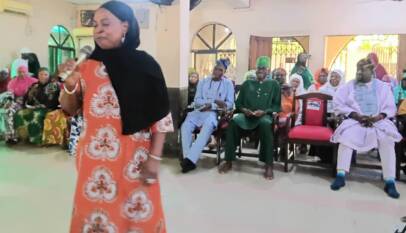
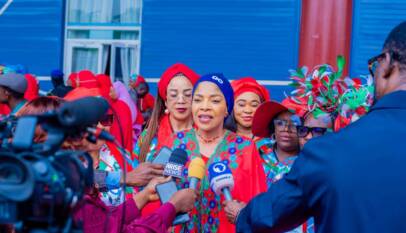
Speaking at the Centre for Gender Economics in Africa (CGE Africa), National Women’s Summit on tackling food insecurity in Ikeja, Lagos, Specialist, Project & Manager, ActionAid Nigeria, Vivian Efem-Bassey, said that at the heart of this transformation is a feminist approach that empowers women as central actors in Nigeria’s food system.
She emphasized that food security existed when all people, at all times, have access to sufficient, safe, and nutritious food to maintain an active and healthy life.
“It is multidimensional, comprising three key pillars, which include: sufficient quality food must be produced and supplied, households and individuals must be able to obtain and afford food, and people must be able to benefit nutritionally from food, supported by clean water, sanitation, and health care.
“In Nigeria, all three pillars are under pressure. Climate change, insecurity, poor infrastructure, inflation, and limited agricultural inputs contribute to low production and high food costs. Compounding these challenges is a persistent gender gap that restricts women’s access to resources, decision-making power, and income opportunities—key drivers of sustainable food security.
“Women are the backbone of Nigeria’s food system. They make up nearly half of the agricultural workforce in rural areas and over 80 percent of the informal sector, including small-scale trading, food processing, and subsistence farming. They are the primary caregivers and household managers, often prioritizing family nutrition over their own,” she further said.
According to her, women face disproportionate levels of food insecurity.
“Deep-rooted sociocultural norms limit their mobility and decision-making power. Unequal access to land, credit, technology, and agricultural extension services keeps many women trapped in cycles of poverty and vulnerability.
“Meanwhile, the burden of unpaid care work, feeding and caring for families, further limits their economic opportunities.
“Research shows that if women had the same access to productive resources as men, agricultural yields could increase by up to 30 percent, significantly reducing hunger and poverty. This underscores a simple truth: empowering women is not just equitable; it is pragmatic.
“A feminist approach to food security is transformative, not incremental. It goes beyond integrating women into existing systems; it challenges structural barriers, promotes equity, and recognizes women as decision-makers and leaders. Such an approach emphasizes that food insecurity is not only a technical or economic problem but also a social one rooted in unequal power relations,” she stressed.
By addressing gender inequality, the Specialist, Project & Manager, ActionAid, further stressed that Nigeria can strengthen its food system, enhance productivity, and improve nutrition outcomes.
In her remarks, Executive Director, CGE Africa, Ms. Uchenna Idoko, said that women’s labour, planting, harvesting, processing, cooking, and caregiving, is often invisible in policy and statistics.
According to her, policies should recognize women’s contributions to household and community nutrition.
“Shared household responsibilities and equitable participation in decision-making should replace rigid gender roles that restrict women’s agency.
“Women need access to land, credit, technology, and markets to contribute fully to sustainable food systems. On land and resource rights, secure ownership and inheritance rights empower women and enhance household food security. Access to loans, training, and agricultural extension services boosts productivity.
“Fair wages, safe conditions, and social protection for women in agriculture and informal sectors are crucial for equitable economic participation. Empowerment is more than participation; it is influence. Women must be part of decision-making structures at the household, community, and national levels,” he stressed.
She lamented that violence and discrimination undermine women’s productivity and access to resources, adding that eliminating these barriers is key to achieving sustainable food security.
Some of the participants at the summit commended the centre for its activities and support for women’s empowerment



MOPA 2026: Momentous Magazine celebrates excellence, leadership in Lagos
Mercy Iheoma Ihedigbo Momentous Magazine has commenced the final countdown t…
