

Bashiru-Kaka unveils development agenda, pledges stronger NiDCOM, SDG partnership


Michael Olumide Alabi
Newly elected Chairman of the Nigerian Community Greater Manchester (NCGM), Otunba Dele Bashiru-Kaka, has unveiled an ambitious development agenda aimed at strengthening the contribution of Nigerians in the diaspora to national development.
Bashiru-Kaka, who succeeds Otunba Abiola Kumoye, said his administration would pursue a new institutional direction anchored on unity, inclusivity, transparency and strategic partnerships with relevant Nigerian and international development institutions.
According to him, the new leadership will seek closer collaboration with the Nigerians in Diaspora Commission (NiDCOM), the Sustainable Development Goals (SDGs) framework and other development agencies to create practical platforms through which Nigerian professionals and entrepreneurs in Greater Manchester can contribute their expertise, investments, technological innovations and human capital to critical development programmes.
He said the initiative was designed to move diaspora engagement beyond occasional interventions to a more structured and sustainable system capable of producing measurable development outcomes.
“Our administration will be anchored on a united leadership rooted in quality, inclusivity and a shared unity of purpose,” Bashiru-Kaka declared.
He added that strict adherence to the constitution of the organisation, financial transparency and accountability would remain central to his administration as it builds relationships with development institutions and stakeholders.
The chairman said the NCGM would explore new opportunities for professionals, entrepreneurs, academics, young people and other members of the Nigerian community in Manchester to participate meaningfully in development initiatives in Nigeria and the United Kingdom.
Four-Point Development Blueprint
Bashiru-Kaka outlined a four-point development blueprint which, he said, would guide his administration during its tenure.
The first pillar is Global Partnerships, under which the NCGM plans to strengthen its engagement with NiDCOM, SDG-related institutions and other development agencies.
The objective, according to the chairman, is to establish practical channels for collaboration in areas such as investment, education, technology transfer, skills development, social intervention and sustainable community development.
He said the initiative would help connect the expertise and resources available within the Nigerian diaspora in Greater Manchester with carefully identified development needs.
The second pillar is Youth and Talent Circulation, which seeks to transform the traditional concept of “brain drain” into what the administration describes as “brain circulation.”
Bashiru-Kaka said the NCGM would promote educational, career-development and mentorship opportunities that would enable young Nigerians to benefit from the experience and professional networks of Nigerians living and working in the diaspora.
The initiative, he explained, would focus on building pathways for young people to acquire skills, access professional guidance and establish connections that could benefit both Nigeria and the United Kingdom.
The youth development component is expected to support the objectives of Sustainable Development Goals 4 and 8, which focus on quality education, decent work and economic growth.
The third pillar is Structured Local Welfare, through which the new administration plans to strengthen the welfare and support systems available to members of the Nigerian community in Greater Manchester.
Particular attention, he said, would be given to elderly members of the diaspora, with the aim of developing a more coordinated and respectful system of care and support.
Bashiru-Kaka said the welfare agenda would ensure that members of the community who have contributed significantly to society over the years are not left without adequate support as they grow older.
The initiative is aligned with the objectives of SDG 3, which promotes good health and well-being.
The fourth pillar, Institutional Stewardship, focuses on strengthening governance and accountability within the NCGM.
The chairman said his administration would introduce open financial frameworks, performance monitoring mechanisms and direct feedback channels through which members of the community could engage with the leadership.
He stressed that transparency would be critical to building trust between the leadership and members of the organisation.
According to him, the NCGM must operate as an institution where decisions are guided by established rules, resources are properly accounted for and members have confidence in the processes through which the organisation is administered.
The institutional reform agenda is linked to the principles of SDG 16, which promotes peaceful and inclusive societies, access to justice and effective, accountable and inclusive institutions.
Bashiru-Kaka said his administration would also work to strengthen unity among Nigerians in Greater Manchester, stressing that the diversity of the Nigerian community should be seen as a strength rather than a source of division.
He said the new leadership would encourage broader participation in community activities and decision-making, while creating opportunities for professionals and organisations within the diaspora to contribute to the development of the community.
The chairman further expressed optimism that stronger collaboration between Nigerian diaspora organisations and development institutions could unlock new opportunities in investment, innovation, education, technology and human capital development.
He noted that Nigerians living abroad possess valuable expertise, international networks and professional experience which, if properly coordinated, could contribute significantly to development efforts in Nigeria.
The NCGM administration, he said, would therefore seek to establish an environment where diaspora professionals can contribute to development projects without losing the benefits of their international exposure.
Bashiru-Kaka also pledged to build on the achievements of his predecessor, Otunba Abiola Kumoye, while introducing reforms that would respond to the changing needs of the Nigerian community in Greater Manchester.
He called on members of the community to support the new administration and participate actively in its programmes, saying that the success of the organisation would depend on collective commitment rather than the efforts of the leadership alone.
The new chairman’s agenda represents an attempt to position the Nigerian Community Greater Manchester not only as a social and cultural association but also as a structured platform for diaspora development, youth empowerment, welfare and strategic engagement.
With its proposed focus on NiDCOM, the SDGs and other development partners, the administration hopes to create stronger institutional bridges between Nigerians in Greater Manchester and development initiatives in Nigeria.
Bashiru-Kaka said the ultimate objective was to build a united and accountable Nigerian community whose human and financial resources could be effectively mobilised for sustainable development.
He reiterated his commitment to leading an administration that would prioritise quality leadership, inclusiveness, transparency and measurable results, while encouraging members of the Nigerian diaspora to see themselves as active partners in the development of Nigeria and the communities where they reside.
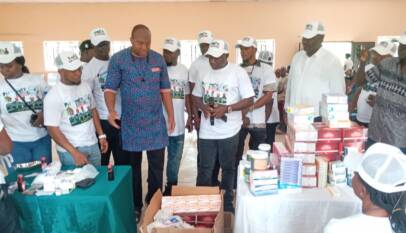



Tompolo-backed PBAT Movement takes free medical outreach to Ugboha
The PBAT Door-to-Door Movement has organised a free medical outreach in Ugbo…
