

Armor of Integration: A new era for Nigerian defense

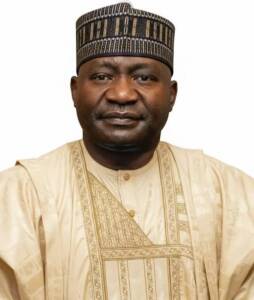
By Kennedy Elaigwu Awodi
In the complex theatre of asymmetric warfare, victory is rarely found at the end of a barrel alone. It is found in the resilience of a farmer returning to his land, the surrender of a disillusioned insurgent, and the transparency of a military budget that prioritizes both hardware and human heart.
Under General Christopher Musa, the Nigerian Ministry of Defence is proving that the strongest shield for a nation is not just its armor, but its integration with the people it protects.
For nearly two decades, Nigeria’s battle against insurgency was often characterized by a “territorial” mindset, measuring success by the number of flags planted in remote forests. However, the shift in leadership to General Christopher Musa has introduced a “Whole-of-Society” doctrine that is finally treating the disease of terrorism rather than just its symptoms.
This evolution is not a mere change in personnel; it is a fundamental shift toward a “Smarter Military” that prioritizes intelligence, human security, and technological accountability.
Traditional warfare focuses on the frontline, but in an insurgency, the “line” is everywhere. General Musa’s strategy has pivoted toward dismantling the logistics and life-support structures that allow terror to breathe. Recent successes, most notably Operation Desert Sanity V in early 2026, exemplify this intelligence-led approach.
By moving beyond the simple “find and fix” kinetic model, the military successfully targeted and destroyed notorious enclaves like the Abu Nazir and Abu Ahmed camps.
The result was not just a body count, but a logistical collapse that forced scores of high-ranking fighters and their families to surrender. When you starve a “weed” of its nutrients, its fuel, its food, and its ammunition routes, it withers.
This is a strategy successfully mirrored by India under the leadership of Prime Minister Narendra Modi. India’s intelligence-led precision strikes against terror infrastructure across the Line of Control demonstrated that destroying the source of the threat is more effective than waiting for the threat to arrive. Replicating this in Nigeria is essential because insurgency in the Sahel thrives on porous borders and shadow economies. By maintaining this tempo, we ensure that these groups cannot regroup or find new safe havens once they are flushed out.
“General Musa has brought a refreshing candor to public service, openly stating that “military successes alone cannot deliver enduring peace.” This recognition has birthed a robust non-kinetic pillar within the Ministry. In flashpoints like Plateau State, the military has moved from being just a patrolling force to a developmental partner, distributing fertilizers and agricultural inputs to farming and herding communities.
This “Human Security” model is a direct page from the playbook of Colombia. For decades, the Colombian government struggled with FARC rebels until they integrated “Territorial Consolidation” programs, bringing roads, schools, and agricultural support to conflict zones alongside the military. By protecting the farming seasons, the Nigerian military is acting as a catalyst for economic recovery. When a young man has a viable farm and a sense of belonging to the state, he becomes immune to the recruitment lures of extremist groups.
The tempo of these non-kinetic programs must be kept because trust is the most fragile currency in the North East and North Central regions. It takes years to build the bridge between a civilian and a soldier, but only days of neglect to burn it. Continuity in these programs transforms a temporary “military victory” into a permanent “communal peace.”
As we look toward the 2026 Defense Roadmap, the emphasis on Modernization and Personnel Welfare represents a significant upgrade in service delivery. General Musa’s defense budget proposal is not just about buying more bullets; it’s about integrating advanced technology like drone warfare and cyber defense capabilities.
This move toward a tech-heavy, professionalized force mirrors the strategy of Israel. Under various administrations, Israel has maintained its “Qualitative Military Edge” not by having the largest army, but by having the most technologically advanced one, backed by rigorous personnel welfare. A soldier who is well-housed, whose family is cared for, and who is equipped with real-time drone intelligence is a soldier who operates with precision and adheres to international human rights standards.
Replicating this modernization in Nigeria is no longer a luxury; it is a necessity. The nature of global conflict is evolving; our adversaries are increasingly tech-savvy, using digital platforms for propaganda and encrypted channels for coordination. If we stop modernizing now, we risk falling behind.
The progress made under General Christopher Musa is undeniable, but it is also delicate. Nigeria stands at a crossroads where the “Whole-of-Society” approach is beginning to show that a secure nation is built on more than just gunpowder. It is built on the transparency of corporate governance within the Ministry, the accountability of service delivery to the frontline soldier, and the protection of the consumer, in this case, the Nigerian citizen, who “buys” into the promise of national security with their tax Naira and their trust.
We must keep the tempo because the roots of insurgency are deep. To stop now would be to allow the weed to regrow stronger and more resistant. By sustaining the intelligence-led dismantling of logistics, expanding the “peace dividend” to every affected community, and relentlessly modernizing our forces, Nigeria is not just winning a war; it is building a lasting sanctuary.
Awodi wrote from North Carolina, USA.
Email: awodiken@outlook.com



APC Campaign Council denies plot to assassinate Atiku, challenges Timi Frank
Stanley Ihedigbo All Progressives Congress (APC) Presidential Campaign Counc…