

Ambassador Ikpeazu seeks direct flights, stronger trade ties between Nigeria, Spain

Stanley Ihedigbo
Nigeria and Spain are exploring fresh opportunities to strengthen bilateral relations, with tourism, direct air connectivity, trade, investment, security, education, agriculture and renewable energy emerging as priority areas for expanded cooperation.
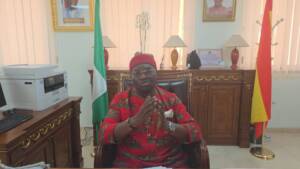
Nigeria’s Ambassador to Spain, Dr. Okezie Ikpeazu, made this known in an exclusive interview with ARISE News, where he outlined areas in which both countries could deepen their economic and diplomatic partnership.
Ikpeazu said Nigeria possesses enormous tourism potential capable of attracting more visitors from Spain and other European countries, but stressed that improved connectivity, security and infrastructure would be critical to unlocking the sector’s full potential.
According to the Ambassador, Spain occupies a strategic position as a gateway between Europe and Africa, making stronger relations between the two countries particularly important to Nigeria’s economic and investment ambitions.
“There is a lot to do between the two countries. The need to deepen and strengthen our ties is very important,” he said.
A major priority identified by the Ambassador is the restoration of direct bilateral air services between Nigeria and Spain.
Ikpeazu argued that direct flights would significantly reduce travel time and make movement easier for tourists, investors, businesspeople, government officials and other travellers.
He said improved air connectivity would also strengthen people-to-people relations while creating a more favourable environment for increased tourism, trade and commercial activities.
“Trade, commerce, tourism and collaboration must start with a restoration of bilateral air services between both countries. I am focused on restoring that, and I hope that it would be restored because it would strengthen government-to-government relations in respect of trade and tourism,” he said.
He explained that easier movement between Nigeria and Spain could stimulate greater interaction between businesses and institutions in both countries and support the expansion of bilateral economic relations.
While highlighting the enormous opportunities in Nigeria’s tourism industry, the Ambassador stressed that tourism development could not be separated from security.
He said tourists and investors must have confidence that they can travel and conduct business safely before the country can fully realise the economic benefits of its tourism resources.
“Every economy, including tourism, is tied to security. We need a strategy that encompasses robust economic development to ensure that tourists move in safety, while private individuals are given the right environment to develop tourist centres,” Ikpeazu said.
He pointed to the possibility of deeper cooperation between Nigeria and Spain in maritime security and naval defence as part of efforts to strengthen Nigeria’s security architecture.
According to him, both countries are already cooperating in naval defence and capacity building for security personnel, with room for further collaboration.
The Ambassador noted that enhanced security would need to be supported by efficient transportation networks and improved systems for the movement of people and goods across the country.
He maintained that these were not only essential for tourism but also for businesses, investment and broader economic development.
Ikpeazu also highlighted opportunities for Spanish investors to participate more actively in Nigeria’s economy, particularly in sectors where both countries possess complementary strengths.
He pointed to agriculture and renewable energy as areas where greater partnerships could be developed.
The Ambassador also drew attention to Nigeria’s critical mineral resources, including lithium, which he said presented additional opportunities for international investment and economic cooperation.
He argued that Nigeria’s ongoing economic reforms under President Bola Ahmed Tinubu had also created new possibilities for foreign investors.
According to him, changes in the economic environment, including a more stable and predictable dollar-to-naira regime and greater ease in the remittance of business proceeds, have improved the country’s investment outlook.
“The economic reforms have changed the outlook towards Nigeria as an investment destination,” he said.
Ikpeazu said Spain could play a greater role in Nigeria’s economic development by increasing investments and establishing partnerships in strategic sectors.
Beyond trade and investment, the Ambassador called for stronger cultural relations between Nigeria and Spain.
He said increased cultural exchanges could help deepen understanding between the two countries while highlighting areas of similarity between their peoples.
According to him, cultural diplomacy could also support tourism by encouraging greater interaction and exposing citizens of both countries to their respective heritage, traditions and creative industries.
On education and human capital development, Ikpeazu disclosed plans to explore the establishment of a Nigeria-Spain education hub.
He explained that the initiative would focus on relevant skills and help address gaps in skilled manpower.
The proposed hub, according to him, could provide Nigerian young people with skills aligned with emerging economic opportunities while also promoting cooperation between educational institutions in Nigeria and Spain.
He described Nigerian youths as an important asset in the country’s development, saying their resilience, creativity and resourcefulness should be channelled towards opportunities emerging from increased global attention on Africa.
“Nigerian youths are resilient, resourceful and hardworking. The focus of the world is on Africa,” he said.
The Ambassador further disclosed that the Nigerian Embassy in Spain was working to encourage Nigerians living in the country to use their skills, talents and expertise to contribute to national development.
He said the Embassy’s approach was centred on citizen-focused diplomacy, with efforts aimed at ensuring that Nigerians in Spain receive the necessary support and consular services while maintaining strong connections with Nigeria.
As part of efforts to improve service delivery, Ikpeazu said plans were also underway to digitise consular services.
According to him, digitalisation would make it easier and more convenient for Nigerians in Spain to access consular assistance and other services provided by the Embassy.
Ikpeazu Advocates Structured Migration
On migration, the Ambassador advocated a more structured and dignified migration system that would enable Africans to move legally between countries while contributing positively to the economies of their host nations.
He stressed the need for migration to be approached in a manner that protects the dignity of migrants while allowing countries to benefit from the skills and contributions of people who move across borders.
Ikpeazu also called on Nigerians to contribute to improving the country’s international image, arguing that the responsibility of projecting Nigeria positively should not rest solely with government institutions.
He urged Nigerians to maintain a productive relationship with their country and play their part in strengthening the national economy.
The Ambassador’s vision for Nigeria-Spain relations extends beyond conventional diplomatic engagement, encompassing a broad range of economic, social and strategic interests.
Tourism, direct air connectivity, trade, investment, agriculture, renewable energy, critical minerals, security, education and culture are among the areas identified for deeper cooperation.
With Spain’s strategic location between Europe and Africa, Ikpeazu believes Nigeria has an opportunity to leverage the relationship to attract more investment, expand tourism, strengthen human capital and create new economic partnerships.
The proposed restoration of direct air services could serve as an important starting point, providing the connectivity required to facilitate greater movement of people, goods, capital and ideas between the two countries.
For Nigeria, the emerging partnership with Spain represents an opportunity to convert diplomatic relations into stronger economic cooperation, while for Spain, deeper engagement with Africa’s largest economy could provide access to one of the continent’s most significant markets and a wide range of investment opportunities.




Delta has lost a distinguished statesman, compassionate leader — Ebie mourns Uduaghan
Chairman of the Governing Board of the Niger Delta Development Commission (N…