

Adeleke’s failure to carry stakeholders along triggered support for Oyebamijì — Akinbade

Jeremiah Adeshina
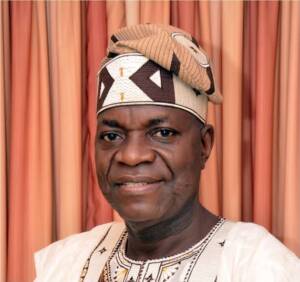
Former Secretary to the Osun State Government, Alhaji Fatai Akinade Akinbade, has attributed the decision of some Peoples Democratic Party (PDP) stakeholders to support the All Progressives Congress (APC) governorship candidate, Bola Oyebamijì, to what he described as Governor Ademola Adeleke’s failure to carry key stakeholders along in the affairs of his administration and political decision-making.
Akinbade made the disclosure on Monday while featuring on SABENKO, a political affairs programme on Eagle 102.5 FM, Ilese-Ijebu, Ogun State, where he spoke extensively on the political realignment taking place ahead of the Osun State governorship election.
According to the former SSG, some of the political actors who have now thrown their weight behind Oyebamijì were among those who previously worked with and supported Adeleke within the PDP, contributing their experience, resources and political networks to his emergence as the party’s governorship candidate and eventual election as governor.
He, however, alleged that the relationship between the governor and some of the stakeholders became strained after Adeleke assumed office, claiming that they were no longer adequately consulted on matters concerning the administration and the political direction of the state.
Akinbade said the stakeholders expected that their experience, ideas and contributions to the political process would be recognised and accommodated by the administration.
“Our ideas and experience were not sufficiently accommodated by the administration. Some of us had worked with Adeleke, supported him and contributed our own quota to the political process that brought him to government, so naturally we expected to be carried along.
“But when there is no consultation and stakeholders no longer feel included in the affairs of government, it creates a gap between the administration and the people who helped build the political structure.”
He said the inability of the stakeholders to establish what he described as a functional relationship with the governor eventually contributed to their decision to withdraw their support and seek an alternative political platform.
The former SSG stressed that the development should not be interpreted as a struggle over financial benefits, insisting that the grievances of the affected stakeholders were fundamentally about consultation, participation and recognition.
“Our political realignment was not motivated by financial considerations. We invested time, money, experience and political capital in the political process that brought this administration to power, and these are things that cannot simply be ignored.
“What we expected was participation, consultation and recognition of the contributions we made to the political process,” he said.
Akinbade explained that the decision to support Oyebamijì was therefore a political response to what he described as the breakdown in the relationship between Adeleke and some of the stakeholders who had previously played important roles in his political journey.
He further linked the emerging alliance to a broader political structure associated with the Tanimu Turaki camp, describing the development as another indication of the fluid nature of Nigerian politics.
According to him, political alliances are not necessarily permanent, as political actors are capable of reviewing their positions when circumstances change.
“Politics is not static. Political actors can change their positions when circumstances change, and that is what has happened.
“The people involved are looking at the prevailing political situation and have decided to support Bola Oyebamijì because they believe that is the direction they want to go,” Akinbade stated.
The veteran politician also drew from his years of experience in Nigerian politics, noting that he had been actively involved in politics since the late 1990s and had served under different administrations.
He maintained that his current political position was informed by his experience in government and party politics and was not a decision taken without consideration of the broader political consequences.
Asked whether the political realignment could be interpreted as a personal disagreement with Governor Adeleke, Akinbade said political participation should go beyond personal relationships.
He maintained that political stakeholders deserved meaningful consultation and recognition, particularly when they had contributed to the establishment and sustenance of a political structure.
Akinbade also dismissed suggestions that the political group supporting Oyebamijì would lose its relevance if Adeleke eventually secures another term in office.
Describing politics as a “game of plus and minus,” he argued that political relevance is not determined solely by who occupies government at a particular time.
“Politics is a game of plus and minus. You cannot say that because somebody is in government today, everybody who takes a different political position has become irrelevant.
“Political relevance is built over time through relationships, structures, and the people you have worked with, and nobody can completely write off those structures because of one election.”
Akinbade expressed confidence in the political bloc backing Oyebamijì, arguing that the people of Osun State are politically conscious and capable of deciding who governs the state through their votes.
Asked to assess Oyebamijì’s suitability for the governorship, Akinbade gave an emphatic endorsement of the APC candidate, describing him as “even more than perfect” for the position.
“For me, Bola Oyebamijì is even more than perfect for the position. He has the experience, he understands the political terrain and I believe he has what it takes to govern Osun State,” he said.
He, however, stressed that his support for Oyebamijì did not require him to condemn the other candidates contesting the election.
“But supporting Oyebamijì does not mean that we must condemn the other candidates; it is simply our choice based on who we believe can best serve the interest of the state,” he added.
Akinbade’s comments came against the backdrop of a similar position recently expressed by former Osun State Governor, Prince Olagunsoye Oyinlola, who featured on Eagle 102.5 FM’s Frontline programme.
Oyinlola had expressed concerns over Governor Adeleke’s handling of political relationships and the process surrounding his movement from the PDP to the Accord Party.
Oyinlola, who alongside Akinbade and other PDP stakeholders recently endorsed Oyebamijì, had also spoken about the issue of inclusion, saying the group expected greater consultation and participation in the political process.
The former governor’s position largely echoed Akinbade’s argument that the grievances of the stakeholders were not primarily about personal interests or financial considerations, but about the manner in which they were allegedly treated and carried along by the administration.
The development has added a fresh dimension to the political contest in Osun State, following the endorsement of Oyebamijì by the Oyinlola-led PDP group.
The endorsement has consequently intensified the battle among the major political contenders to consolidate party structures, influential stakeholders and grassroots support ahead of the August 15 governorship election.
With the election only hours away, the comments by Akinbade and Oyinlola have placed the question of political inclusion and stakeholder management at the centre of the ongoing campaign.
For the stakeholders backing Oyebamijì, the realignment represents a response to what they consider a breakdown in political consultation under the Adeleke administration. For the ruling camp, however, the election remains an opportunity for voters to assess the governor’s performance and determine whether he deserves another mandate.
Ultimately, the outcome of the poll will determine whether the political structures backing Adeleke will prevail or whether the emerging alliance around Oyebamijì can translate its growing support among influential political actors into votes at the polling units.



APC Campaign Council denies plot to assassinate Atiku, challenges Timi Frank
Stanley Ihedigbo All Progressives Congress (APC) Presidential Campaign Counc…