Beyond run: How Lagos women run is redefining women’s empowerment, economic inclusion, sustainability

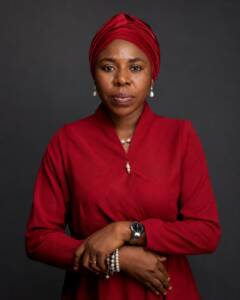
By Sidikat Folami
Sometimes, meaningful institutional change begins with something people have become accustomed to overlooking.
For the Lagos Women Run Empowerment & Sustainability Programme (LWRESP), that opportunity was found in the hours women spent waiting to collect their running kits.
Every year, Lagos Women Run brings together women from different communities, professions, ages and economic backgrounds. They come for the sporting experience, the fitness challenge and the opportunity to participate in one of Lagos State’s prominent women-centred sporting platforms.
But in 2022, I began to see another opportunity within that gathering.
I asked myself: What if the time women spend waiting for their running kits could become time invested in their personal and economic development?
What if women could collect their kits while also learning practical skills, exploring business opportunities, discussing their health and wellbeing, understanding sustainability and connecting with other women?
That simple question became the starting point of what is now the Lagos Women Run Empowerment & Sustainability Programme.
What began as an observation has developed into a structured initiative with successive programme cycles, growing participant reach, wider technical and institutional collaboration, and increasingly sophisticated monitoring and evaluation.
The 2025 edition, which complemented the 10th edition of Lagos Women Run, marked an important stage in that evolution. The 2026 programme is taking the model further, with greater emphasis on economic inclusion, financial resilience, practical livelihoods, environmental participation and opportunities for women to contribute to conversations affecting their lives.
The programme is a Mateen Lander concept, powered by Lagos Women Run, with Mateen Lander Impact Foundation (MLIF) leading its conceptual development and coordination.
The woman who saw more in the waiting time
The thinking behind LWRESP did not emerge in isolation.
It was shaped by years of working with women, developing entrepreneurs, training individuals and observing the relationship between skills, economic opportunity and personal development.
My professional journey began in garment production and alteration. With more than 17 years of experience in the garment and textile space, I have worked directly with materials, production processes, customers, artisans, business operations and the practical realities of entrepreneurship.
This experience has shaped my understanding of the challenges facing women in business.
It is one thing to discuss entrepreneurship in a training room. It is another to build and operate a business, work with customers and materials, manage production, navigate uncertainty and develop solutions when resources are limited.
My involvement in women’s development also predates Lagos Women Run.
In 2015, I began mentoring and supporting women within a fashion entrepreneurship community that grew from an initial network of approximately 100 women. That engagement developed into years of leadership, teaching, business support and community interaction.
My work subsequently expanded into entrepreneurship training, mentorship, women’s wellbeing, personal effectiveness and practical skills development.
These experiences gradually shaped an approach to empowerment based on a simple understanding:
Women do not necessarily lack ambition, ability or willingness to work. Many need access to useful knowledge, visibility, supportive networks, practical resources and opportunities through which their capabilities can create economic value.
My work in textile circularity added another dimension to that perspective.
As my work progressed from garment making into textile recovery, resource management and circular-economy systems development, I began examining not only how women could improve their livelihoods, but also how they could participate in emerging value chains around material recovery, reuse, recycling and resource valorisation.
That combination of practical industry experience, entrepreneurship, mentoring, training and environmental systems thinking became particularly relevant to the opportunity presented by Lagos Women Run.
When I attended the 2022 event as a participant, I did not see only a kit-collection activity.
I saw a platform capable of delivering something more.
Rather than viewing the women waiting for their kits as a temporary audience, I saw an existing gathering of people with different interests, ambitions, skills and economic realities.
The challenge was to make that environment more useful.
Following conversations with the Lagos Women Run team, the idea progressed into the first structured empowerment programme in 2023.
It was the beginning of a different way of using the space.
2023: Turning an idea into a working model
The first structured implementation established the foundation for LWRESP.
The programme introduced a two-day seminar and three days of vocational training, supported by an exhibition component showcasing selected women-led businesses.
The seminars addressed women’s productivity, resilience, leadership, social entrepreneurship, communication, decision-making and mental well-being.
The vocational programme covered practical areas including tailoring and garment construction, beauty and artistry, visual arts, millinery and fascinator production, household cleaning-product formulation, and Adire and Batik techniques.
The intention was to combine knowledge with practical engagement.
Participants were not simply invited to listen to speakers. They were encouraged to explore their creative abilities, interact with experienced practitioners, practise techniques and consider how acquired skills could support personal or professional development.
The programme recorded more than 1,700 registrations, with approximately 80 per cent attendance reported in the subsequent programme review.
On the first seminar day, more than 1,000 women were recorded, filling the 500-seat hall beyond capacity.
More than 550 women participated in the first day’s vocational activities, while more than 1,000 engaged in different practical classes on the third day.
Participation extended across Lagos Local Government Areas, bringing together traders, artisans, professionals and women from different communities.
The vocational sessions also attracted older women, demonstrating that the desire to learn, create and remain productive does not belong to one age group.
The pilot established two important principles.
First, there was significant demand for empowerment opportunities within the Lagos Women Run environment.
Second, practical learning could become a natural extension of the event experience, provided it was properly organised, relevant and accessible.
The first cycle also provided operational lessons around participant coordination, communication, logistics and large-scale engagement.
Those lessons became part of the foundation for subsequent development.
2024: When sustainability became part of the story
The 2024 edition represented a defining stage in the programme’s development because it introduced a stronger environmental and circular-economy dimension.
The programme moved beyond conventional vocational activities to bring waste collection, recycling, upcycling and waste-to-wealth into greater focus.
Clean-cooking awareness was also introduced, expanding the conversation between women’s everyday activities, resource use and sustainable living.
Delivered from November 5 to 7, 2024, the empowerment activities took place alongside the running-kit collection.
The learning structure was deliberately broad.
Sessions addressed good grooming, self-care and mental well-being; dreams and aspirations; environmental stewardship; financial management; disability inclusion; and the use of digital platforms for productivity.
Practical sessions included tyre and plastic ottoman production, plastic and carton furniture production, visual art and craft, body massage, skincare, beauty and self-care.
The breadth was intentional.
Women’s development cannot be reduced to one form of intervention. Confidence, financial awareness, digital productivity, environmental understanding, creativity and practical skills can all contribute to a woman’s ability to improve her circumstances.
The sustainability component gave the 2024 edition a particularly important distinction.
Waste was no longer treated simply as an environmental problem to be discussed. It became a resource to be examined, recovered and transformed.
Through recycling, upcycling and waste-to-wealth activities, participants were introduced to opportunities around discarded plastics, tyres, cartons and other materials.
A coordinated waste-collection and reward activity also operated alongside programme delivery, with collection points at Street Waste Recycling and Mateen Lander Resources.
This allowed participants to engage directly with material recovery rather than encounter circular-economy ideas only through presentations.
The introduction of clean cooking further connected sustainability with household realities.
The 2024 programme recorded more than 500 active participants across its programme activities.
Another important development was the provision of ₦1 million in grants to 20 outstanding participants through Lagos Women Run.
The significance of this went beyond recognition.
Some beneficiaries were able to use the support to acquire equipment and begin working for themselves.
That experience reinforced an important lesson for me:
Empowerment becomes more meaningful when women are given not only knowledge, but also pathways through which knowledge can become action.
2025: From skills training to an integrated model
The 2025 edition marked the 10th anniversary of Lagos Women Run and represented another major milestone for LWRESP.
By then, the programme had progressed from seminars and vocational skills into a broader framework connecting economic empowerment, climate literacy, circular-economy education, enterprise development, wellness, inclusion and community resilience.
Sixteen interactive and practical sessions covered areas such as waste valorisation, recycling, composting, sustainable farming, entrepreneurship, financial literacy, creative crafts, beauty, health, mental wellbeing and personal development.
The programme also placed greater attention on disability inclusion and meaningful participation, including support for members of the deaf community through sign-language assistance.
The numbers were significant.
Registered participants: 1,389
Estimated overall reach: 3,000+
Average daily engagement: 600+
First-time participants: 79%
Interest in future programmes: 98.7%
Knowledge improvement rating of 7–10: 90%+
Entrepreneurial interest: approximately 98%
But beyond the numbers was a participant profile that told an even more important story.
About 41.3 per cent of respondents already operated businesses, while 57.6 per cent planned to start businesses.
Only 1.1 per cent indicated that they were not interested in business.
More than 66 per cent of participants were between 36 and 60 years old.
This demonstrated that the programme was not simply attracting young women looking for their first opportunity.
It was reaching women already carrying significant economic, family, caregiving, trading, enterprise and community responsibilities.
Participation also reflected grassroots reach across Lagos, particularly in Alimosho, Surulere, Ikorodu, Kosofe, Shomolu, Mushin and Oshodi-Isolo.
These findings reinforced my belief that women’s empowerment must be understood beyond the traditional idea of teaching a skill.
Many women are already working. Some are running businesses. Some want to start businesses. Others are looking for ways to improve their existing income.
What they often need is the combination of knowledge, networks, tools, finance, market access, confidence and continuous support.
From participation to recognition
The 2025 edition also included a recognition process within the wider Lagos Women Run event arrangements.
Ninety-two outstanding participants were shortlisted.
Two participants identified as the most outstanding received ₦100,000 each, while other gifts were distributed through the event’s wider recognition arrangements.
This recognition was distinct from the training and monitoring activities of the empowerment programme, but it reinforced a broader principle: women deserve to be seen not only as beneficiaries, but also as contributors, innovators and role models.
Measuring what happens after the training
Perhaps the most important development in 2025 was the strengthening of the programme’s monitoring, evaluation and learning system.
We began moving beyond activity reporting to a more structured process involving participant registration, attendance tracking, session monitoring, facilitator and volunteer feedback, stakeholder reviews, participant surveys, outcome assessments and post-programme follow-up.
A four-month impact assessment provided an opportunity to examine how women were applying what they had learned.
The findings indicated reported progress in livelihood experimentation, environmental adoption, confidence, personal agency, financial awareness and knowledge-sharing.
Participants reported applying acquired knowledge through home-based production, small-scale business activities, recycling, composting, household resource management and service provision.
Some reported modest sales, supplementary income, reduced household expenditure and improved financial organisation.
Individual stories made these findings particularly meaningful.
One participant reported that the farming training had progressed into a home garden where she was growing okra and pumpkin leaves for household consumption and sale.
Another reported training two other people in headtie styling and Adire techniques.
That second example is particularly important to me because it demonstrates how empowerment can multiply.
A programme participant does not have to remain the final beneficiary.
She can become a trainer, mentor, employer, producer or community resource for someone else.
Other women reported starting businesses, improving their understanding of money management, gaining confidence in public speaking, exploring income opportunities and becoming more intentional about environmental practices.
One participant reflected on how her perception of waste had changed, saying she had learned that there was nothing that should automatically be regarded as waste.
These are important signals.
They show women moving from exposure to experimentation, from learning to application, and from receiving knowledge to sharing knowledge.
The gap between a skill and a livelihood
The impact assessment also revealed something we must not ignore.
Some women acquired practical skills but lacked the capital, equipment or customer access required to commercialise those skills.
Others identified the need for mentorship, market access and continued support.
This finding has become an important input into the next stage of programme development.
It reinforces the distinction between acquiring a skill and building a livelihood.
The former can often be achieved through training.
The latter requires additional ingredients—capital, tools, business knowledge, networks, customers, markets, mentorship and sustained opportunity.
That is one of the areas where we must continue to improve.
From practical skills to systems development
The evolution of LWRESP also reflects my own professional journey.
My early experience in garment production gave me direct knowledge of the relationship between materials, workmanship, customers, artisans and small-business operations.
My subsequent work in entrepreneurship training and mentorship helped me understand the decisions women must make to sustain businesses and livelihoods.
My development into textile circularity leadership expanded that perspective further.
Through Mateen Lander Limited, my work now engages with textile recovery, material management, reuse, resource valorisation and the wider systems required to make circularity commercially and operationally viable.
This is an important connection to the future of LWRESP.
The circular economy is not simply about teaching people to make products from discarded materials.
It involves a wider value chain:
collection, sorting, recovery, processing, technical skills, product development, enterprise, supply relationships and markets.
Women’s economic empowerment follows a similar principle.
We cannot simply teach a woman how to make something and assume that a sustainable livelihood will automatically follow.
We must also consider what happens afterwards. Can she access materials? Can she price her product? Can she find customers? Can she manage cash flow? Can she access finance? Can she build a market? Can she employ someone else? Can she pass the knowledge to another woman?
These are the questions that increasingly inform the programme.
2026: The next stage
The 2026 edition represents the next stage of this evolution.
The emphasis is moving towards a more deliberate integration of economic inclusion, financial resilience, practical livelihoods, environmental participation, leadership and wellbeing.
Financial inclusion is an important part of this direction.
But having a bank account is not the same as being financially resilient.
The 2025 participant profile recorded 99.7 per cent bank-account ownership among respondents.
That is encouraging, but the more important questions are: Do women understand their income and expenditure? Can they manage business costs? Do they understand cash flow? Can they price their products appropriately?
Do they understand profitability? Can they save and reinvest? Can they make informed decisions about money?
These are the issues that financial resilience must address.
The 2026 programme, therefore, places stronger emphasis on financial resilience and business management as practical areas of learning.
Environmental sustainability will also remain prominent.
Climate literacy and waste-to-wealth will be connected to everyday resources, household practices and economic opportunities.
The objective is not to make sustainability an abstract conversation.
It is to help women see how environmental responsibility can coexist with enterprise and livelihood development.
The bigger vision
Looking back, what began as a simple observation at a kit-collection point has become a broader experiment in integrated women’s empowerment.
The lesson is that platforms can be more powerful than individual programmes.
A sporting event can become an educational platform. A waiting period can become a classroom. A discarded material can become a resource. A skill can become a business.
A participant can become a trainer. A small grant can become productive equipment. And a woman who comes to run can leave with a new idea about her livelihood, her environment and her own capacity.
That is the opportunity before Lagos Women Run. The goal should not simply be to make the empowerment programme bigger every year. It should be to make it deeper, more measurable, more inclusive and more connected to real economic opportunities.
The future of women’s empowerment will require more than seminars. It will require ecosystems.
It will require partnerships between sport, government, business, financial institutions, development organisations, educational institutions, environmental practitioners and women’s networks.
It will require us to recognise that women are not merely beneficiaries of development.
They are entrepreneurs, employers, innovators, consumers, producers, caregivers, community leaders and agents of environmental change.
Beyond the finish line
The story of LWRESP is not only about running.
It is about what happens before, during and after the race.
It is about taking a moment that might otherwise be considered unproductive and turning it into an opportunity for learning.
It is about recognising potential in places where others may see only waiting time.
And it is about creating pathways through which knowledge can become confidence, confidence can become action, action can become enterprise, and enterprise can contribute to stronger families and communities.
The most important part of a race may not always be the finish line. Sometimes, it is what happens after the race. That is where the real journey begins.
Folami, Textile Circularist | Founder & Executive Director, Mateen Lander Impact Foundation | Arinola Wealth


NAC 2026: FPL Media partners industry stakeholders to promote innovation in marketing communications
Mercy Iheoma Ihedigbo National Advertising Conference (NAC) 2026 has secured…