

2027: Candidates’ records should guide voters, not empty promises — Adegoke

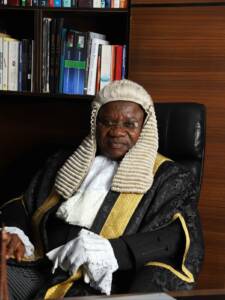
Mercy Iheoma Ihedigbo
Senior Advocate of Nigeria (SAN) and political activist, Kunle Adegoke, has urged Nigerian voters to look beyond campaign promises and scrutinise the records and antecedents of candidates before casting their ballots in the 2027 general elections.
Adegoke said voters should take greater responsibility for their electoral choices by examining the previous conduct, public service records and capacity of candidates rather than relying solely on campaign rhetoric.
He spoke on Thursday during an appearance on Frontline, a current affairs programme on Eagle 102.5 FM, Ilese-Ijebu, Ogun State, where he discussed voter responsibility, political alliances and his ambition to represent Osun Central Senatorial District.
The SAN was responding to concerns from callers about politicians who make promises during election campaigns but allegedly fail to fulfil them after assuming office.
Some callers questioned why politicians sometimes appear to change after gaining power despite commitments made to voters before elections.
Responding, Adegoke said the electorate must also accept responsibility for the choices it makes by properly scrutinising candidates.
“It is you people who have been making mistakes. What is the antecedent of the people that have been soft-soaping you, that have been soft-talking you? What is their antecedent?” he asked.
Adegoke urged voters to examine what candidates had done before seeking elective office, arguing that their antecedents could provide useful information about their capacity, character and commitment beyond campaign promises.
Lawyer-client relationship
The SAN also addressed questions about his previous legal representation of the All Progressives Congress (APC) and whether the professional relationship could affect his credibility as a political candidate.
He explained that legal practitioners have a professional responsibility to represent clients who engage their services, stressing that representing a political party as a lawyer should not automatically be interpreted as endorsing all of its political positions.
“I’m a lawyer by profession. It is whoever engages me that I will represent,” Adegoke said.
He questioned whether the same standard would be applied to lawyers who had represented the Peoples Democratic Party (PDP) or other political interests before becoming politically active or seeking elective office.
According to him, professional legal responsibility should be distinguished from political affiliation when assessing the career and public activities of a lawyer.
“So we must develop society from the conscious appreciation of issues and facts,” he said.
On the Accord-APC relationship
Adegoke also spoke on the political relationship between the Accord Party and the APC, particularly the understanding between the parties at the presidential level.
He said, as far as he understood it, the arrangement was limited to the presidential election and should not automatically determine the outcome of elections involving other elective positions.
“The purpose of the accord between the Accord Party and our party, as far as the presidential election is concerned, I will not be mischievous to say what they did not say, is limited to the presidential election,” he said.
Adegoke maintained that voters were not necessarily bound to support the same political party across different elections conducted within the same electoral cycle.
He argued that the electorate was much larger than the membership of any political party and could make independent choices based on candidates and issues.
“It is not members of Accord alone that elected Governor Adeleke. It is people, the electorate generally,” he said.
He added that voters could make different choices in presidential, gubernatorial and National Assembly elections depending on the candidates presented to them and the issues at stake.
Senate ambition
Adegoke linked his position to his ambition to represent Osun Central Senatorial District in the Senate, saying his intervention in politics was driven by concerns about leadership and development.
“My intervention is based on leadership, and I’ve been an activist to address developmental needs,” he said.
He identified effective representation, legislative oversight, scrutiny of government budgets and constituency development among his priorities if elected.
The SAN said lawmakers should not limit their oversight responsibilities to investigating or disciplining members of the executive who may have committed offences, but should also monitor the implementation of government programmes.
He said lawmakers must ensure that public resources are translated into tangible benefits for citizens.
Constituency projects
On constituency projects, Adegoke said lawmakers should ensure that interventions reflected the actual needs of the communities they represent rather than being driven by political considerations.
“When it comes to constituency projects, yes, I mean, it is not my father’s money. It is government money that they are appropriating,” he said.
He said, if elected, he would use his legislative position to pursue constituency projects across the 10 local government areas that make up Osun Central Senatorial District.
“I want to develop Osun Central. I want to use Osun Central as a template that will show what I would have done were I to be in the executive,” Adegoke said.
He said constituency projects should be based on proper assessment of the needs of individual local government areas, noting that some communities might require rehabilitation of existing facilities rather than construction of new ones.
“I will use my legislative position to ensure that constituency projects will be constructed in all the 10 local governments and will take into consideration the needs of that particular local government,” he said.
Calls for cooperation
Adegoke also stressed the importance of cooperation with other lawmakers and political actors, saying effective representation could not be achieved in isolation.
He said elected representatives should approach political office with humility and recognise the importance of knowledge, consultation and collaboration.
The SAN said political opponents could still work together when the objective was to improve society, stressing that political competition should not permanently prevent cooperation.
“We are supposed to work together to ensure the success of our society. I will reach out to my opponents to see how we can better the lot of our society. I’m not going to do it in isolation, so long as they are willing to cooperate with me,” he said.
Adegoke said the quality of political representation should ultimately be reflected in effective oversight, responsiveness to constituents and the ability of elected representatives to work with others in pursuit of development.


Bravest lesson of all: From caves of Okinawa to frontlines of Nigerian classrooms
By Asiwaju Kunle Kalejaye SAN In June 1945, in Okinawa, a 22-year-old teache…