

Save our roads: Echioda calls for emergency on rail, water transport

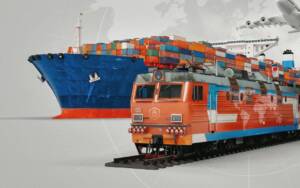
A concerned Nigerian, Rev. (Dr.) Mathias Echioda, has called on the Federal Government to urgently revive Nigeria’s rail and inland water transport systems as part of measures to reduce pressure on the nation’s roads, improve movement of people and goods, and address the worsening burden on road infrastructure.
Echioda made the call in an open letter dated September 17, 2026, addressed to the President, the 36 state governors, the FCT Minister, the National Assembly and state Houses of Assembly.
He expressed concern over the condition of roads across the country, describing the situation as a major national challenge affecting transportation, commerce, security and the livelihoods of Nigerians.
According to him, deteriorating roads have resulted in hardship for motorists and commuters, increased vehicle maintenance costs and prolonged travelling time.
He also argued that poor road infrastructure could have security implications, particularly where damaged roads restrict access to rural communities, farms and other areas requiring emergency response.
Echioda identified the movement of heavy cargo by road as one of the major issues requiring urgent policy attention. He alleged that excessive loading of heavy-duty trailers and trucks was contributing significantly to road deterioration.
He called for stronger enforcement of axle-load regulations and functional weighbridges, insisting that transportation operators should comply with existing regulations irrespective of their social or political status.
“The truth is that our roads are being systematically destroyed by heavy-duty trailers and trucks carrying loads they were never designed to bear,” he said.
Echioda argued that shifting a significant proportion of heavy cargo from roads to rail and inland waterways would reduce pressure on road infrastructure.
He therefore urged the Federal Government to prioritise the rehabilitation and modernisation of the country’s rail network, particularly freight services, while developing viable inland waterway routes for the movement of bulk goods.
The National Inland Waterways Authority (NIWA) says its statutory responsibilities include developing inland waterways for navigation and providing an alternative means of transporting economic goods and people.
NIWA also says Nigeria has more than 3,000 kilometres of navigable waterways and about 10,000 kilometres of waterways with potential for transportation of bulk cargo and passengers.
Echioda said the development of inland waterways must, however, go hand in hand with safety, regulation and appropriate infrastructure.
NIWA has noted that the Inland Waterways Transportation Regulations 2023 provide a regulatory framework covering issues including vessel tonnage, navigation, safety and penalties for violations.
Calls on Tinubu
Addressing President Tinubu and the Federal Executive, Echioda called for what he described as a “State of Emergency on Transport Infrastructure.”
He urged the Federal Government to:
prioritise the rehabilitation and modernisation of rail infrastructure for freight transportation; make rail freight competitive and efficient enough to attract cargo currently transported by road; develop inland waterways as an alternative cargo transportation system; strengthen enforcement of axle-load limits;
ensure that weighbridges are functional across major freight corridors; and
impose appropriate sanctions on operators who violate established regulations.
He argued that reducing the volume of heavy cargo transported by road would help extend the lifespan of road infrastructure and reduce recurring expenditure on repairs.
Message to Governors
The cleric also challenged state governors to take greater responsibility for roads under their respective jurisdictions.
He urged governors to ensure transparency in the award and execution of road contracts and to publish information on the cost, contractor, scope and progress of major road projects.
Echioda further called on state governments to treat rural road rehabilitation as an economic and security priority, particularly because poor connectivity can affect farmers’ access to markets and communities’ access to essential services.
He also asked governors to support Federal railway and inland-waterway projects by providing necessary right-of-way, land, security and other logistical support.
Charge to lawmakers
Echioda urged members of the National Assembly and state Houses of Assembly to strengthen legislative oversight of road and transport infrastructure.
He called for regular and transparent inspections of road projects, publication of oversight findings and closer scrutiny of contractors and relevant government agencies.
He also urged lawmakers to strengthen legislation against overloading and ensure that penalties for violations are effectively enforced.
On rail and waterways, he appealed to legislators to monitor transport-related budget allocations from approval through implementation.
“A budget line is not progress; steel on the ground is,” he said.
‘Road crisis is also an economic crisis’
Echioda said the consequences of poor transportation infrastructure go beyond damaged vehicles, arguing that prolonged journeys, higher logistics costs and poor access to markets ultimately affect businesses and households.
He also linked road connectivity with national security, saying poor roads can hamper the movement of security personnel and emergency responders.
He therefore urged the Federal Government and the states to approach transportation infrastructure as a coordinated national project rather than as isolated federal or state initiatives.
While acknowledging that reviving rail and waterways would require significant investment, he maintained that the long-term benefits would include reduced pressure on roads, improved movement of goods and greater transportation options for Nigerians.
He appealed to political leaders to focus on what he described as long-term national interest rather than short-term considerations.
“The question is not ‘if’ we can fix our roads and revive the railways. The question is begging for your courage to do it,” he said.
Echioda concluded by urging President Tinubu, the governors and lawmakers to seize the opportunity to create a transportation system that would serve future generations.
“The Nigerian people are watching, and history will remember your choice,” he said.


August inflation: Manufacturers seek cheaper power, finance, transport
Stanley Ihedigbo Manufacturers Association of Nigeria (MAN) has calle…